The key question asked by all stakeholders is whether the uranium mining industry can meet the needs of a growing nuclear reactor fleet. There is no definitive answer right now: uranium resources are abundant, but production may lag behind demand.
The reference scenario published by the World Nuclear Association (WNA) for reactor fleet growth assumes a capacity doubling from the current 372 GW to 449 GW by 2030 and to 746 GW by 2040, representing an average annual growth rate of 5.3%. Compared to the 2023 forecast, an additional 60 GW of new builds is expected by 2040, primarily in East and South Asia and in newcomer countries. The growing reactor fleet will trigger increased demand for natural uranium as the primary raw material for nuclear fuel. In the WNA reference scenario, this rises from the current 67,000 tonnes to over 150,000 tonnes per year by 2040. To evaluate the supply-demand balance for natural uranium, several demand-side factors must be considered.
Resources remain stagnant
According to the 2024 edition of Uranium: Resources, Production and Demand (the Red Book, published biennially by the IAEA and OECD/NEA), identified in-situ uranium resources total over 10.7 million tonnes. Recoverable resources, factoring in mining and processing losses, exceed 7.9 million tonnes.
Identified in-situ uranium resources total over 10.7 million tonnes.
At first glance, these resources are sufficient for the future needs of nuclear power units for the next 50 years. However, uranium resources with a recovery cost below USD 80/kg are shrinking, currently making up only about a quarter of total resources. And while overall global uranium reserves grew by 28%, resources in the
Resources in the < USD 40/kgU category have also decreased. Following a reassessment of resources in Uzbekistan and Brazil by 103,000 tonnes, this category dropped by 20%. Resources with the highest recovery cost (< USD 260/kg) grew by 2% due to the inclusion of new or previously unaccounted resources in Cameroon, Egypt, India, Pakistan, and Saudi Arabia, but fell by almost the same amount due to Orano’s reassessment of the Imouraren deposit in Niger and Bakouma in the Central African Republic. As a result, total identified resources remained virtually unchanged, increasing by just 0.2%.
Among uranium mining companies, Rosatom leads in total explored resources thanks to assets in Russia, Kazakhstan, Tanzania, and Namibia. It is followed by Kazakhstan’s Kazatomprom, France’s Orano, Canada’s Cameco, and China’s CNNC and CGN. Kazatomprom has the largest resources with a recovery cost of less than USD 80/kgU. Rosatom ranks second, followed by Cameco, CNNC, CGN, and Orano.
Among uranium mining companies, Rosatom leads in total explored resources.
Production on the rise
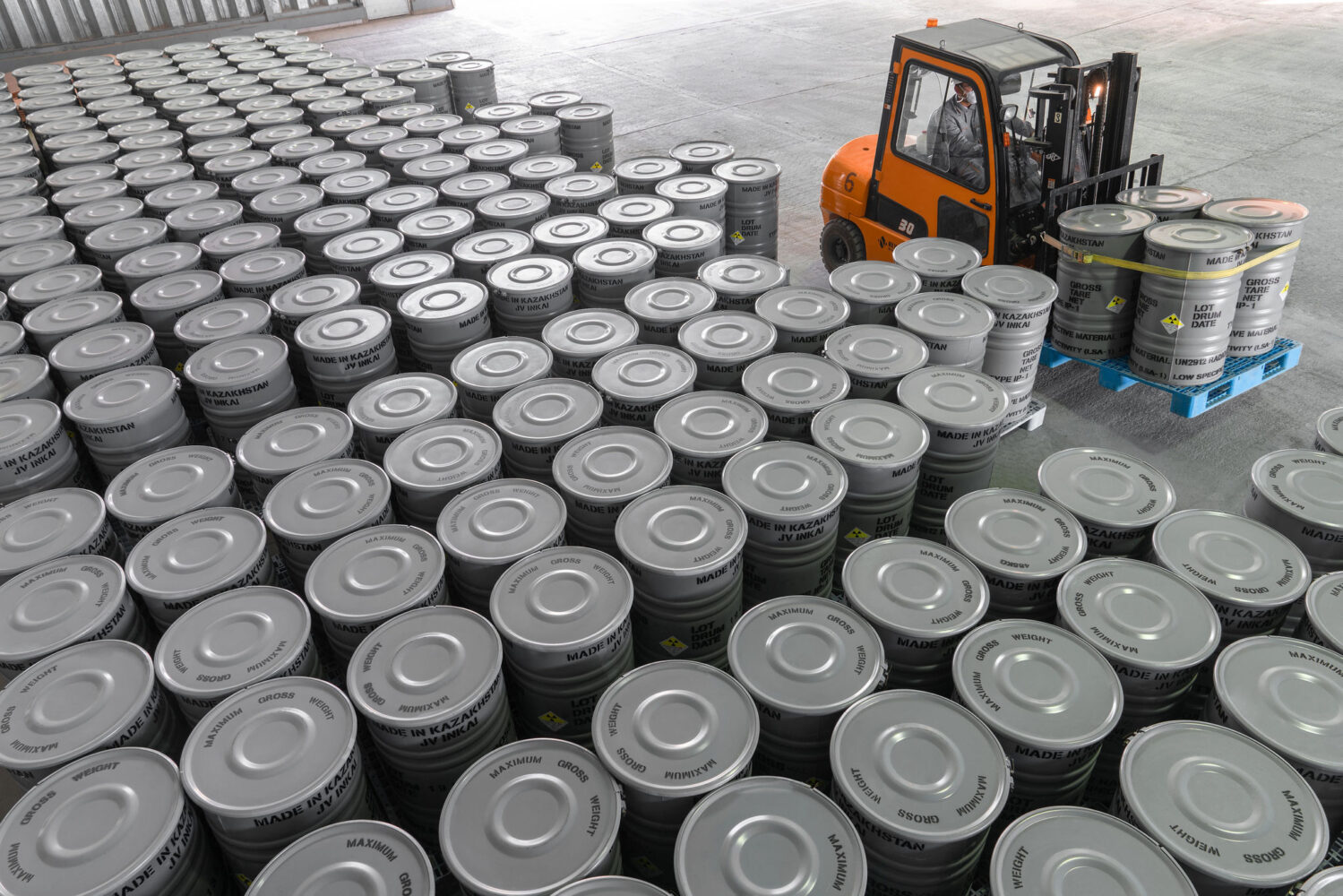
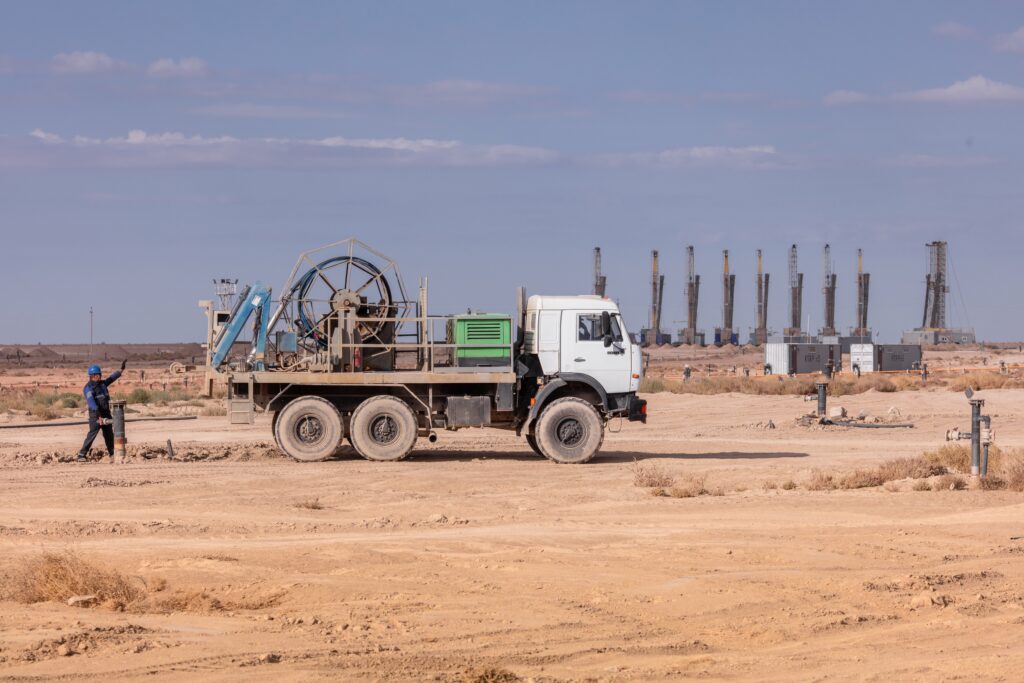
Remaining the world leader in uranium production, Kazatomprom is ramping up output. While Kazakhstan produced 21,109 tonnes of uranium in 2023, the figure reached a record 25,839 tonnes in 2025, up 11% from 2024. In 2026, production is targeted at 27,500–29,000 tonnes of uranium.
“The increase in production is related to plans to reach the design capacity (6 thousand tons per year) of the mine at sites 6 and 7 of the Budenovsky deposit”. In 2025, Kazatomprom launched pilot operations at the Inkai-3 project, which holds 83,100 tonnes of uranium reserves. The pilot phase is slated to last four years. Commercial operation is scheduled to begin in 2030–2032, reaching a design capacity of 4,000 tonnes of uranium per year.
In 2025, amendments to the Subsoil Code were adopted, ensuring Kazatomprom’s share in new subsoil use contracts will be at least 75%, and 90% for contract extensions. Starting in 2026, mineral extraction tax rates will vary depending on actual annual output under each subsoil use agreement and the prevailing spot price of uranium.
In Canada, two underground mines — McArthur River and Cigar Lake — were operating in 2025. In mid-2025, Orano’s Canadian subsidiary began extracting uranium at the McClean Lake mine using SABRE (Surface Access Borehole Resource Extraction) technology. According to McClean Lake co-owner Denison Mines, 250 tonnes of uranium were produced in 2025.
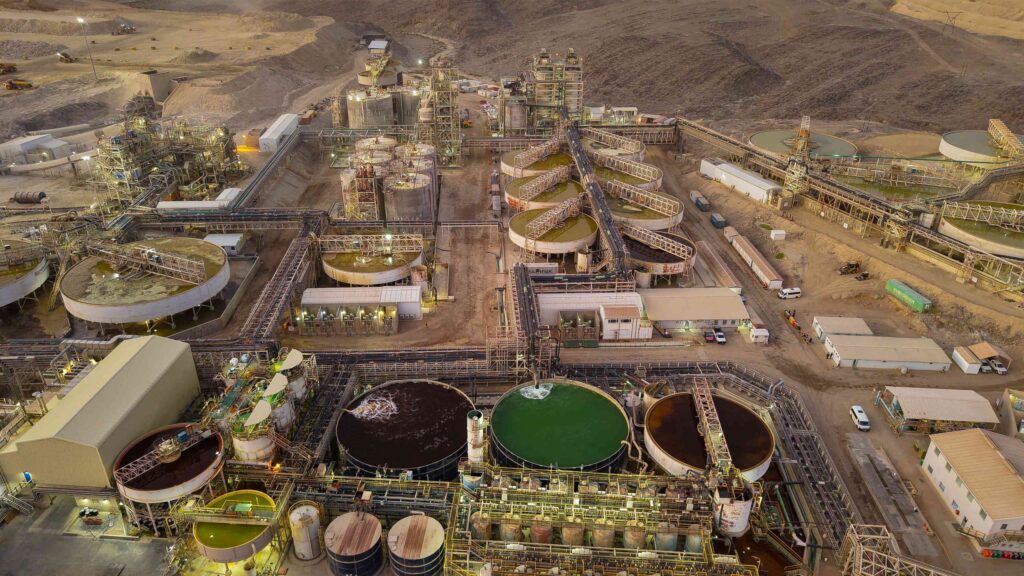
In Namibia, output from three mines (Husab, Rössing, and Langer Heinrich) reached 7,332 tonnes in 2024 (12% of global production). Over the past seven years, Husab and Rössing have maintained stable production levels, producing 4,437 tonnes and 2,205 tonnes of uranium respectively in 2024. The Langer Heinrich mine produced 690 tonnes of uranium in 2024, and about 1,540 tonnes in 2025.
Uzbekistan has been ramping up production over the last few years. The preliminary target for 2025 is 6,000 tonnes of uranium. By 2030, the country plans to produce over 7,000 tonnes annually. According to an SRK Consulting report, Navoiuran’s mineral resource base as of January 1, 2025 stood at about 116,000 tonnes of uranium. However, none of its 40 deposits hold resources exceeding 10,000 tonnes of uranium, with the largest deposits ranging from 4,000 to 9,000 tonnes in resources.
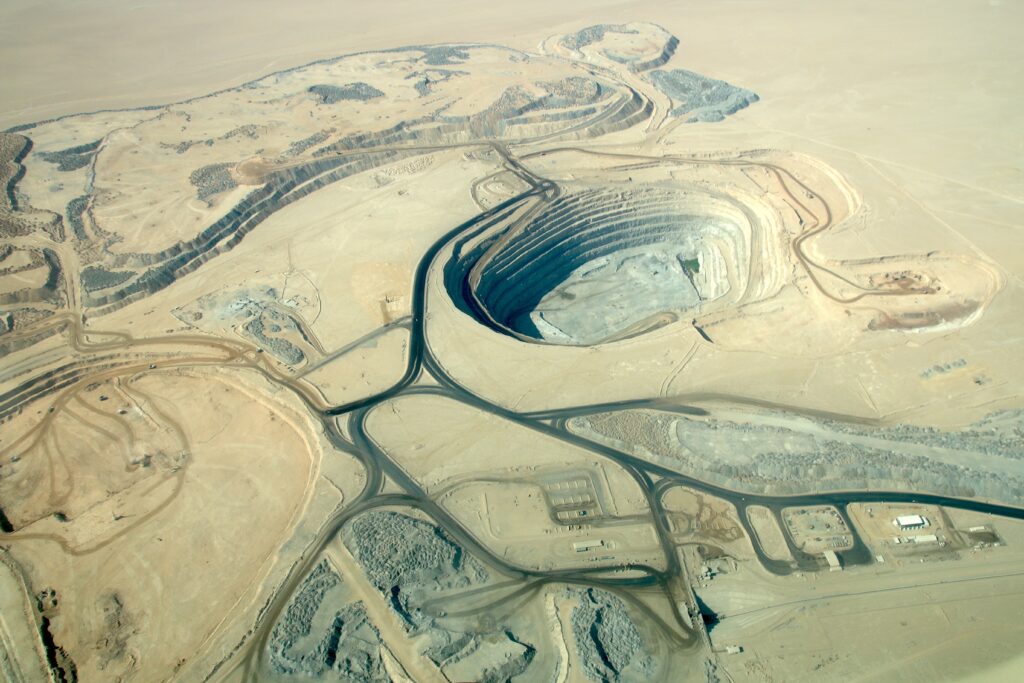
In Australia, production in 2025 is expected to be slightly higher than in 2024. BHP’s Olympic Dam mine steadily produces around 3,000–3,400 tonnes of uranium per year. The 2025 calendar year was no exception, with production hitting 3,479 tonnes.
In Russia, uranium production in 2024 amounted to 2,738 tonnes. Rosatom’s mining subsidiaries met their production targets by 100%. “Rosatom is secured with its own mineral resource base for decades to come and holds leading positions in the global uranium market,” Rosatom Director General Alexey Likhachev told the Strana Rosatom newspaper.
In China, preliminary data indicates uranium production of about 2,200 tonnes. In 2025, China mined uranium at four sites (three using in-situ recovery and one underground mine). Operations at three underground mines were suspended due to high production costs. According to China National Nuclear Corp. (CNNC), pilot uranium production began in 2025 at the new National Uranium No. 1 mine in the Ordos Basin. The facility’s design capacity is 1,000 tonnes of uranium per year.
Looming closures
Production growth without successful exploration and expansion of the resource base will lead to the closure of operating mines between 2030 and the late 2040s. This primarily applies to the deposits that were brought online in the early 2000s.
Given this prospect, uranium producers have recently taken steps to develop new resources. Rosatom is one of them. “Our key task is to expand the uranium resource base to meet the needs of the Russian nuclear power industry. We have already reached an agreement with the Federal Agency for Mineral Resources and the Ministry of Natural Resources and Environment to set up a working group on developing the resource base. In 2026, we will complete the bulk of capital work at the Shirondukuyskoye deposit, enabling the extraction of about 400 tonnes of uranium starting in 2028. We will begin tunneling work at Mine No. 6 at the Priargunsky Industrial Mining and Chemical Union (PIMCU). We will make every effort to bring the Elkon project out of hibernation,” Victor Svyatetsky, First Deputy CEO and Administrative Director of Rosatom Nedra, told the Vestnik Atomproma magazine.
Kazatomprom is another example. In January 2025, the company announced in its updated 2025–2034 development strategy that it aims to replenish and efficiently utilize its mineral resource base through exploration and operational optimization.
Thus, in the long term, the winners will be those uranium mining companies that best secure reserves for their mines.
Industry hurdles
Production growth, the commissioning of new capacities, and even exploration activities are often hindered by economic, regulatory, social, and other issues. These increase the time and costs required to prepare new sites.
One of the key problems is inflation. Prices for equipment, diesel fuel, electricity, and sulfuric acid are rising, as are personnel costs. In addition, interest rates have gone up, making bank financing harder and more expensive to obtain.
Sometimes, a lack of workers, equipment, or chemicals becomes an issue. For instance, the restart of Canada’s McArthur River mine was slowed by challenges in hiring qualified personnel and restarting equipment after years of being idled. In Kazakhstan, production dipped due to a shortage of sulfuric acid and delays in building auxiliary infrastructure.
Complex regulatory procedures also pose obstacles to startups. In some countries, the permitting process can take over a decade. Companies are forced to update feasibility studies and postpone final investment decisions. Opposition from local communities can lead to the cancellation of a mine project, as happened with the Jabiluka deposit in Australia.
Politics plays a role, too. The most striking example here is the transition of mines in Niger under state control and the ensuing disputes with France’s Orano.
Some takeaways
Over the coming decades, most of the raw material needs of the global nuclear power industry will be met by primary natural uranium mining. According to WNA estimates, this demand will amount to 150,000 tonnes by 2040. However, production from all identified sources will only reach up to 70,000 tonnes by that time. At operating mines, production will be halved due to resource depletion, dropping from the current 60,200 tonnes to 29,500 tonnes. The launch of previously mothballed, under-construction, and planned new mines will offset retiring capacities, but only partially — up to 50,000 tonnes. Bringing prospective mines online starting in 2030 could add another 20,000 tonnes by 2040, but their future remains risky and uncertain. Supplies from identified secondary sources between 2024 and 2040 will add roughly another 5,000 tonnes of uranium.
Thus, despite there being sufficient uranium resources “in the ground,” demand for uranium could exceed supply from identified sources by 75,000 tonnes in 2040. This demand is expected to be met by supplies from so-called “unspecified sources.” These include unaccounted secondary sources, as well as idled mines and undeveloped deposits for which companies do not yet have articulated plans.
Given this state of affairs, tremendous efforts in geological exploration, the deployment of cutting-edge mining technologies, increased investment, and an improved regulatory environment will be required to bring new uranium assets into the nuclear fuel cycle.
Rosatom’s position
The resource base evolution shows that inexpensive uranium on the global market is running out. The growth of the global reactor fleet will occur against the backdrop of the retirement of major low-cost uranium projects and a reduction in secondary sources. Against this backdrop, Rosatom finds itself in a highly advantageous position: the Russian nuclear corporation possesses a high-quality uranium resource base both in Russia and abroad. It is capable of ensuring long-term uranium production growth and meeting the needs of the corporation’s nuclear fuel cycle.
Concurrently, Rosatom is developing Generation IV energy systems that will not require natural uranium. The coordination of all activity fields related to the nuclear fuel cycle is now overseen by the “Uranium Council,” Rosatom Director General Alexey Likhachev told the Strana Rosatom newspaper. “Expanding our product line, creating Generation IV energy systems that are independent of the resource base, and undertaking large-scale construction of power units domestically and abroad will require new approaches to managing the entire nuclear fuel cycle of a two-component nuclear energy system featuring both thermal and fast neutron reactors. A Nuclear Fuel Cycle Committee has been established to coordinate this work. It includes practically all top-level executives of the nuclear corporation. The committee will act as a kind of ‘Uranium Council,’ determining strategy and tactics in this crucial area,” Alexey Likhachev emphasized.
Rosatom will expand its capacities in enrichment, fuel fabrication, and spent fuel reprocessing, and will shape a national uranium program. This program aims to reduce the specific consumption of natural uranium via closed nuclear fuel cycle technologies while simultaneously expanding the resource base to increase the share of nuclear generation.
Photo by: JSC NAC Kazatomprom, Paladin Energy, Wikipedia
This site uses cookies. By continuing your navigation, you accept the use of cookies. For more information, or to manage or to change the cookies parameters on your computer, read our Cookies Policy. Learn more