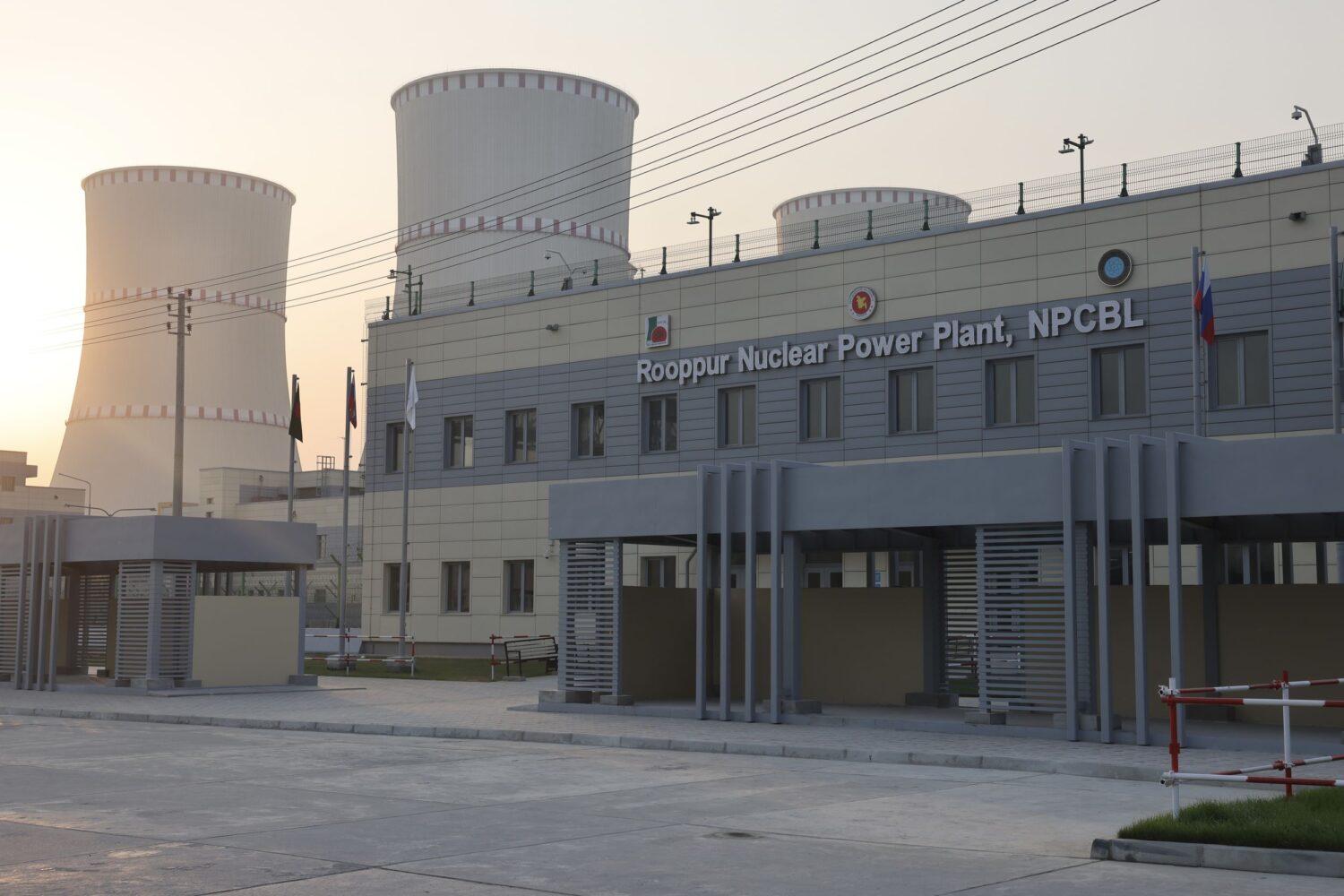
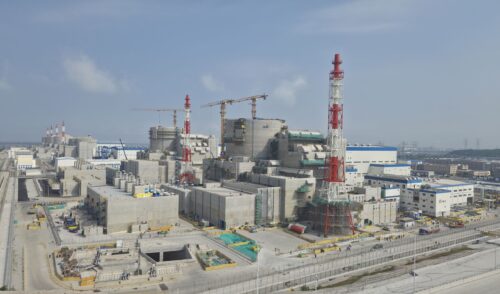
In late April, preparations for achieving first criticality began at Rooppur Unit 1 in Bangladesh — a landmark event for the country, for Rosatom, and for the global nuclear community. Rosatom’s power units are rising across the globe: the Russian nuclear corporation maintains its position as the world leader in overseas construction of nuclear power plants. Here is an overview of the latest developments at Rosatom’s construction sites.
Rooppur NPP (Bangladesh)
In late April, nuclear fuel loading commenced at Unit 1, one of the key stages preceding initial criticality. “Today, Bangladesh has joined the ranks of nations using peaceful nuclear energy as a reliable source of sustainable development. Undoubtedly, the Rooppur NPP will become a crucial element of the country’s energy system. This project is another important step for Rosatom in developing global nuclear energy and strengthening friendly relations with our international partners,” noted Rosatom Director General Alexey Likhachev.
“The Rooppur NPP project is a symbol of Bangladesh’s scientific progress, demonstrating the country’s readiness and ability to responsibly and efficiently adopt advanced technologies,” said Bangladesh Minister of Science and Technology Fakir Mahbub Anam.
The nuclear power plant will have two power units featuring VVER-1200 reactors.
El Dabaa NPP (Egypt)
In January, a steam turbine for Unit 1 and a polar crane bridge were delivered to Egypt. A retaining ring — the structure securing the reactor vessel — for the same unit followed in March. A pressurizer relief tank, part of the reactor’s pressure compensation system, was also installed. Erection of the reactor building continues, with the installation of the fourth tier of the inner containment shell (ICS) and the reactor pit lining underway.
At Unit 2, concreting of the reactor building floor slab at elevation +0.100 and the foundation slab of the transport airlock trestle was completed in January. In February, a dry shield was installed for the reactor pit, and workers began concreting the fourth tier of the reactor building’s ICS. In March, a bearing frame was installed.
At Unit 3, the first concreting stage for the first tier of the ICS was completed in February.
Four units with VVER-1200 reactors are being built at this nuclear power plant.
Akkuyu NPP (Türkiye)
At Unit 1, preparations are nearing completion for cold and hot functional tests using loaded dummy fuel assemblies. The key objective for this year is to transition to initial criticality and subsequent operational activities.
At Unit 2, hydro-accumulators for the passive core flooding system were installed in the reactor building in April. Each accumulator will be filled with an aqueous solution of boric acid, which will be automatically injected into the reactor core to cool it if pressure drops in the primary coolant circuit. Following this, the installation of the sixth tier and the dome of the ICS will commence.
In March, a retaining frame was installed in the reactor pit of Unit 4. The next step involves filling the reactor pit with special-grade concrete.
Four units with VVER-1200 reactors are being built at this nuclear power plant.
Paks NPP (Hungary)
At the construction site of Paks II Unit 5, workers began pouring concrete for the reactor building’s basemat on February 5. As of that date, the unit is officially classified as “under construction” according to IAEA standards. Concreting will proceed continuously until the end of 2026. The basemat will require nearly 9,000 tonnes of reinforcing steel and 43,000 cubic meters of concrete mix. The work will be monitored at every stage to ensure its highest quality. The next stage will be the erection of inner and outer containment shells of the reactor building.
The design of the plant provides for two units with VVER-1200 reactors.
Kudankulam NPP (India)
In April, open-reactor flushing of the safety systems began at Unit 3. This process clears all pipelines of any debris remaining after installation and tests the operation of pumping units, process safety systems, and normal operation systems.
The nuclear power plant currently operates two units, with four more under construction, all featuring VVER-1000 reactors.
Uzbek NPP (Uzbekistan)
Concrete bedding was laid for the reactor building of the RITM-200N power unit to be built in the Jizzakh Region of Uzbekistan. Approximately 900 cubic meters of concrete mix were poured, preceded by the levelling of the foundation base and installation of the waterproofing and grounding systems. The next key milestone at the site — pouring first concrete for the reactor building basemat — is scheduled for June 2026.
The design of the plant provides for two units with VVER-1000 reactors and two units with RITM-200N small modular reactors.
Tianwan and Xudabao NPPs (China)
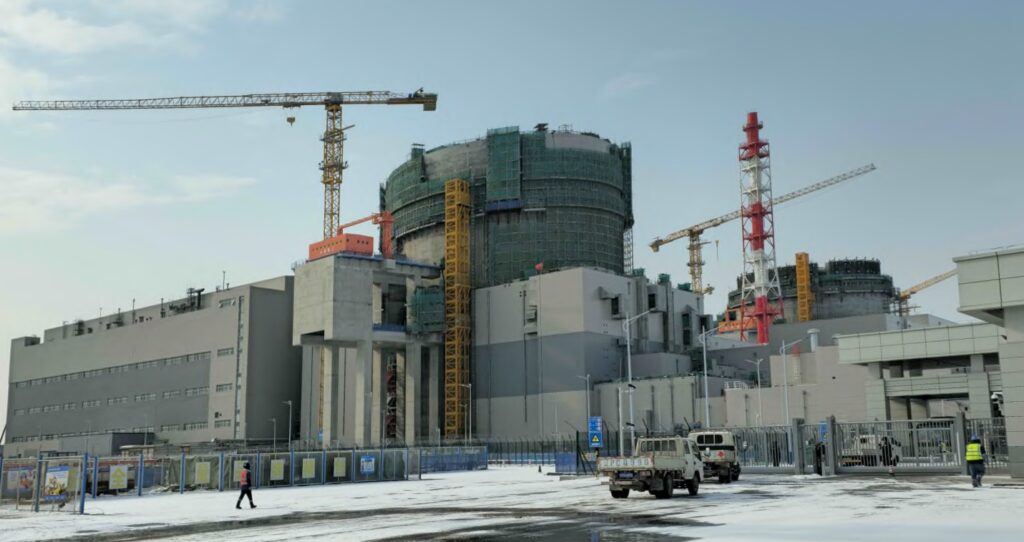
Construction of Tianwan Unit 7 and Xudabao Unit 3 is nearing completion. Chinese engineers are conducting pre-commissioning operations at these units. The next step will be the loading of nuclear fuel at Tianwan Unit 7.
Each of the plants will have two units with VVER-1200 reactors. The Tianwan NPP already operates four units with VVER-1000 reactors.
Nuclear plants in Russia
Rosatom is building two power units each at the Kursk and Leningrad NPP sites, as well as a unit with a BREST-OD-300 fast neutron reactor as part of the Proryv (Breakthrough) project. Preparations are underway for the official start of reactor construction at the Smolensk, Beloyarsk, and Primorye NPP sites, as well as the Yakutia small modular reactor plant.
Photo by: ASE JSC, Akkuyu Nuclear JSC, Rosatom State Corporation