Small modular reactor (SMR) technology is among the most promising development paths for the global nuclear energy industry. Its strengths include scalability, high factory readiness, reliability, and efficiency. Rosatom, a recognized world leader in this segment, offers reference solutions to its partners. The market for this technology is taking shape: as projects grow in numbers, approaches to engineering and operation are refined, accelerating standardization, reducing costs, and establishing new applications for SMRs.
A small nuclear power plant consists of one or several small modular reactors. According to the International Atomic Energy Agency (IAEA), small modular reactors are advanced nuclear reactors with an electrical power capacity of up to 300 MW per unit.
Small nuclear power plants offer several key advantages.
First, they are scalable. The number of power units can vary, meaning an SMR plant will generate exactly the amount of electricity required by a specific consumer. If there is a need to increase output, more power units can be added within a relatively short timeframe.
Second, they are fast to build and affordable. In standard configurations, the construction time for SMRs is potentially shorter than for large nuclear power plants, and the total capital costs are lower. Actual timelines and costs depend on the site readiness, share of local content, regulatory procedures, and plant configuration.
Third, they are factory-ready for installation. Most components of the SMR’s nuclear island are delivered to the site fully assembled.
Fourth, SMRs unlock new possibilities for power supply to remote and sparsely populated areas. Compact dimensions, low freshwater consumption, and long refueling intervals (refueling needed every 5–6 years) simplify logistics and infrastructure requirements. At the same time, the SMR technology strengths present new challenges as technology vendors will have to achieve target project economics through refined business models, optimized power unit configurations, and deep integration with local energy systems through hybrid solutions involving renewables.

All that notwithstanding, SMR power plants share the same benefits as conventional large nuclear generating facilities: they produce no harmful atmospheric emissions, provide a stable energy supply, and the electricity tariff remains fixed throughout the plant’s entire operational lifetime. Small modular reactors are independent of climate and season, making them ideal for integration with renewable energy sources like wind and solar.
The nuclear industry is now presented with several growth avenues: reducing the levelized cost of electricity through standardization and mass production, refining and shortening construction timelines via standardized designs and increased module readiness, gaining commercial operating experience as reference plants are commissioned, and developing the regulatory framework and resilient supply chains. The combined advantages of SMRs create never-before opportunities for their integration into energy systems, especially in remote regions and in hybrid configurations with wind and solar generation.
Sharing experience
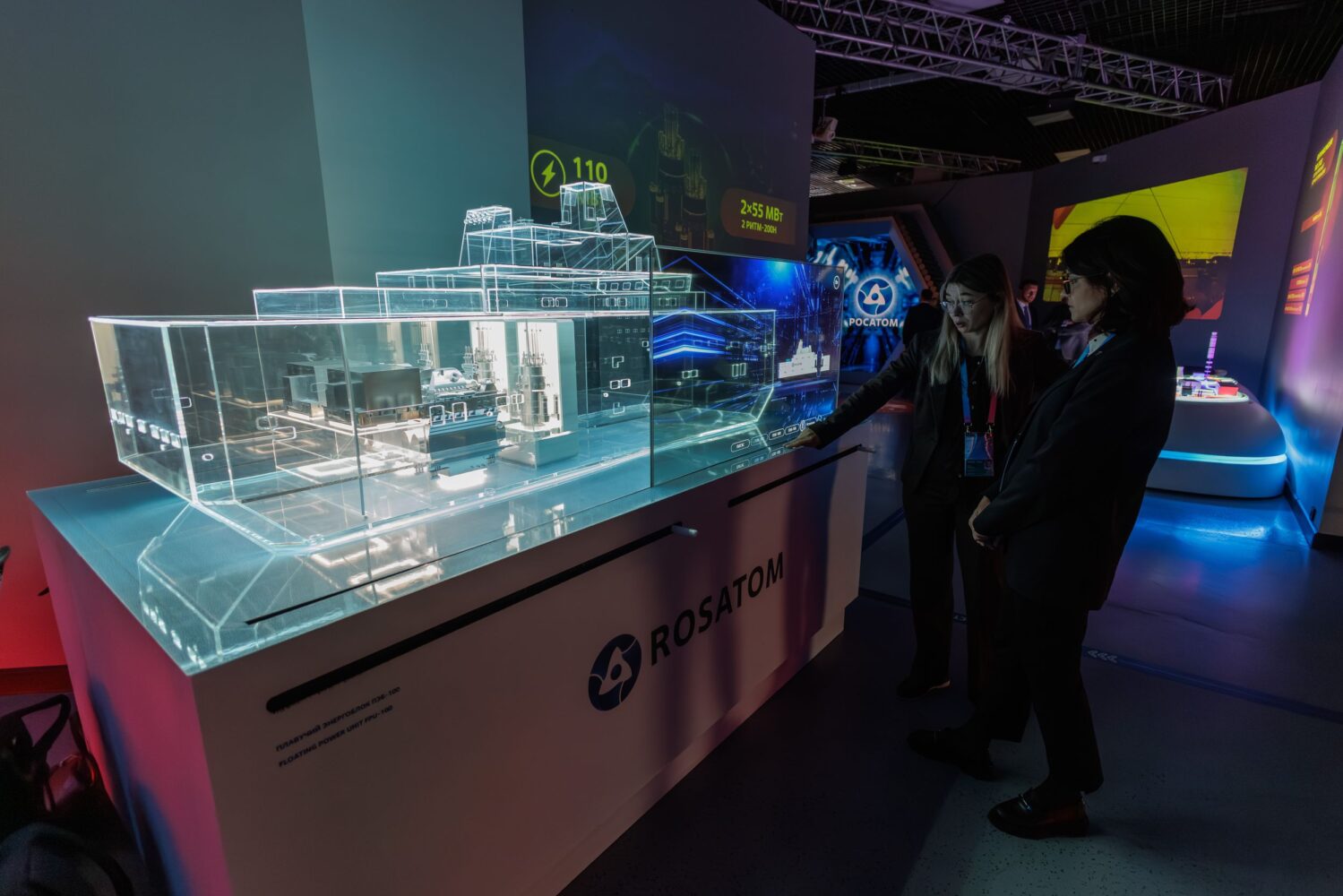
Rosatom possesses unparalleled expertise in small-scale nuclear generation solutions. The world’s only floating nuclear power plant, Akademik Lomonosov, has been successfully operating for over five years in Pevek, Russia’s northernmost city. This facility serves as a reference and allows for the refinement of technical solutions, logistics, and operational procedures for subsequent scaling.
The flagship of Rosatom’s SMR line is the RITM-200 reactor. Its design incorporates decades of operational experience with small reactors powering Russian nuclear icebreakers, exceeding 400 reactor-years. All the latest nuclear icebreakers of the Project 22220 series are equipped with reactors of this type. Their design has proven itself as highly efficient and safe at every stage of the lifecycle.
Various modifications allow the RITM reactor to be used in both land-based power stations and floating power units in different climates. For instance, work is ongoing in the Russian region of Yakutia to construct a small nuclear power plant with a RITM-200N reactor.
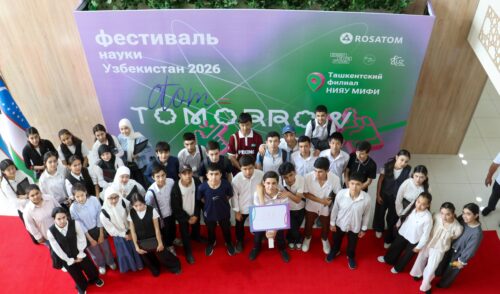
In 2024, Russia and Uzbekistan made the world’s first export deal to build an SMR power plant, and its construction has already begun. The final design of the nuclear power plant to be built in the Farish district of Uzbekistan’s Jizzakh region provides for the construction of two large power units with Generation III+ VVER-1000 reactors and two 55 MW power units with RITM-200N reactors. This will be the world’s first facility to feature both high- and low-capacity reactors on the same site. In October this year, the SMR construction project entered a new phase as site excavations started for the first power unit with a RITM-200N reactor. “Just as in all our international projects, we strive to increase local content in the construction of this power plant. Much work will be done by subcontractors from Uzbekistan. Rosatom will build a station with a service life of at least 60 years and will provide all necessary support during its operation. We look forward to many decades of fruitful and mutually beneficial cooperation,” said Rosatom Director General Alexey Likhachev at the official ceremony.
Meanwhile, work is underway at the site to conduct engineering surveys, finalize design, and set up a construction yard.
Photo by: Strana Rosatom Newspaper, Nuclear Industry Communication Center, Uzatom Agency