The present-day nuclear industry is unthinkable without far-reaching digitalization and automation. Rosatom offers its Russian and international partners comprehensive solutions for digital transformation and robotic automation of production processes, and also builds data centers (DCs). All these advanced technologies are becoming particularly relevant to Kazakhstan on the back of building the country’s first nuclear power plant.
Instrumentation and control (I&C) systems are designed to make the nuclear power plant operation safe by monitoring the equipment and registering its process parameters. The I&C system consists of over 20 subsystems at three control levels:
- Upper level: operational and dispatch control using data on equipment status;
- Middle level: industrial-grade programmable logic controllers, the ‘brain’ of the entire I&C system;
- Lower level: sensors and detectors monitoring equipment parameters.
The I&C system and its subsystems ensure safe and reliable operation of the nuclear power plant by collecting and analyzing data, registering a comprehensive range of various parameters, and conducting in-depth internal self-diagnostics. I&C systems of nuclear power plants with Generation III+ reactors have advanced, reliable, functionally complete, and informative architectures.
They are capable of responding to any, even the slightest, deviations, and operators instantly receive all necessary information. If needed, the I&C algorithms can also independently shut down certain plant systems.
Any safety-critical system of a nuclear power plant is duplicated. If one system fails, another system or device takes over its functions. Even if several channels fail, the system continues to operate, reliably ensuring safety of the facility. What is more, different hardware and software are used in different channels to further reduce the probability of error.
Digital ecosystem
Development and deployment of product lifecycle management (PLM) and computer-aided engineering (CAE) solutions comprises another area of Rosatom’s activity. With these solutions, the Russian nuclear corporation is building its end-to-end digital ecosystem.
“By uniting leading industry experts, we have created a full range of import-substituting solutions for nuclear applications, including PLM systems, CAE tools, and BIM (building information modeling—Ed.) technologies. We do not stop at what we have achieved—we adapt our solutions for other industries and offer proven ones to international partners,” says Rosatom chief Alexey Likhachev.
Rosatom’s portfolio includes digital products, solutions, and services for government, business, and industry across seven priority areas:
- Mathematical Modeling and R&D,
- Enterprise and Production Management,
- Digital Infrastructure,
- Large Construction Project Management,
- Information Safety and Security,
- Digitalization of Municipal Services and Processes,
- System Integration and Software Development.
Rosatom’s customers for IT solutions include major industrial, energy, and oil-and-gas companies. Rosatom’s international partners show particular interest in the Sarus product lifecycle management system. Rosatom Group companies have been successfully using Atom.RITA, a smart assistant for robotic technology.
The digital infrastructure product line includes Atom.Most, a platform for integrating information systems into a single working environment, as well as AI-powered tools, Atom.Poisk and Atom.Oko, for information searching and document recognition and processing.
Another product, quite different from others, is Rosatom’s Smart City, a digital municipal management platform that streamlines interaction between residents, municipal authorities, contractors, utility companies, regional agencies, and other stakeholders. The platform is being successfully deployed in Russian regions.
Digitalization penetrates every key aspect of Rosatom’s business. The so-called digital twins—virtual copies of devices or processes—are used across many different operations, from developing and engineering nuclear power plants to creating new materials, including new types of nuclear fuel and composites. Digital twins help increase efficiency, save time during product development, reduce the number of physical tests, and ultimately lower the cost of the final product.
Data centers paired with nuclear plants
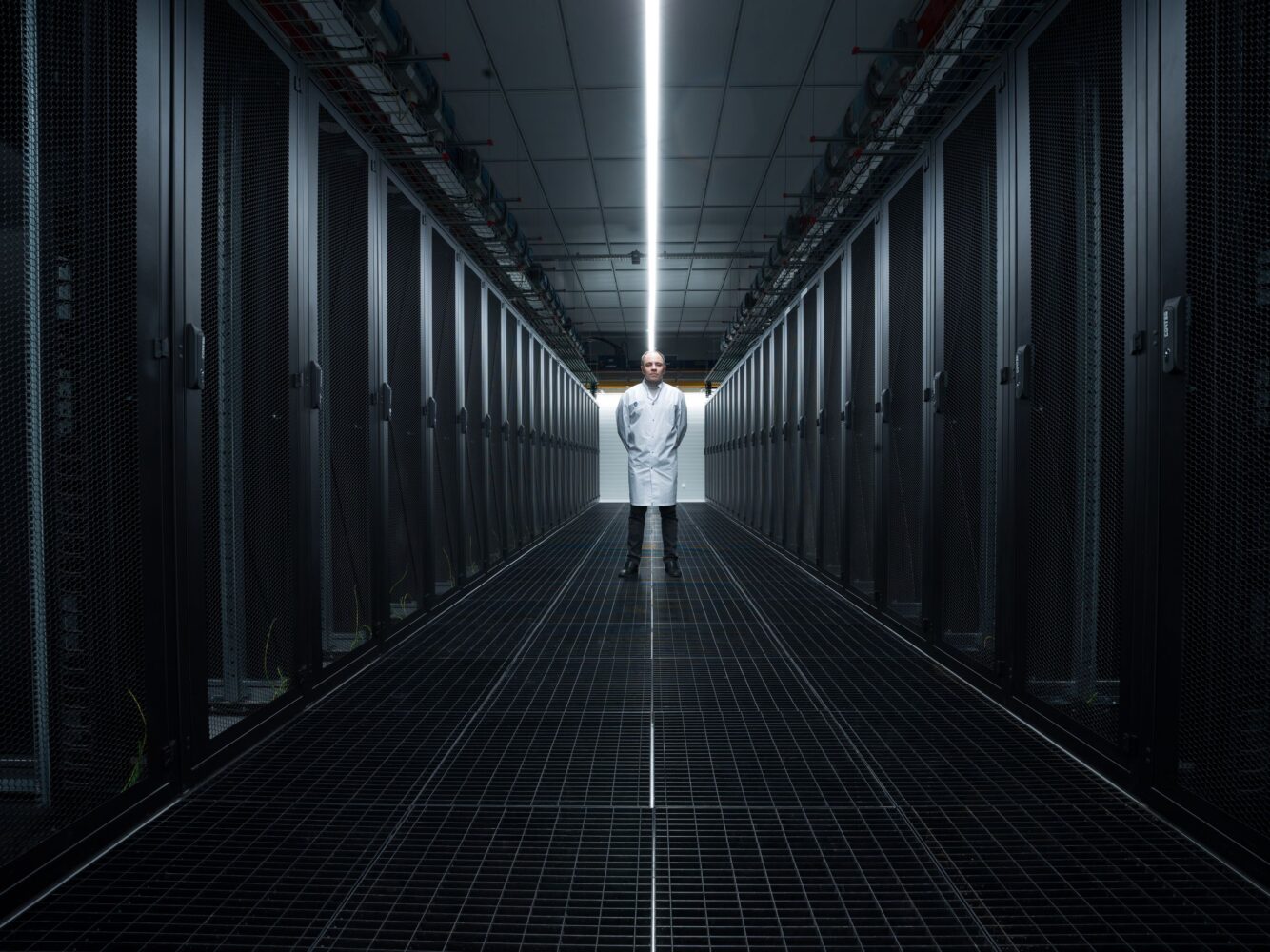
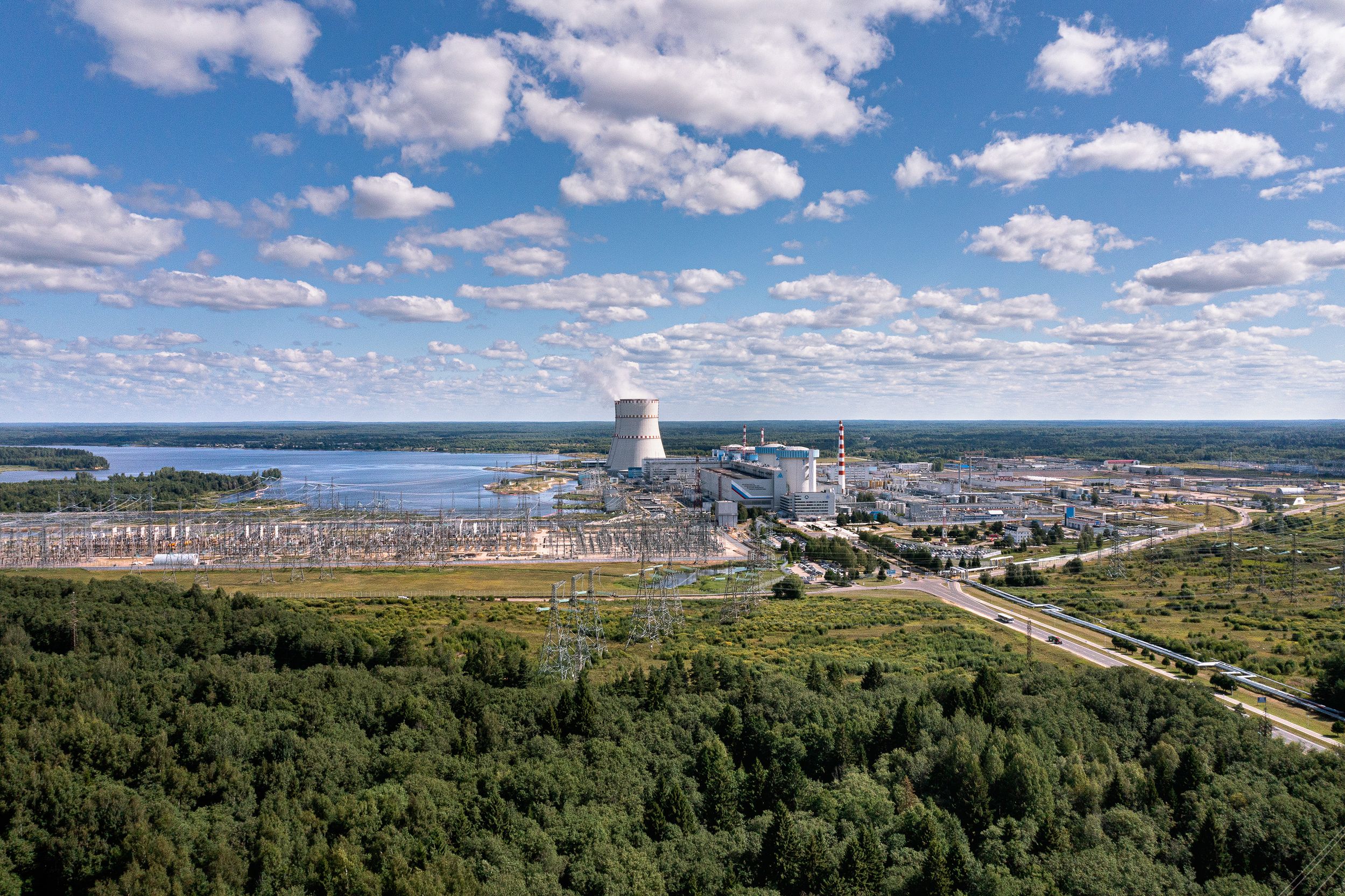
Today, Rosatom is one of the key players in the Russian data center (DC) market. Almost ten years ago, the Russian nuclear corporation pioneered a concept that is now becoming a global trend, combining nuclear power plants with data centers. In 2018, a data center was commissioned near the Kalinin Nuclear Power Plant. It supplies the data center with stable electricity at a fixed rate, giving the facility a competitive advantage.
Currently, Rosatom operates five high-tech data centers with a total capacity of over 93 MW and more than 6,500 rack spaces. In the near future, the company plans to deploy modular data centers at the Novovoronezh, Balakovo and Smolensk nuclear power plants in Russia.
Rosatom’s comprehensive offering for its partners includes a wide range of possibilities:
- Construction of DCs and providing them with power: DCs can be incorporated right into the nuclear plant design;
- Colocation: DCs can house customer servers and network equipment;
- Cloud services: renting computing power and building custom data centers.
Thus, Rosatom remains at the forefront of technology trends by steadily developing key digital capabilities, successfully deploying its products domestically, and offering the best solutions to both Russian and international markets.
Photo by: Rosatom State Corporation, Kalinin NPP