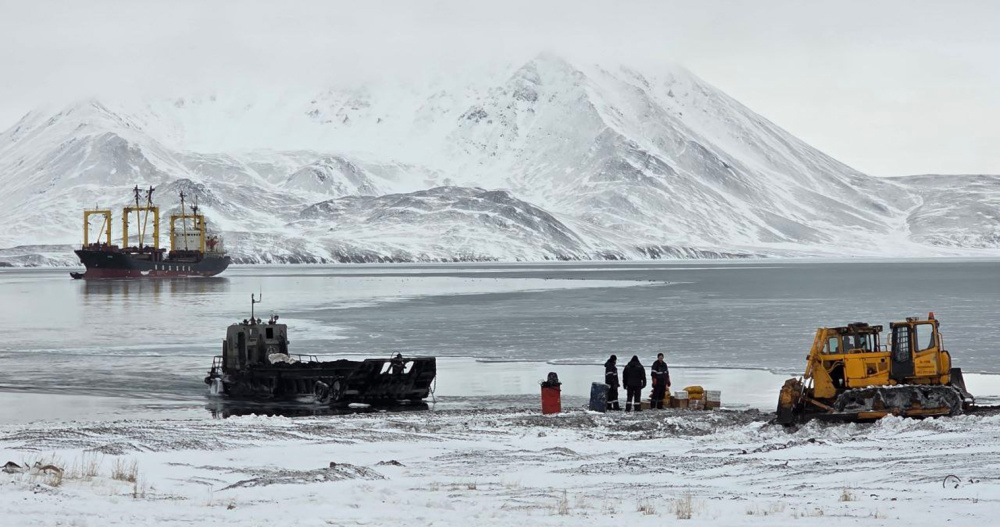
Amid disruptions to international cargo shipments via southern routes, the use of alternative options like the Northern Sea Route (NSR) is becoming increasingly relevant. A growing number of international players are expressing interest in shipping via the NSR. As the infrastructure operator for the route, Rosatom is stepping up efforts to ensure year-round voyages.
The oil market — and the logistics market more broadly — has been in a state of continuous turmoil since February of this year. Many shipments have been blocked, and there are significant risks associated with shipping through the Bab-el-Mandeb Strait. The memory of the 2021 transport collapse, caused by a container ship running aground in the Suez Canal, is also still fresh. All these developments are forcing shippers and logistics companies to seek alternative transport routes between Europe and Asia. Options include sailing around Africa or using overland railway networks. But there is another alternative: the Northern Sea Route.
“More and more nations and companies start thinking beyond the speed and cost of transportation — the safety and resilience of transport routes and logistics chains, which are less susceptible to crises, military conflicts, and other external risks, are becoming the decisive factor. Russia can offer the world such solutions,” Russian President Vladimir Putin said in a video address to the first International Transport and Logistics Forum (ITLF) held in St. Petersburg in early April this year.
The primary advantage of the NSR is the shorter transit time (roughly 20 days) for the shipping lanes between East Asia and Western Europe. For comparison, the route via the Suez Canal takes 30–35 days, while sailing around Africa takes 40–45 days.
Year-Round Navigation Is Just Around the Corner
The short navigation season used to be a major challenge for NSR traffic, but this issue has been actively addressed in recent years. This year, ice conditions in the Kara Sea are more severe than a year ago. “Despite this, seasonal navigation in the western sector of the NSR is operating almost exactly on schedule, much like a regular bus service,” Vladimir Panov, Rosatom’s Special Representative for Arctic Development, said at the ITLF.
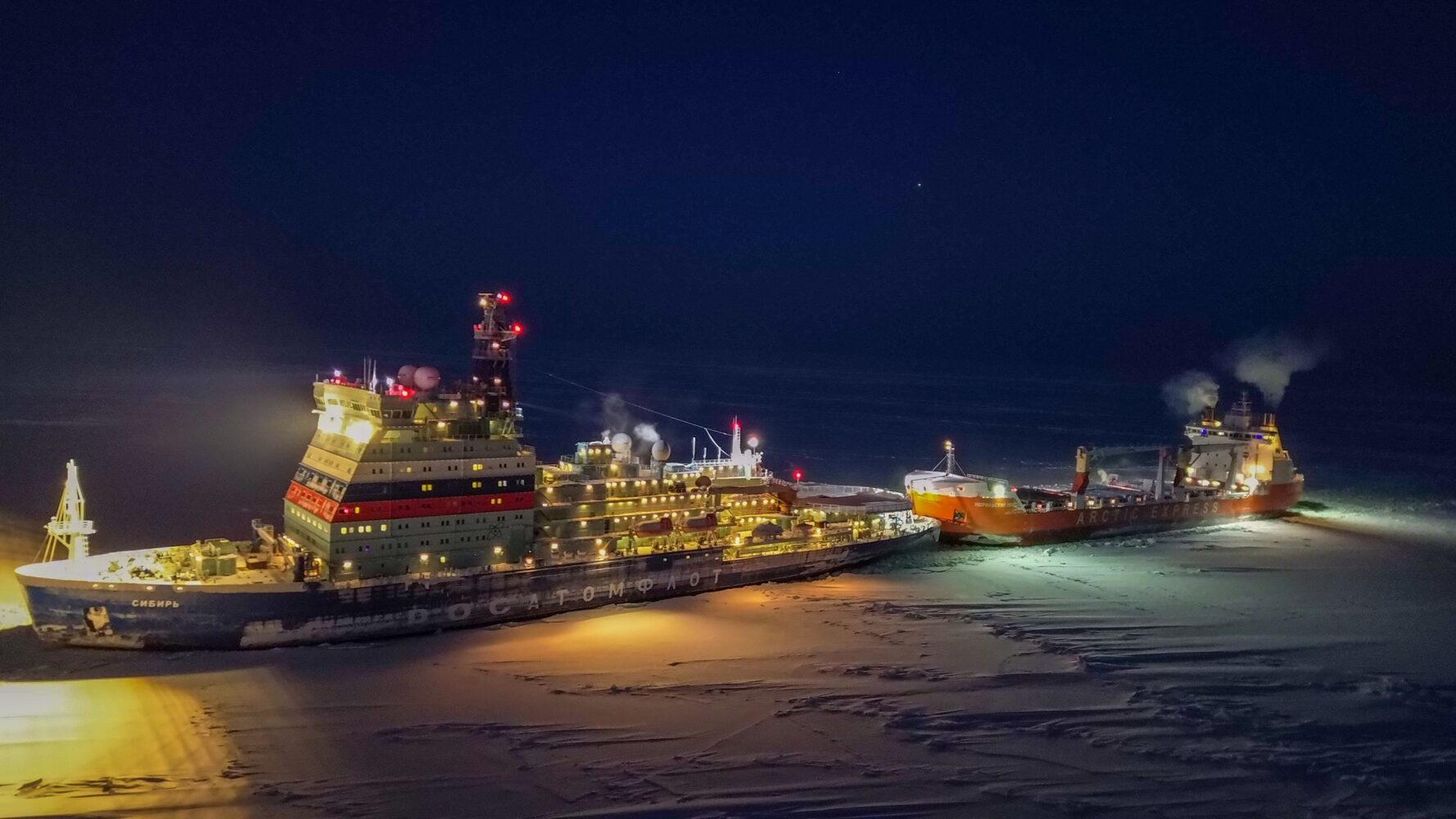
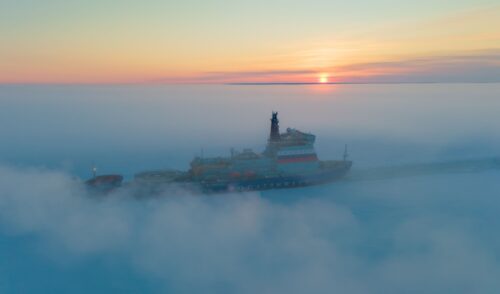
Experimental ultra-early and ultra-late voyages have been conducted under the escort of Atomflot’s nuclear icebreakers. “We have significantly expanded the navigation period in the eastern sector of the NSR, relying on the experience and capabilities of Christophe de Margerie-class gas carriers and icebreakers,” Sergey Frank, Chairman of the NSR Shipping Council, stated at the forum.
“We have put icebreakers on standby duty to ensure the safe passage of vessels, including non-ice-class ships. Perhaps the development of the eastern part of the NSR and the transition to year-round navigation will happen even earlier than we anticipate,” Vladimir Panov noted.
Test voyages will take place as early as this year. In 2026, Sovcomflot expects to take delivery of two more Arc7 ice-class LNG carriers that will operate year-round along the entire NSR. “This will happen for the first time in human history. We plan to organize a year-round service during the 2026–2027 navigation season,” Sovcomflot CEO Igor Tonkovidov said at the ITLF. By 2028–2030, the transit interval for high ice-class vessels on the NSR could be reduced to 12 hours, Sergey Frank believes.
Icebreakers will be the key to ensuring year-round navigation. Currently, there are eight nuclear-powered icebreakers operating in the Arctic. Four of these are new multi-purpose Project 22220 icebreakers. Three more icebreakers of this design (Chukotka, Leningrad, and Stalingrad) are currently under construction. Rossiya, the lead icebreaker of Project 10510 series, is also being built. It is designed specifically for year-round navigation on the NSR and will be the most powerful icebreaker in the world.
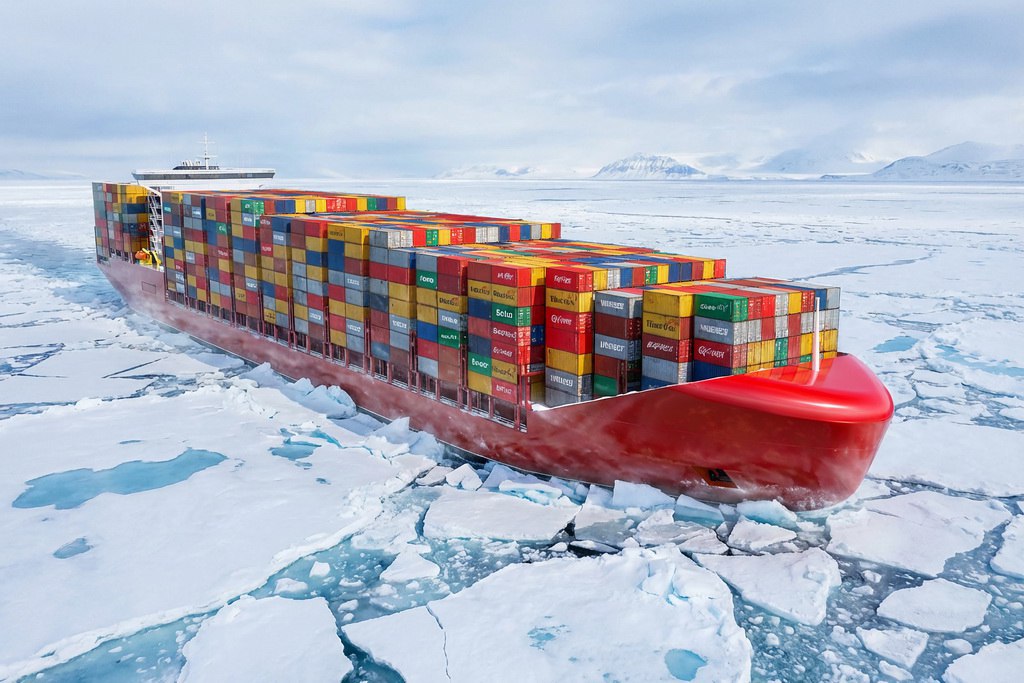
International interest in the NSR is growing. Chinese companies have been conducting container voyages for several years and are scaling up cargo volumes. Last year, a transit voyage from China to Western Europe was completed via the NSR for the first time. There is immense interest in the route from other countries in East and South Asia as well. Negotiations are currently underway with one of these countries for an inaugural container voyage, tentatively scheduled for this September.
This year’s cargo traffic is 15% above previous records, Rosatom Director General Alexey Likhachev reported at the ITLF. He also expressed hope that the figure would surpass the 40-million-tonne mark this year.
Photo by: FSUE Atomflot, United Shipbuilding Corporation, Rosatom State Corporation
This site uses cookies. By continuing your navigation, you accept the use of cookies. For more information, or to manage or to change the cookies parameters on your computer, read our Cookies Policy. Learn more