Small modular reactors (SMRs) are one of Rosatom’s flagship offerings. This comes as no surprise, given that the Russian nuclear corporation is the first and, so far, the only company in history to have built a floating nuclear power plant. And, of course, this is not Rosatom’s only SMR project. Let’s test your knowledge of Russian small modular reactors.
1. What is the name of the world’s only operating floating nuclear power plant (FNPP)?
a) Arktika
b) Sevmorput
c) Akademik Lomonosov
d) Arctic Circle
e) North Wind
2. What type of reactor is installed on this FNPP?
a) VVER‑1000
b) RBMK-1000
c) BN-800
d) KLT-40S
e) RITM-200
3. What is the nominal electric power of the two reactors on this FNPP?
a) 30 MW
b) 50 MW
c) 70 MW
d) 85 MW
e) 100 MW
4. What geographical term is used in the name of the 10 MW reactor plant currently being developed by Rosatom?
a) Reef
b) Shelf
c) Island
d) Beach
e) Cape
5. Rosatom’s flagship small modular reactor is the RITM-200. Where have these reactors already accumulated over 400 reactor-years of operation?
a) At research centers
b) On nuclear submarines
c) At the Bilibino Nuclear Power Plant
d) On the latest nuclear power icebreakers
e) They have not accumulated that much time yet
6. How many RITM-200N reactor units will Rosatom build in Uzbekistan?
a) 2
b) 3
c) 4
d) 0
e) 8
7. How often do RITM-200S reactors designed for floating power units need refueling?
a) Annually
b) Once every 2 years
c) Once every 3 years
d) Once every 5 years
e) Once every 10 years
8. Which of the following coolants is NOT being considered for SMR designs developed by Rosatom?
a) Heavy water
b) Lead-bismuth
c) Helium
d) Light water
e) Lead
9. What type of reactor is used in the BREST-OD-300 project, which falls under the IAEA’s classification for small modular reactors?
a) Pressurized water reactor (PWR/VVER)
b) Boiling water reactor (BWR)
c) High-temperature gas-cooled reactor (HTGR)
d) Sodium-cooled fast neutron reactor
e) Lead-cooled fast neutron reactor
10. Which advantage of SMRs is particularly important for consumers in isolated and hard-to-reach areas?
a) High degree of factory prefabrication
b) Compact footprint
c) Zero emissions
d) Stable generation and resilience to climate and weather fluctuations
e) All of the above
Correct answers:
1. All of the above. SMRs offer several major advantages over conventional nuclear power plants: a high degree of factory prefabrication, a compact footprint, zero harmful atmospheric emissions, and a stable energy supply. Power generation at such plants does not depend on the climate or season.
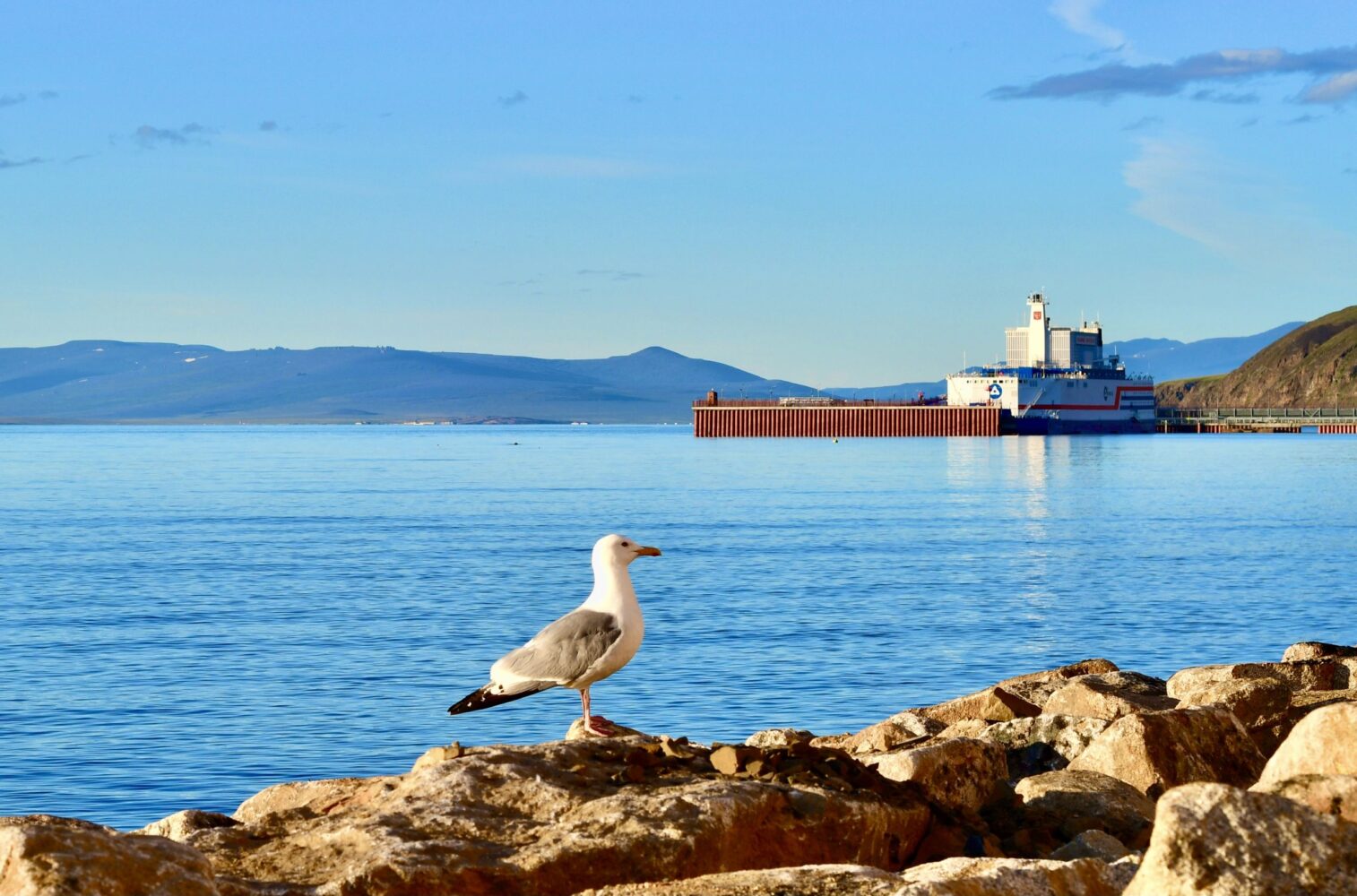
2. Akademik Lomonosov. The Akademik Lomonosov is the world’s only operating floating nuclear power plant. It is moored in the port of Pevek, Russia’s northernmost city, located above the Arctic Circle in a permafrost zone. Named after the great Russian scientist, Academician Mikhail Lomonosov, the plant was first connected to the grid on December 19, 2019.
3. KLT-40S. Two KLT-40S pressurized water reactors are installed on board the Akademik Lomonosov. They represent the continuation and evolution of the KLT reactor line used on the Sevmorput LASH carrier, and the KLT-40M reactors installed on the Taymyr and Vaygach nuclear icebreakers.
4. 70 MW. Under nominal conditions, two KLT-40S reactors can supply 70 MW of electricity to the onshore grid and up to 50 Gcal/h of thermal energy for heating district water. This is enough to provide electricity for a population of about 100,000 people.
5. Shelf. Rosatom is developing the Shelf-M design, a small modular reactor plant (around 10 MW) intended for power supply to remote areas, including offshore platforms and coastal facilities.
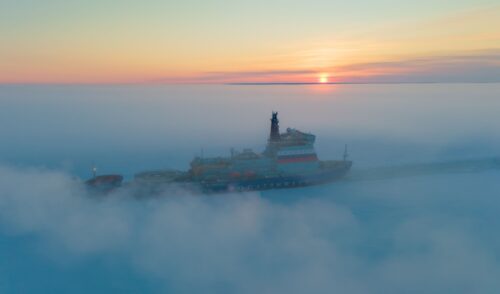
6. On the latest nuclear-powered icebreakers. All the latest Project 22220 nuclear icebreakers are equipped with RITM-200 reactors. Their design has proven highly efficient and safe at every stage of its lifecycle.
7. Two units. In March of this year, Rosatom and Uzatom signed an addendum to their contract, introducing a new, integrated configuration for the country’s first nuclear power plant. It will comprise two large power units with VVER-1000 reactors and two small modular reactor (SMR) units with RITM-200N reactors, each with a capacity of 55 MW. When the nuclear plant operates at full capacity, it will generate around 17.2 billion kWh per year, covering up to 14% of Uzbekistan’s total power consumption.
8. Once every five years. The reactor will be able to operate for up to five years without refueling. No nuclear fuel handling is planned at the plant site; all such operations will take place at a specialized facility.
9. Heavy water. Rosatom is developing SMRs that use light water, lead, lead-bismuth, and helium as coolants, but not heavy water.
10. Lead-cooled fast neutron reactor. The BREST-OD-300 is an innovative fast neutron reactor that uses lead as a primary coolant. The design implements the inherent safety concept and a closed nuclear fuel cycle.
Photo by: Engineering Division of Rosatom State Corporation, Floating Nuclear Thermal Power Plant, JSC “SKhK”, Wikipedia