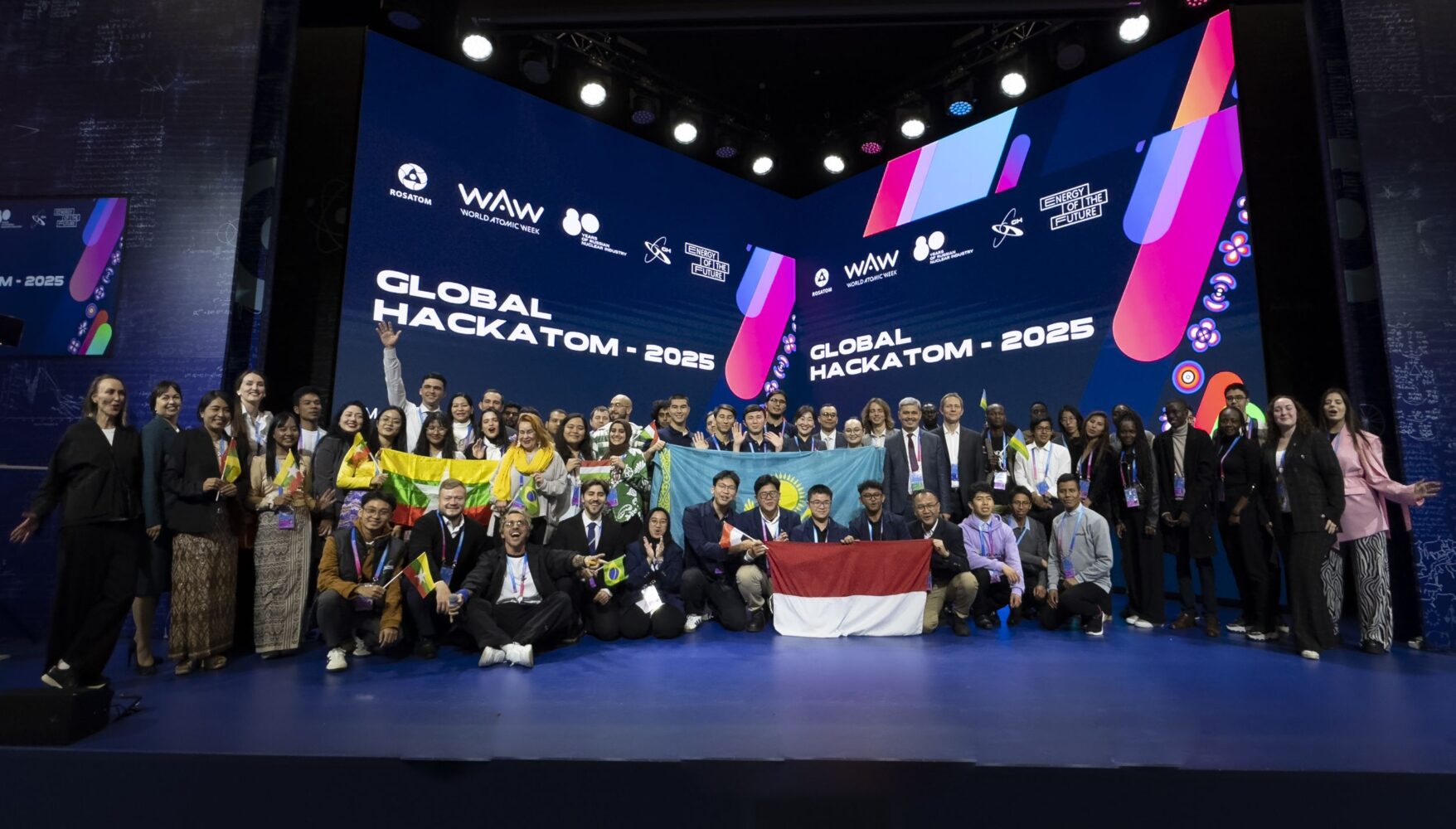
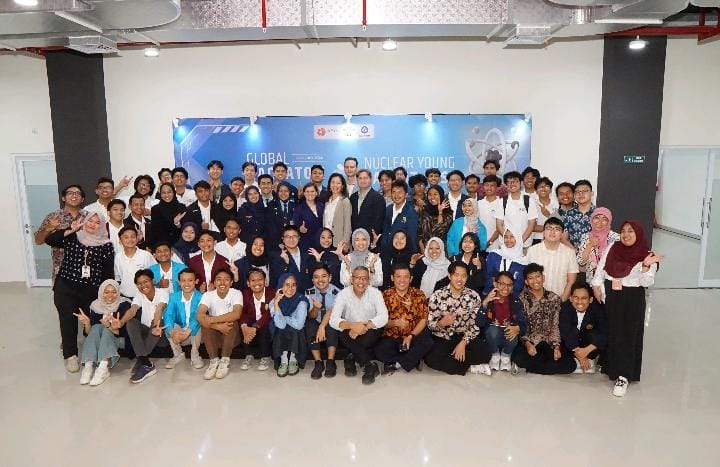
Indonesian students took second place in the final of the Global HackAtom international championship held in 2025. In just 24 hours, they proposed an unexpected solution to support astronaut health using nuclear technologies. In an exclusive interview, the five-member team with the unusual name Tahu Sumedang (Fried Tofu) shared their experience of the final and the opportunities this victory unlocked for them.
What does your team’s name mean?
Frederick Suhamdy: In Indonesia, the phrase “Tahu Sumedang” means “fried tofu.” It is a common snack sold by street vendors, especially in Sumedang, the area where our campus is located. We thought this name would be catchy and fun. We wanted to represent our homeland, Indonesia, and its rich culinary culture.
How was the team formed?
Fathi Ghifari: We are all from the same institution, Padjadjaran University. Of course, finding an idea for a project without arguing is like watching a movie without a main character. Each of the five of us looked for the best idea, and then we discussed them to make a final decision.
National stages were held before the final in Moscow. Was the competition tough?
Marsha Aziza Wardhana: I don’t remember exactly how many teams participated in the national stage of HackAtom, but I remember our reaction very well when we first saw the list of finalists: “No, we have to forget about winning.” We were all second- and third-year undergraduate students, and we had to go head-to-head with graduate students and seniors. It was a truly challenging competition.
What language did you speak during the final? Did you have any difficulties translating technical terms?
Richard Kurniawan: Within the team, we communicated in our native Indonesian, of course. With other Global HackAtom participants and the jury, we spoke English. Fortunately, we had no problems translating technical terms, because we primarily use English in our major.
Your project is one of the most human-centric: you proposed a concept of using nuclear technologies to maintain biological rhythms during space flights. Could you tell us more about it?
Marsha Aziza Wardhana: It all started with a seminar by Russian cosmonaut Anton Shkaplerov. He mentioned that astronauts are prone to depression and the feeling of isolation. So, at first, we wanted to invent something to improve astronauts’ mental health. Later, our mentor told us that all of the astronauts’ problems — cardiovascular risks, compromised immunity, or even mood instability — could share a common pathomechanism: the misalignment of the circadian rhythm, or biological clock. That is how the idea for our project was born.
The jury included representatives from Rosatom and engineering universities. Which questions from the experts were the most difficult for you, and which ones did you like?
Marsha Aziza Wardhana: The most difficult ones were about financial planning and future plans. None of us had a solid background in economics or management, so the financial part was a bit tough. But I really liked the questions about our project: what isotope we were going to use, what principles we relied on, and how our solution differed from what is currently used on the International Space Station (ISS) to regulate astronauts’ circadian rhythms.
The final brought together more than 50 participants from 10 countries. Did you feel a spirit of international scientific camaraderie?
Frederick Suhamdy: When I met the teams from other countries, I was nervous: it was my first experience communicating with international students. I was very curious to learn about their cultures and projects.
Krisi Nohan: We had fierce competition, but we still managed to make friends. Thanks to the events organized by Rosatom, we bonded with people from different countries. Personally, I became friends with the team from Kazakhstan, and we still keep in touch.
When the results were announced and you realized you were among the winners, how did you feel?
Fathi Ghifari: Amazing. Unbelievable. It felt like a dream!
If you had to describe Global HackAtom in three words, what would they be?
Fathi Ghifari: Memorable, fascinating, inspiring.
The final was dedicated to space exploration using nuclear technologies. What do you think this will look like in the foreseeable future?
Frederick Suhamdy: I am optimistic. I think the integration of nuclear technologies into spacecraft will happen in the next 50 years, as atoms are among the best options for power generation in terms of efficiency and environmental impact. As a future doctor, I hope to contribute to space exploration by ensuring the health and safety of astronauts.
What does winning Global HackAtom mean to you in the context of your future?
Fathi Ghifari: Many of us on the team are interested in developing our careers in the nuclear field. We hope that in the future we can contribute to the development of nuclear medicine in Indonesia.
Marsha Aziza Wardhana: Winning HackAtom 2025 gives me the confidence to consider nuclear and aerospace medicine as my potential majors in the future. One of our team members, Frederick Suhamdy, has even started thinking about practicing medicine in Russia.
Photo by: Rosatom International Network, ANO Energy of the Future