El Dabaa is one of the world’s largest nuclear construction projects. In late May, key pieces of equipment arrived at the nuclear power plant site. Meanwhile, Egypt’s Alexandria hosted the national stage of the Global HackAtom international student championship, where teams proposed original robotics solutions for the nuclear industry.
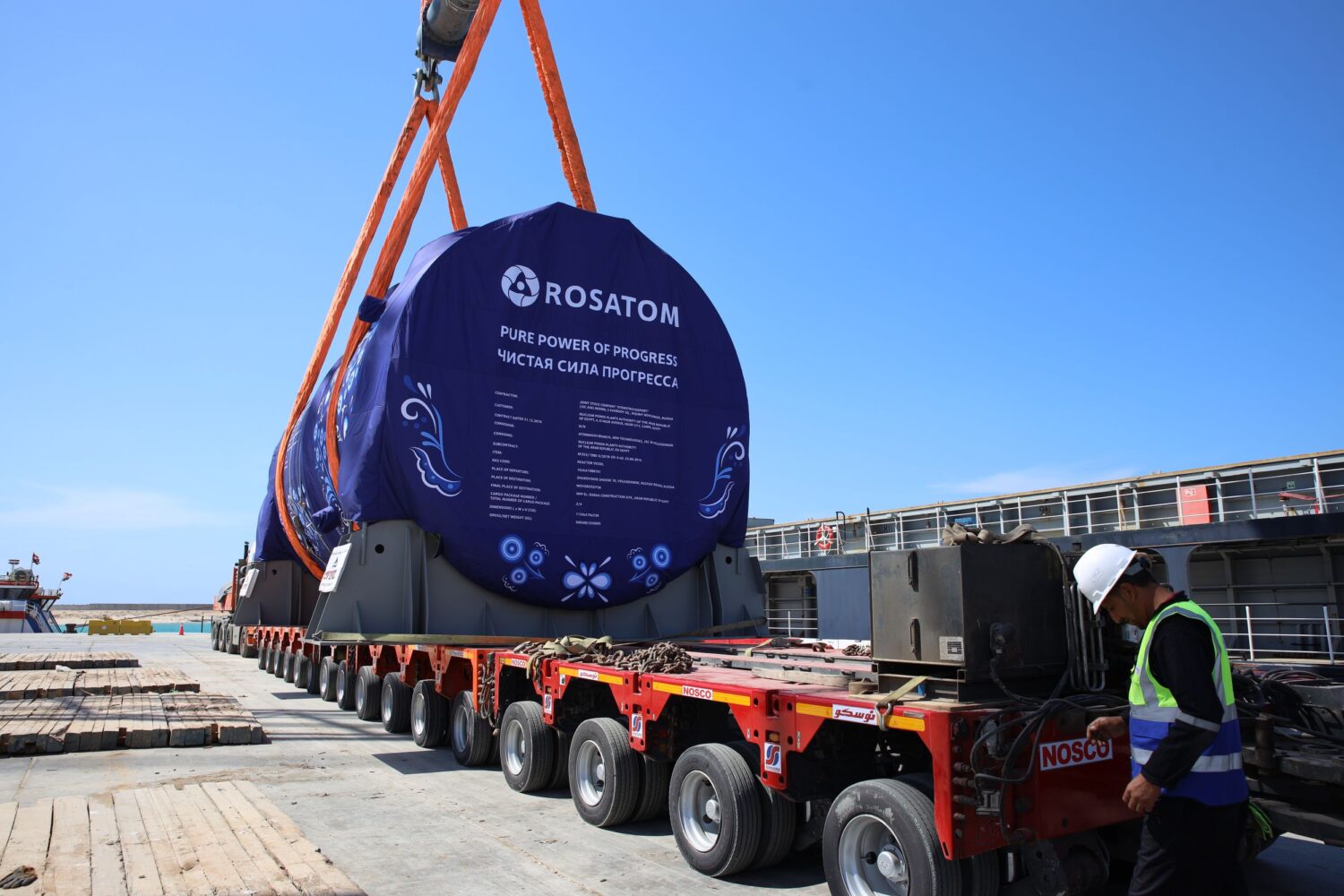
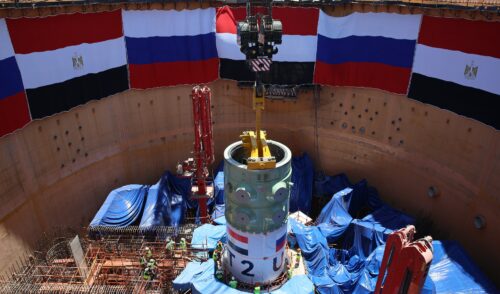
The VVER-1200 reactor pressure vessel (RPV) for Unit 2 was delivered to the El Dabaa construction site in late May. The cargo arrived at the plant’s dedicated sea port aboard the Russian vessel Aleksandr Udalov.
Apart from the RPV, the shipment included four steam generators and a pressurizer for the first power unit. The total weight of the cargo was about 2,000 tonnes, with the pressure vessel accounting for nearly 333 tonnes.
“The growing pipeline of overseas new build orders has enabled Rosatom to transition to the serial production of equipment for nuclear power plants. The components shipped to the El Dabaa NPP are necessary to proceed to pre-commissioning operations,” commented Rosatom Director General Alexey Likhachev.
The cargo was unloaded in the presence of Egypt’s Minister of Electricity and Renewable Energy Mahmoud Esmat. The minister visited the El Dabaa construction site and praised the strategic relations between Egypt and Russia and the partnership that has supported the Egyptian vision for the peaceful use of nuclear energy.
The equipment was manufactured at Rosatom’s production facility Atommash in Russia. In terms of dimensions, this shipment was the largest in its history for a single nuclear power plant. The cargo was transported by a river-sea class vessel, allowing it to be delivered from the factory pier to the construction site without intermediate transshipment.
“The delivery of the reactor pressure vessel for the second power unit is the result of a well-coordinated effort by our professionals involved at every stage — from manufacturing the equipment to organizing complex logistics and delivery to the construction site. Such tasks require a high degree of coordination and synchronization across all processes. The consistent progress of the project is ensured, among other things, by close cooperation with the Egyptian customer and a shared focus on results,” said Oleg Yakovlev, Director for Nuclear Plant Construction in Egypt and Director of AtomStroyExport’s office in Egypt.
Student hackathon
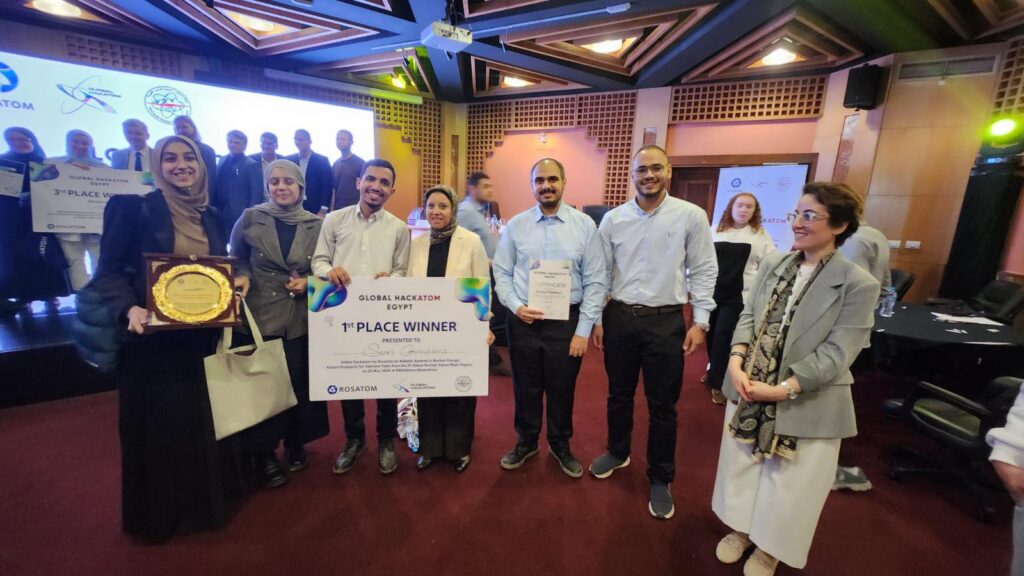
One of Rosatom’s primary objectives is to promote knowledge about the nuclear industry and develop technological and engineering competencies among youth. For the second consecutive year, the Russian nuclear corporation is holding the Global HackAtom international student championship in various countries. This year, the Egyptian national stage of the championship took place in late May at the Library of Alexandria. It brought together 11 teams representing eight universities from Cairo, Alexandria, Kafr El Sheikh, and the Matrouh Governorate. During a 24-hour marathon, the teams developed practical solutions on this year’s theme, “Robotics Systems in Nuclear Energy.” The SunGuardians team from Ain Shams University emerged as the winner. The jury commended the project for its technical originality, practical relevance, and future-oriented approach. Second and third places went to the Atom Works team from Cairo University and PantoMath from Alexandria University, respectively.
“Global HackAtom is far more than a student competition; it is an investment in the next generation of innovators who will shape the future of technology and energy. Seeing Egyptian students engage with such complex and future-oriented challenges with creativity, confidence, and technical curiosity is deeply inspiring,” noted Murad Aslanov, Director of Rosatom Country Office in Egypt.
The winning team will represent Egypt in the Global HackAtom Grand Final, which will be held in Russia in September. There, the Egyptian students will compete with top student teams from 14 countries around the world.
“Egypt’s nuclear journey is not only about infrastructure and energy generation; it is also about investing in human capital and building national expertise for the future. Initiatives like HackAtom offer young Egyptians a valuable opportunity to explore advanced technologies, think critically, and contribute ideas that reflect the innovative spirit needed to support the country’s long-term development ambitions,” concluded Khaled Attia, Project Manager at the El Dabaa Nuclear Power Plant.
Photo by: ASE JSC, Engineering Division of Rosatom State Corporation, ASU (Ain Shams University)
This site uses cookies. By continuing your navigation, you accept the use of cookies. For more information, or to manage or to change the cookies parameters on your computer, read our Cookies Policy. Learn more