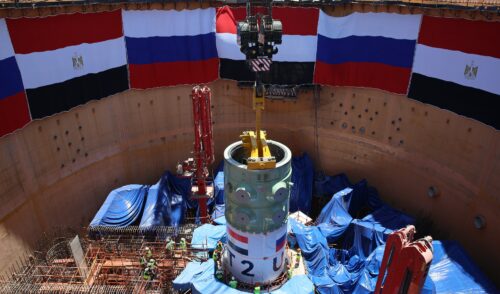
Russia has increased its contribution to the construction of the International Thermonuclear Experimental Reactor (ITER). In June, the Russian team installed the first three gyrotron systems at the site of the world’s first fusion reactor designed to produce net energy. Previously, Russia secured an order for 20 more such devices. Cooperation is also expanding across other areas.
The goal of the ITER project is to demonstrate the scientific and technological feasibility of using fusion energy on a commercial scale and to validate the necessary technologies. As an initiator and one of the key contributors to the project, Russia designs, manufactures, and supplies 25 ITER systems (including all central divertor assemblies, 40% of the first-wall panels, switching equipment, diagnostic systems, blanket module connectors, and more).
Pietro Barabaschi’s visit
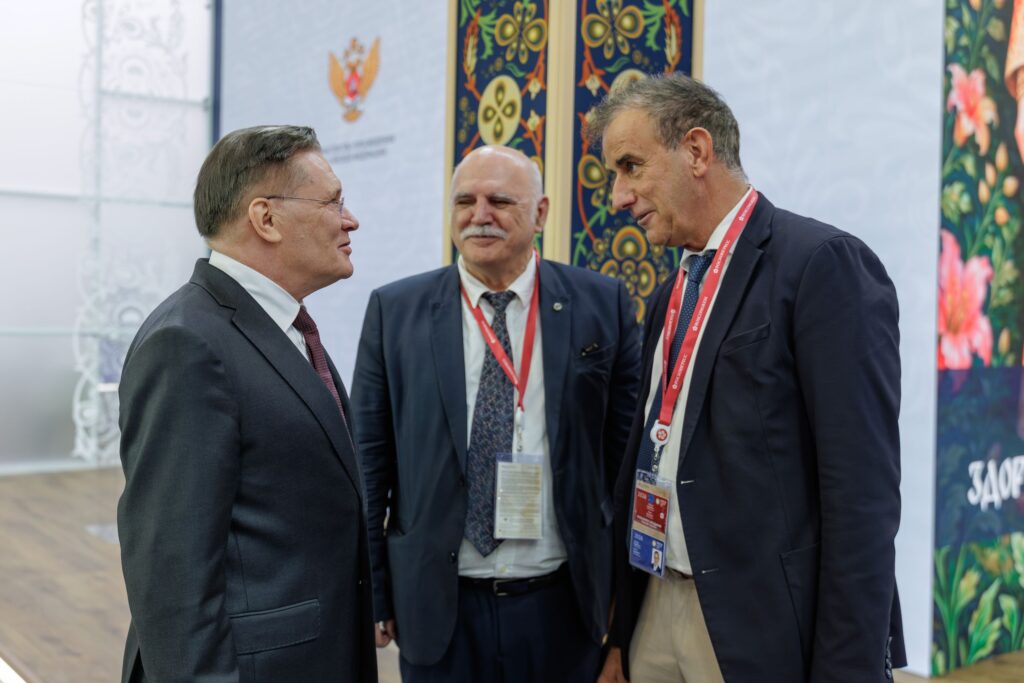
The Director General of the ITER Organization spoke at the Saint Petersburg International Economic Forum (SPIEF) and discussed training and secondment opportunities for Russian engineers at the ITER project with Tatiana Terentyeva, Rosatom’s Deputy Director General for Human Resources. The parties agreed to explore various options for representatives of Russian educational and research institutions. “It is a great pleasure to visit Russia again and participate in a landmark event like SPIEF. I am very glad that Russia continues its active participation in the ITER project. The project is currently in a swift implementation phase, and only through the closest possible cooperation will we be able to achieve success,” Pietro Barabaschi said at SPIEF.
More gyrotrons
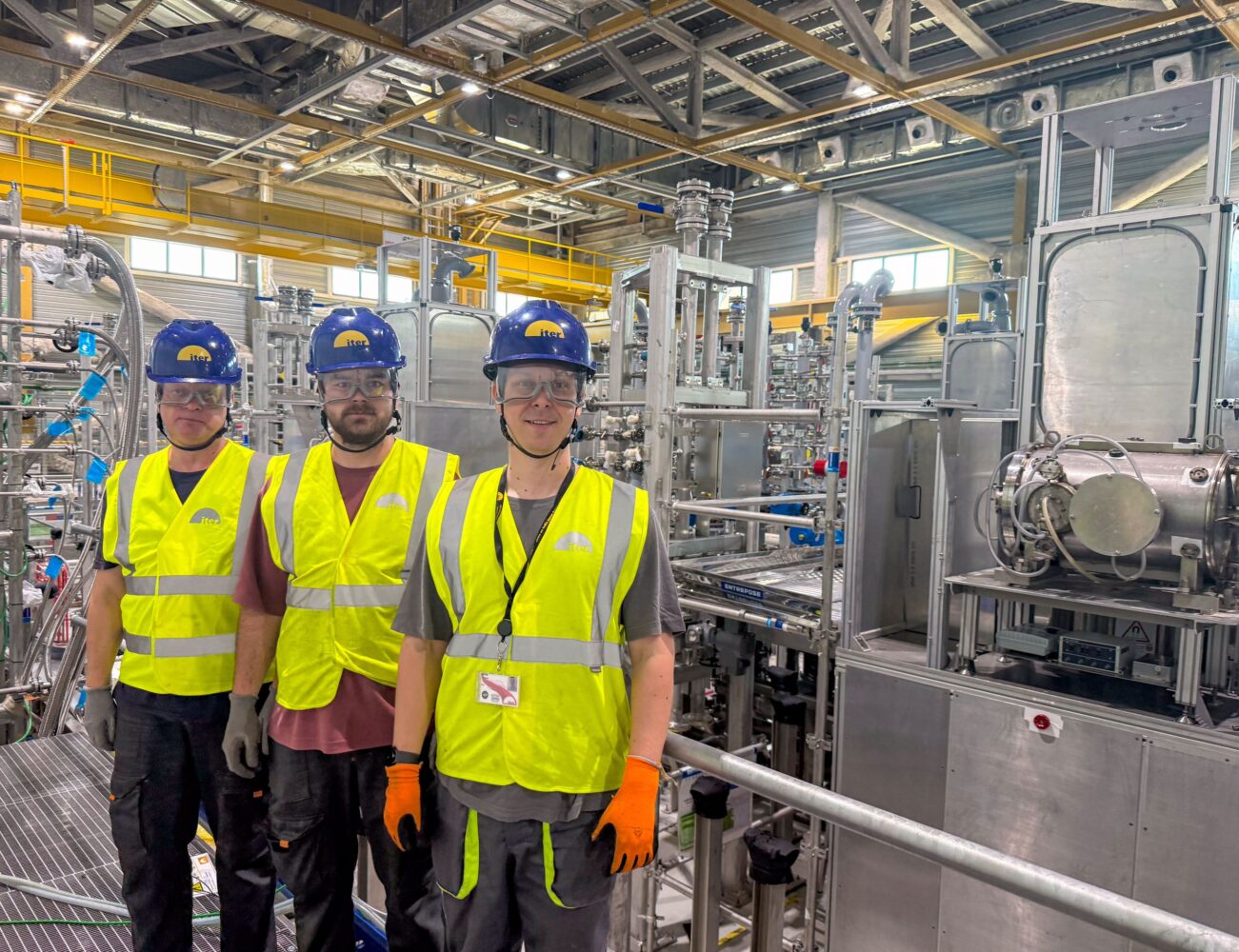
In June, technical specialists from the Institute of Applied Physics of the Russian Academy of Sciences (IAP RAS), the GYCOM research and production enterprise, and Rosatom’s ITER Project Center installed three Russian-made gyrotron systems at the ITER construction site. The assembly and installation process took six weeks.
“The plasma temperature in ITER will reach 300 million degrees Celsius, which is 20 times hotter than the core of the Sun. Heating plasma to such temperatures requires systems of immense complexity. This has never been done before. Russian systems with record-breaking technical specifications will help achieve this,” emphasized Anatoly Krasilnikov, Director of the ITER Project Center.
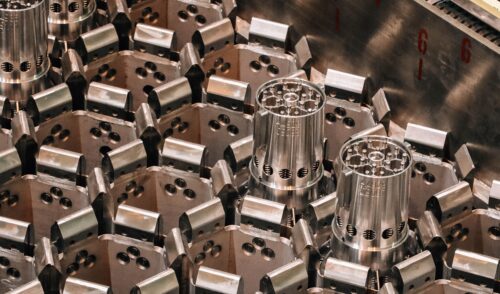
Gyrotrons are needed to heat deuterium-tritium plasma using electron cyclotron resonance heating (ECRH), one of three heating methods utilized in ITER. Invented in the USSR in the 1960s, a gyrotron is capable of generating electromagnetic radiation with an output of several megawatts. With a wavelength of approximately 1 mm, the radiation can be focused on a small target to heat it to extreme temperatures.
Initially, the ITER design provided for 24 gyrotrons. Europe was to manufacture six of them, India two, and Japan and Russia eight each. “Eight Russian gyrotrons have been manufactured, four have been delivered to France, and three have been installed. Japan has manufactured and delivered eight gyrotrons. Two have been assembled, and one is undergoing tests. ITER has not yet accepted the European-made gyrotron. India plans to supply Russian-designed gyrotrons by simply purchasing them from us,” Andrey Fokin, Laboratory Head at IAP RAS, told the Strana Rosatom newspaper.
Two years ago, due to difficulties in securing approval from the French regulator, the ITER management decided to abandon beryllium as the first-wall material and replace it with tungsten. Consequently, the importance of gyrotrons for ITER grew significantly: a decision was made to increase their total capacity from 20 MW to 80 MW. In 2025, ITER signed contracts with Russia and Japan to manufacture and supply an additional 40 gyrotrons, 20 from each country. “It is possible that we and the Japanese will receive an order for four more systems if other project members fail to meet their targets,” Andrey Fokin added.
Ahead of schedule
In late June, the ITER Organization headquarters hosted the 38th meeting of the ITER Council. It was noted that the project is proceeding well ahead of schedule, reflecting the well-coordinated efforts of the international project team. “The pace of construction for this unparalleled facility has increased sharply. To maintain this momentum going forward, it is essential to strictly fulfill all commitments undertaken by each party, and those commitments have grown significantly. I hope that all high-tech components can be delivered here from Russia strictly on schedule, despite the well-known restrictions,” commented Victor Ilgisonis, Rosatom’s Director for Technology Research and Development and Russia’s representative on the ITER Council.
In the autumn of 2026, the Russian ITER Project Center plans to ship control racks for the gyrotron systems to the site. This will be the largest delivery related to these devices in 2026. Several other major shipments are also scheduled for this year.
This site uses cookies. By continuing your navigation, you accept the use of cookies. For more information, or to manage or to change the cookies parameters on your computer, read our Cookies Policy. Learn more