Rosatom is the global leader in small-scale nuclear generation solutions. This status was underscored by the first-ever export contract for electricity supply from floating power units (FPUs), signed with an Indonesian company. Earlier, the Russian nuclear corporation secured the world’s first export deal to build a small modular reactor (SMR) plant in Uzbekistan, where site work is now in full swing.
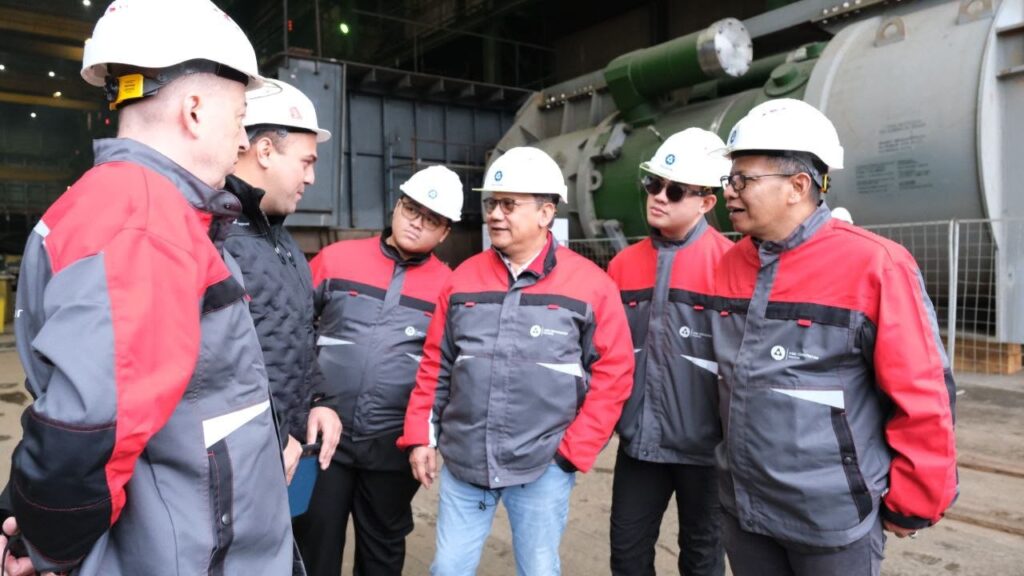
At Russian Energy Week on October 16, Rosatom and Indonesia’s PT Pembangkit Listrik Nuklir signed an agreement to supply electricity to Indonesian consumers. Two PEB-100 floating power units, with a combined capacity of 200 MW, will deliver power to Halmahera Island in North Maluku. The deal marks Rosatom’s first export project to supply electricity from floating power units. It’s also the world’s first electricity sales agreement between two countries that do not share a border, according to Rosatom Director General Alexey Likhachev. “We are selling electricity to the other side of the world. Our unique solution makes this approach replicable as well,” he said.
The two PEB-100 floating power units will be equipped with RITM-series reactors. RITM-200 reactors have been operating aboard Russia’s nuclear-powered icebreakers since 2020, demonstrating their efficiency, reliability and safety. Indonesian consumers are expected to receive the first electricity five years after the main terms of the power supply contract take effect. The arrangements cover the entire lifecycle of the power units.
“Cooperation between Rosatom and Indonesia is developing very rapidly. Our recent meeting with President Prabowo Subianto confirmed that the world’s largest archipelagic state is steadily advancing toward stronger energy security and carbon neutrality,” Likhachev commented on the signing.
“As national investors, we see supporting Indonesia’s energy transition as both our priority and our responsibility. It is essential to emphasize that this is a commercial B2B project, funded by private investment without drawing on Indonesia’s state budget. We are honored to take part in this historic partnership,” said Yudi Utomo Imardjoko, CEO of PT Pembangkit Listrik Nuklir.
“I am confident the global business community will view it as a compelling example of how the private sector can, with consistent government support, initiate large-scale infrastructure projects in nuclear generation capable of transforming a nation’s economy. Beyond electricity supply, we are discussing the start of a long-term partnership,” Likhachev emphasized.
Land-based SMRs
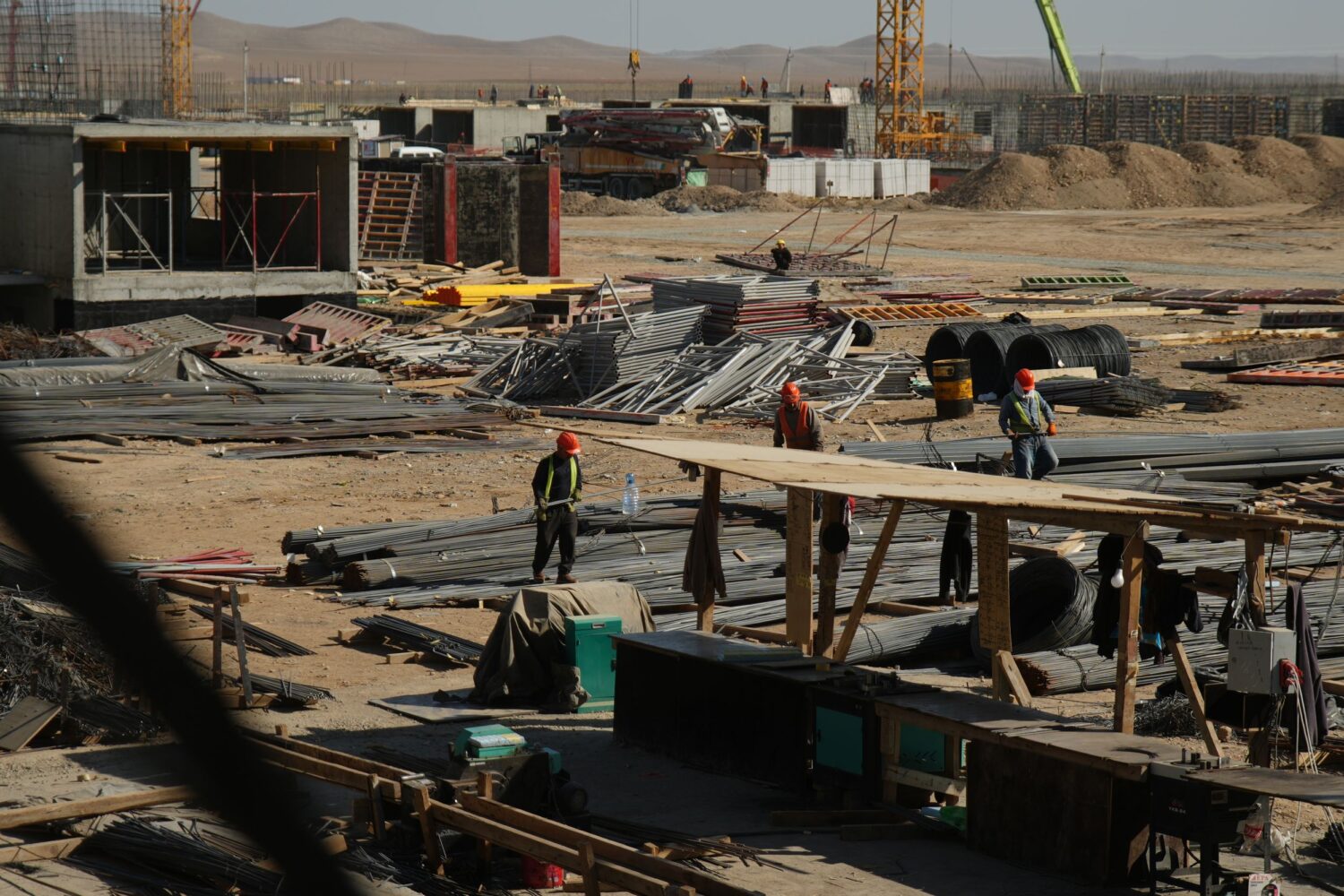
In October, Likhachev visited the construction site of the integrated nuclear power plant being built in Uzbekistan’s Jizzakh Region. Concrete pouring for the foundation slab of the first small-capacity power unit has been underway since June 4, with foundation work scheduled for completion by the end of 2026.
Alongside the plant, a satellite town is under construction to house more than 30,000 future plant employees and their families. The town will feature comprehensive social, educational, medical, and public infrastructure. An industrial cluster is planned 25 kilometers from the plant site.
The day after touring the site, Likhachev met with Uzbek President Shavkat Mirziyoyev. He briefed the president in detail on the completion of key project milestones, near-term production targets, and the construction of the plant’s satellite town. The two parties also discussed prospective areas of cooperation in nuclear medicine, additive manufacturing, and the training of local engineering and research personnel. Likhachev thanked the president for his personal attention to the development of Uzbekistan’s nuclear industry and his support for joint initiatives, reaffirming Rosatom’s commitment to broader collaboration.
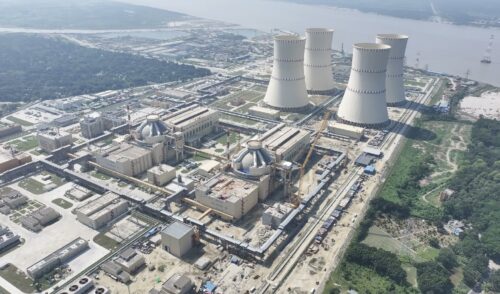
The Jizzakh facility is being built under the world’s first export contract for an integrated nuclear power plant, which will combine two large-capacity power units of 1,000 MW each and two 55 MW small modular reactors. Once fully operational, the plant will meet up to 14% of the country’s electricity demand.
Floating Units for Africa
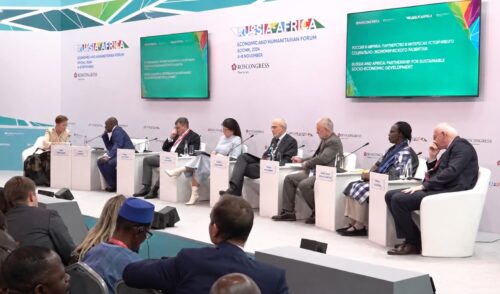
Russian small-scale nuclear generation solutions — particularly floating power units — are drawing interest worldwide, including in Africa. Speaking after the Russia-Africa Summit, Likhachev said: “Our floating nuclear power units drew enormous interest. Of Africa’s 54 states, 38 have access to the sea. Most of them have grid infrastructure that, by our standards, is modest and suited to medium- and small-capacity generation. As many as nine countries expressed strong interest in the technology. We are already in substantive discussions on projects for Egypt, Tanzania, Togo, and Namibia.”
Photo by: Rosatom International Network, Strana Rosatom newspaper, Rosatom State Atomic Energy Corporation