Alexander Merten, the head of “Rusatom – International Network” (RIN) told about ROSATOM’s plans of expansion of its foreign centers network. He noted that ROSATOM has opened more than 10 regional centers across the world. The centers function in Eastern Europe with the head office in Kiev, in Central Europe (Prague), Central and Southern Africa (Johannesburg). Today, a team for the regional center in South East Asia with the headquarters in Singapore is being built. In October, ROSATOM launched a regional center in Western Europe with the office in Paris. The plans are to set up regional centers in the Middle East and Middle Asia before the end of this year.
To unfold the net
ROSATOM’s companies manufacture a broad range of products, render various services not only in nuclear power, but not all of them are represented abroad. It was decided to set up regional centers of the Corporation to develop relations with foreign partners and inform them on capabilities and competences of ROSATOM and its companies. One more important goal of such centers is reduction of sectoral foreign economic activity expenditures. “The Corporation’s regional offices operate in the interests of all divisions; each company doesn’t need to set up an office abroad. Moreover, RIN offices are set up following the logic where “one office is responsible for the work in the whole region.” “For example, the office in the RSA covers Southern and Central Africa,” Merten explains. “On the whole, one regional center substantially reduces business travel expenses existing today, consultancy expenses and helps to significantly economize on regional and local PR events through involvement of local contractors by the regional centers,” he says.
The first regional office abroad was started three years ago in Kiev as the East European branch of Atomenergoprom (the integrated company, which consolidates civilian assets of the Russian nuclear industry). Later, it was reorganized into a regional office of Rusatom Overseas and then into an affiliated company of the RIN. “Now, it is the leader among our regional centers. The Kiev-based team of the RIN demonstrates a good result. This regional center, Rusatom – Eastern Europe, covers six countries: Ukraine, Belarus, Lithuania, Latvia, Estonia and Moldova,” Merten noted.
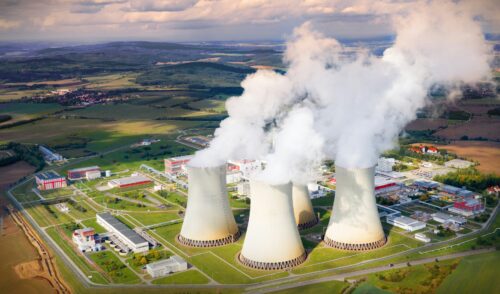
Active work has started in the RSA. At the 58th IAEA General Conference ROSATOM signed with that country an agreement of the strategic partnership in the nuclear power development. “Regretfully, the tender for construction completion of two reactors at Temelin NPP in the Czech Republic was cancelled. Our office in Prague took the most active part in the tender and drafting of documents. But it covers Central Europe. We have serious prospects also in Hungary and other countries,” the head of “Rusatom – International Network” says.
Merten believes that deployment of the network of regional centers within the coming three years will bring about a growth of international proceeds by 30% and a 30% reduction of overall sectoral expenditures for the external economic activities.
An impeccable image
The complexity of relations with the United States will not hinder opening centers there. “ROSATOM’s companies have not been imposed with the sanctions and we hope much that, given the features of the nuclear industry and impeccable image of the Corporation as a reliable partner, this will not happen,” Merten noted. He emphasized that in the international activity the main thing is safety, reliability of technologies and economic reason. “We believe that our partners will proceed from these principles,” he concluded.
Politics will not hinder operations of the center in Kiev. “Ukraine has always been a historically important partner; there is the second largest fleet of nuclear reactors built to the Russian technologies there. Now 15 power units at four NPPs operate in Ukraine, with nuclear power having a share up to 50% in Ukraine’s energy mix,” Merten reminded. “Nuclear power complexes of our countries have always operated closely. They built their relations on the principles of respects and mutual benefit. And we hope much for continuation of this cooperation and that our colleagues have common sense and economic interests will prevail over political preferences,” he said.