Fast breeder reactors have been developing in Russia since 1949. The BR-1 zero-power reactor, started up in the Institute for Physics and Power Engineering (IPPE) in 1955, confirmed the possibility of plutonium breeding. The BR-5 reactor, operating since 1959, gave first important data in physics, radioactive sodium technology, fuel elements working capacities, needed for developing sodium fast reactors. The BOR-60 reactor in Dimitrovgrad, operating since 1969 is used for fuel life cycle tests, tests of fuel assemblies and new active zones, for testing new steam generator models or studying new technologies. BN-600 (village of Zarechny, Penza region, started up in 1980) is a power reactor, operating in the power system of Middle Urals as unit 3 of the Beloyarsk NPP. The reactor has an advanced integral packaging, good energy parameters, is of high safety and efficiency and almost doesn’t affect the environment.
Further work on fast reactors is connected with designing new units of increased safety and improved economic ratio. The realization of the BN-800 project is very important for complex practical studying of fast reactors and fuel cycle.
Fast technology
800 MW power units with fast breeder reactors are actually improved version of BN-600. The increase of power from 600 to 800 MW is achieved safe. The basis is traditional homogeneous zone with mixed uranium-plutonium oxide fuel. It’s the first experience of industrial use of this kind of fuel for power reactor in our country.
Any type of isotopic plutonium composition, produced in thermal reactor and further in a fast reactor, can be used for the fuel. In BN-800 there are three zones with different fuel enrichment. Increasing the number of control bodies up to 30 helped to create two independent systems of affecting reactivity and provide meeting the requirements of safety normative documents.
There is one 800 MW turbine and two main feed pumps with pipeline installed in the turbine island. In order to improve hydrolycity it is required to produce high and low pressure stainless steel heaters.
The increase of number of NPP constructions resulted in further safety restrictions, which touched upon fast breeder reactors as well. So some engineering design features used for BN-600 had to be revised and changed.
Thus, for timely detection of heat-removal conditions aggravation in separate parts and getting information on the first stage of ultimate design-basis accident now there is analysis, signal processing and “giving an operator a piece of advice” concerning sodium boiling, acoustic and neutron noises.
For the BN-800 unit there are emergency cooling systems via “sodium-air” secondary coolers, attached to every loop of the second circuit in parallel to steam generators. The system provides for breakdown heat-removal in case of loss of power or feed-water. The BN-800 project suggests the presence of a remove shutdown panel. The systems and tools put to the panel are determined by the following tasks: reactor shut-down and conduct control of main neutron and technological parameters, characterizing the cooldown and control of parameters, determining the conditions of premises and installment systems in terms of fire safety.
The emergency shut-down rod fast entry control system consists of two sets, each of them managing all the rods. The independence of the sets is provided by locating them on different premises, laying different cable connections and switching to different power sources. The sets on each parameter contain three independent signal systems for shutting down parameters.
The plant
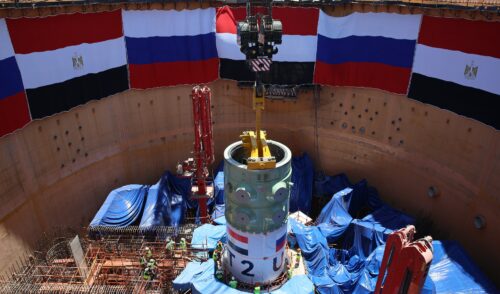
The BN-800 reactor is to provide work for unit 4 of the Beloyarsk NPP, it is now on its final stage. Today there are works on gas reactor heating-up. The next step is filling the reactor with sodium – for now this liquid metal is stored in storage containers in the power unit’s main building.
There are 5464 people currently working on the site, 400 of them doing pre-commissioning works. In the unit 4 building the following works are completed: rotating plugs hydraulic hitch alloy loading, load-off cylinders gas shut-off assembly, assembly of hydraulic actuator of the main circulating pumps inverted valve, mounting of the main rotating plug steering gear and its connection according to the scheme. The works in hardened command post of accident prevention is completed too.
The start-up of diesel generators of standby power supply of loads, important for safe reactor operation was done on site. In case of power supply failure, such as a major accident in regional power system, the NPP has multiple reserved power supply of important systems. Three channels of the BN-800 reactor power supply are provided by three diesel installments 3200 kW each, although just one would be enough for safety. Normal starting of reserved diesel-generators is automated, but can also be done by operator, if necessary.
Two more diesel generator sets 400 kW each, provide power supply redundancy to other block systems. Besides, the power unit has auxiliary 55 kW diesel-generators and mobile diesel-generator plants, making one more step of reservation. Test launch of the sets was successful; they are ready to work to provide multi-level safety.
Evgeny Romanov, the Rosenergoatom Concern General Director visited the unit in the middle of December. His previous visit had been in September 2013 and, according to him, “the situation had changed dramatically”.
“Then it used to be a construction in process, while now it is a ready object. This is seen from reports, from the picture, it is felt in the atmosphere. It is obvious that this now is the unit very close to start-up”, – noted Mr. Romanov.