Countries across Latin America are active in expanding cooperation with Rosatom in nuclear energy. At the recent World Atomic Week (WAW) international forum in Moscow, representatives from the region highlighted nuclear power’s role in ensuring energy security and sustainable development. Other news from the region include: a Brazilian team won Rosatom’s Global HackAtom competition, and a congress held in Mexico brought together experts to discuss the future of the nuclear sector in the region.
Speaking at the forum, Rosatom Director General Alexey Likhachev noted that it had become increasingly clear over the previous few years that nuclear energy was an irreplaceable component of the future global energy mix. “Thanks to the reliability, predictability, and long operational lifespans of nuclear facilities, more and more countries are choosing nuclear power as a pathway for their development,” he said.
According to Bento Albuquerque, Board Chairman at Diamante Energia (Brazil), over 30,000 people in the country still live without access to electricity. Public opinion in Brazil is highly favorable toward nuclear energy. New nuclear capacity, he emphasized, could close the electricity gap, drive sustainable development, accelerate decarbonization, and enhance national energy security.
Global HackAtom 2025 winners
A Brazilian team emerged victorious in the final of Global HackAtom 2025, a competition organized by Rosatom. The final took place in Moscow as part of the WAW youth program. The winning team, TupiTech, outperformed competitors from ten countries in a 24-hour technology marathon focused on space exploration using nuclear technologies. The jury evaluated projects based on their originality, significance, and practical applicability.
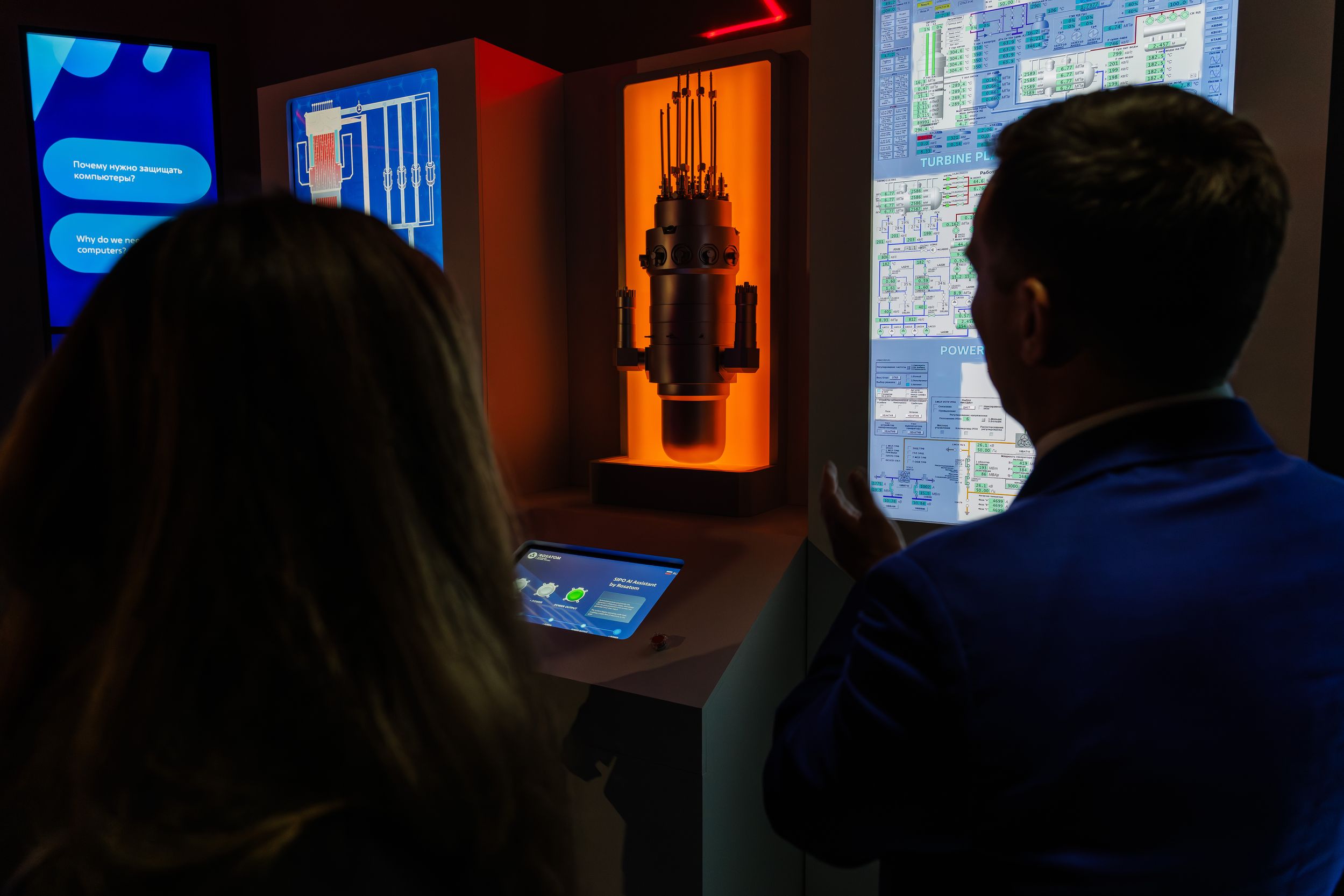
The winning project is a modular space exploration hub powered by next-generation reactors capable of producing vital resources—oxygen, hydrogen, and fuel—for long-duration missions and exploration of other planets. The project also allows for preparing humans for extreme conditions, realistically simulating system failures and emergencies, and monitoring bodily functions.
“We had the biggest brainstorming session of our lives, and we are very happy about this victory—both for ourselves and for Brazil,” said team leader Larissa Oliveira de Sá, a master’s student in nuclear engineering.
Before advancing to the global final, TupiTech won the regional round held at the Institute of Energy and Nuclear Research (IPEN) in São Paulo.
Discussing the future of Latin America’s nuclear sector
Rosatom also participated in the 36th Congress of the Mexican Nuclear Society held in Xalapa, Mexico. This year’s congress was centered on nuclear energy development programs and public acceptance of nuclear technologies in Latin America. Roman Aseyev, an administrator at Rosatom America Latina, delivered a presentation on international activities of the Russian nuclear corporation, including its operations in the region, and took part in the roundtable titled “Development of the Nuclear Industry in Latin America: Challenges and Opportunities.”
“Nuclear energy is not just a reliable and cost-effective source of power but also the foundation for energy independence, economic growth, and progress in science and education. For Latin American countries, it represents an opportunity to make a technology leap and create high-skilled jobs. However, the biggest challenge facing the nuclear industry is the deep-rooted public mistrust. That’s why transparency is one of Rosatom’s core principles. Our 80 years of experience show that nuclear energy development always begins with open dialogue built on trust and facts that dispel myths about nuclear technology and help society make informed decisions,” said Roman Aseyev.
Rosatom’s participation in key regional events underscores the corporation’s strategic commitment to deepening partnerships with Latin American countries across a wide range of nuclear technology applications.
Photo by: Rosatom, Strana Rosatom newspaper, Rosatom’s International Network