Rosatom is committed to sharing its technologies with friendly nations, providing them with energy and technology solutions for adopting a new economic paradigm and improving the quality of life. The partners of the Russian nuclear corporation reap these benefits, even during the construction of nuclear power plants. These topics, along with the prospects for Russian nuclear technologies in space, were discussed at the international Russian Energy Week (REW) forum held in Moscow on October 15-17.
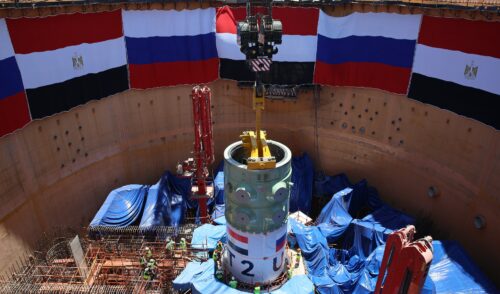
Rosatom holds about 90% of the global market for nuclear new build. There are 110 Russian-designed reactor units constructed globally. “Russia is the world’s only country with competencies across the entire nuclear energy chain. When building new capacity abroad, we do not merely construct power generation facilities but, together with our partners, create the future of the energy sector and related industries, establishing a solid foundation for the development of personnel, science, and technology on the national scale. These are the principles we follow when building nuclear stations in Egypt, Bangladesh, and Türkiye. We intend to deepen nuclear cooperation with countries of the Global South and within BRICS,” Russian President Vladimir Putin said at REW.
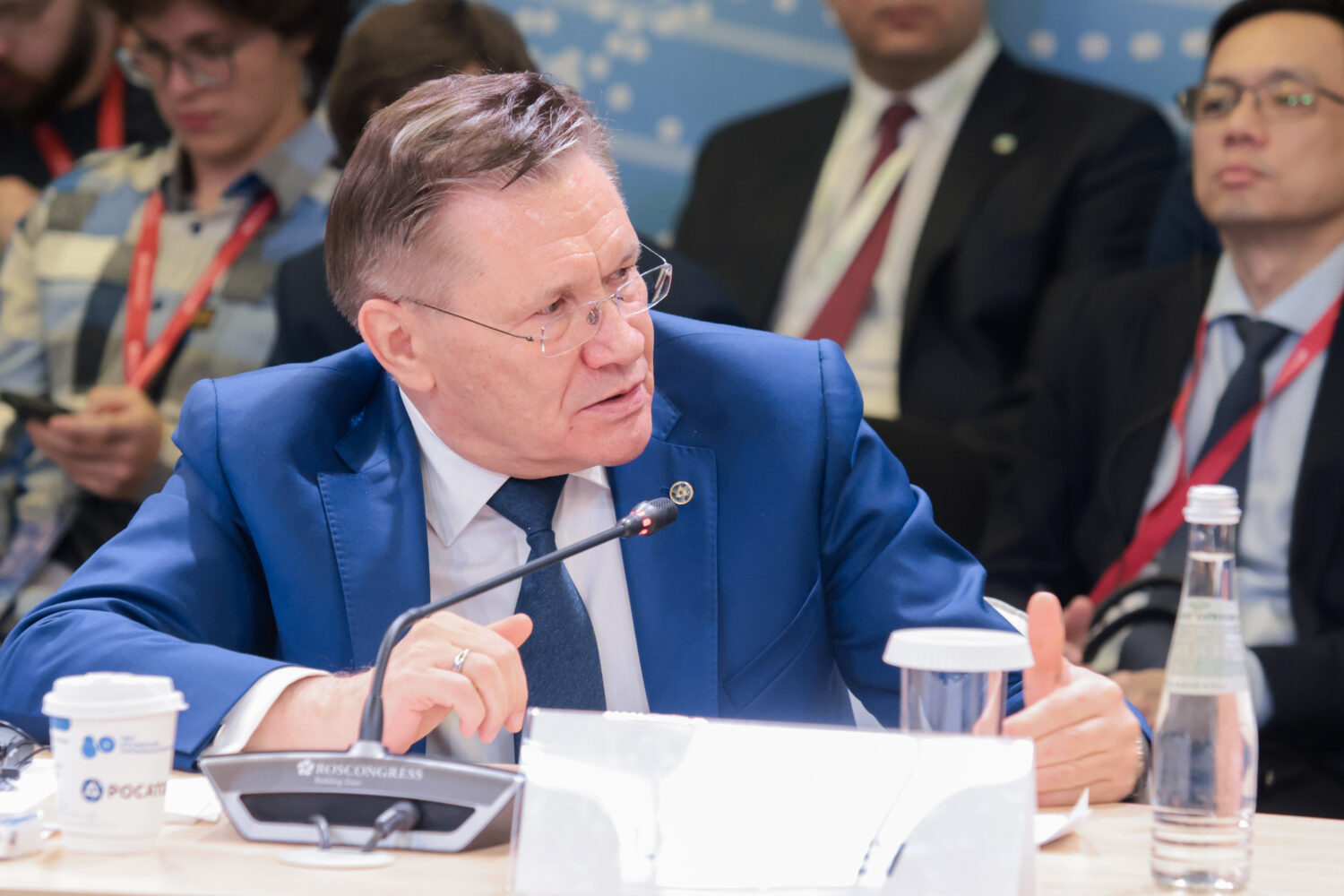
What secures Rosatom’s unrivaled position in the global market is the complete self-sufficiency of the Russian nuclear industry. “No other corporation brings together all the competencies required, from uranium exploration and mining to decommissioning and environmental projects,” Rosatom Director General Alexey Likhachev said at the plenary session.
Russian nuclear engineers have been sharing nuclear technologies since the industry’s inception, building research and power reactors worldwide. “Sharing technologies with the countries striving to build a prosperous future is in our DNA,” Alexey Likhachev emphasized.
Today, Rosatom is constructing 24 power reactors, has won a contract for a two-reactor power plant in Kazakhstan, and has agreed to expand Uzbekistan’s nuclear project, with two large and two small reactors to be built instead of six small modular reactors. Belarus has expressed its intent to construct a third large reactor; a roadmap for nuclear new build has been signed with Ethiopia, and negotiations with some other countries are in their final stages.
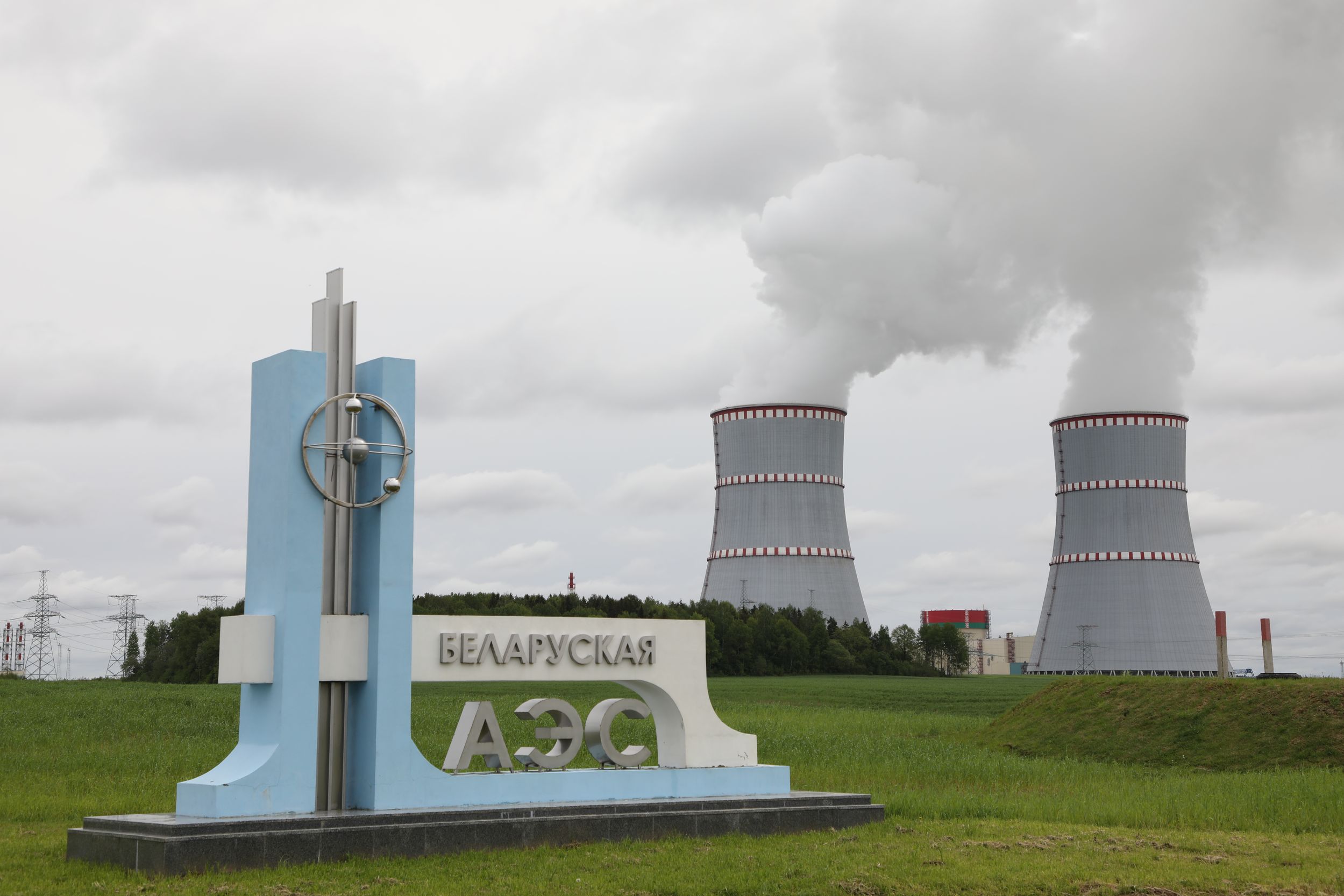
Benefits during operation
Two reactors of the Belarusian nuclear power plant supply the country with clean energy, which is used, among other things, for electromobility and heating. These systems — from generation to motor and boiler — are entirely carbon-free. There are 41,000 electric vehicles in the country, and the number is projected to reach 50,000 by the end of this year.
In Belarus, newly-built apartment buildings and individual homes are being converted to electric heating. BelEnergo, which supplies heat and electricity to the country’s major cities, has installed electric boilers with a total capacity of 916 MW.
The country is not stopping there, working on digitalization, additive technologies, nuclear medicine, energy storage systems, and more in cooperation with Rosatom. “Those who use nuclear energy have the opportunity to strengthen their energy security and also to create conditions for improving the quality and comfort of life for their people. I would go as far as saying nuclear energy is an engine of progress. And those who have nuclear energy will always be a step ahead,” said Belarusian Deputy Prime Minister Viktor Karankevich.
Benefits during construction
Türkiye is already benefiting from its Akkuyu NPP, now under construction. As stated by Türkiye’s Minister of Energy and Natural Resources, Alparslan Bayraktar, local content — meaning the share of goods and services provided by Turkish companies — exceeds 50%. “This will help us build the second and third plants, or even plants outside Türkiye. Perhaps, our companies can participate in the Hungarian project or elsewhere,” he noted.
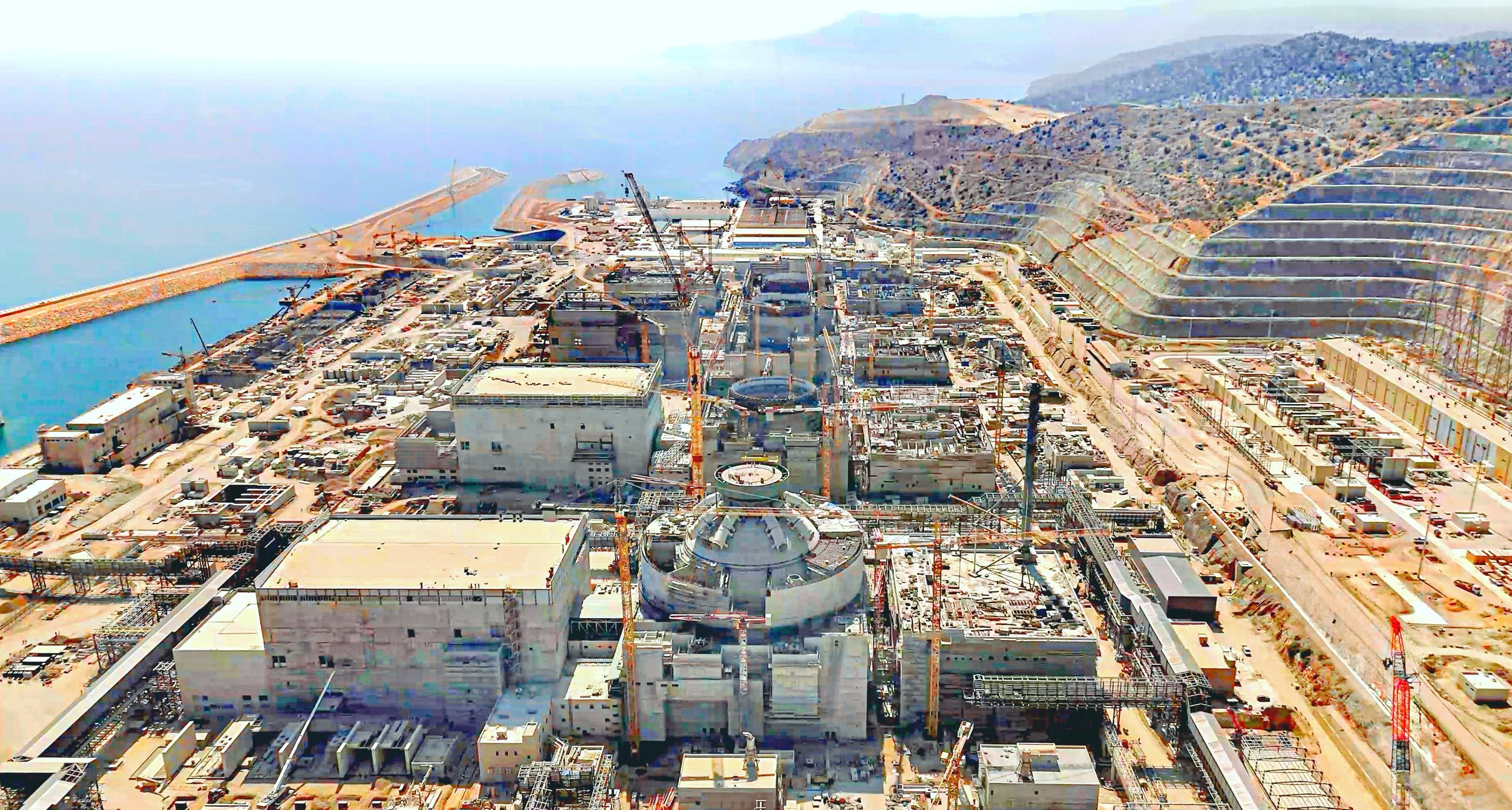
The global nuclear community has set a goal to triple the total installed nuclear capacity. Along with finance and technology, we need human capital to achieve it, the minister explained. And this is what Türkiye has: hundreds of Turkish students have received degrees in nuclear engineering from Russian universities and are already working at the Akkuyu NPP. “Developing human capital is the most important part of our nuclear energy program,” the minister concluded.
An example of how the nuclear industry positively impacts individual lives is the story of Sohyla Aboudeif from Egypt, a recipient of the IAEA Marie Skłodowska-Curie Fellowship, who also spoke at REW. Sohyla Aboudeif received her higher education in Russia, completing her postgraduate studies at the Moscow Institute of Physics and Technology. She did an internship at the Novovoronezh Nuclear Power Plant. Sohyla now works on automating and digitalizing manufacturing processes. She is also engaged in R&D activities: together with colleagues, she has created a facility for processing plastic using ionizing radiation.
Space plans
Speakers at REW also addressed how nuclear technologies shape the future. One of the most exciting areas is space exploration. “Nuclear energy is the key to the Solar System. We cannot travel far on chemical engines, and humanity would be doomed to the low Earth orbit,” cosmonaut Oleg Kononenko said at REW.
Rosatom and the Russian space agency Roscosmos are working on building a lunar nuclear power plant. It is needed there to live, work, conduct experiments, extract water ice from polar craters, produce oxygen and hydrogen for rocket fuel, and power laser communication systems. The long-term perspective includes nuclear reactors to power life support systems of extraterrestrial colonies.
“We are inspired by the task of creating a nuclear power plant on the Moon. Humanity has never solved such tasks before. But they are outlined in the national space project, so we are simply obliged to solve them,” Alexey Likhachev said in conclusion.
Photo by: Roscongress, Akkuyu Nuclear JSC, ASE JSC