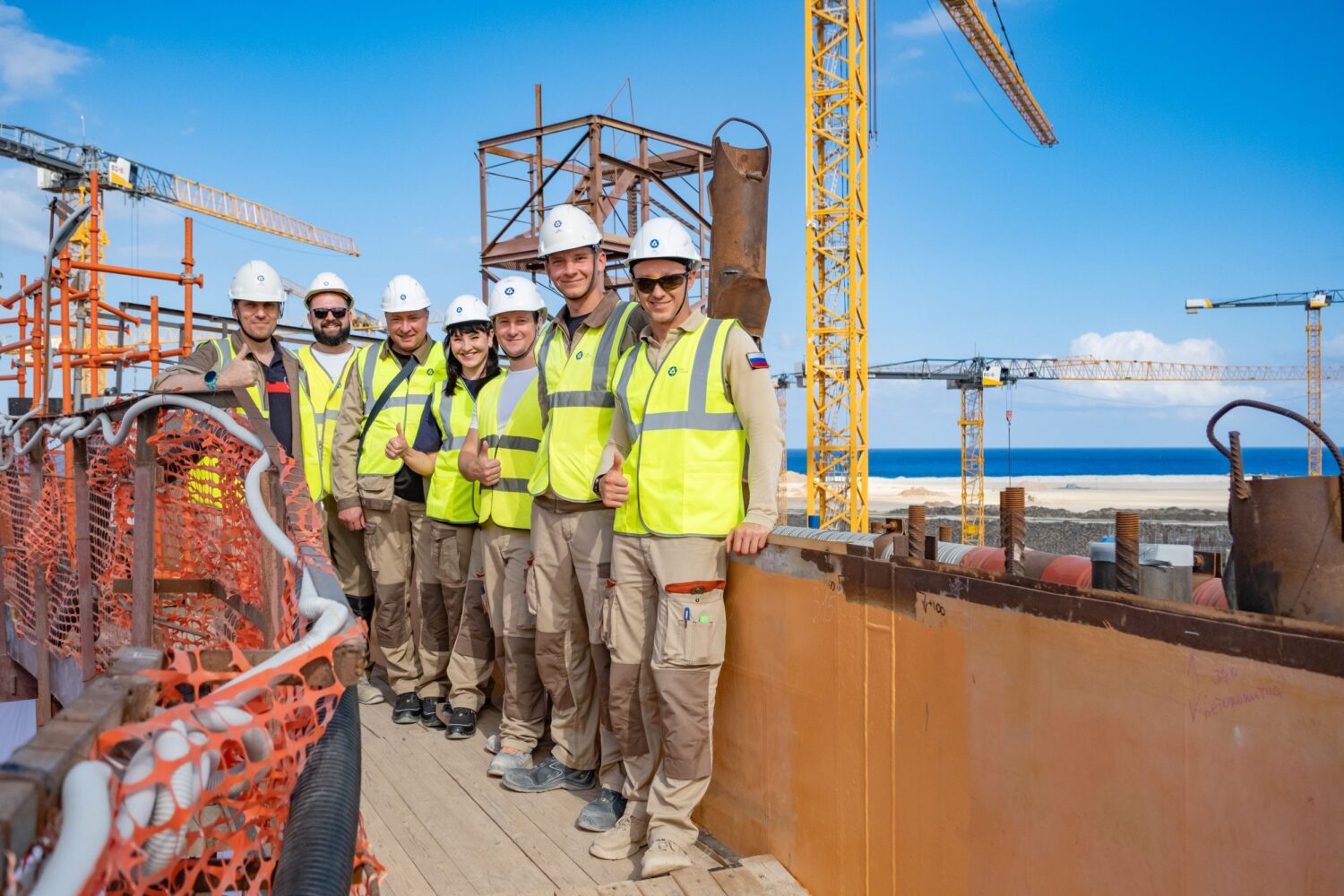
Construction work is going full tilt at all four power units of Egypt’s El Dabaa. However, the nuclear power plant construction is not the only focus of Russian-Egyptian cooperation in the nuclear sector. In February, a delegation from the Executive Authority for Supervision of Nuclear Construction Projects in Egypt visited Moscow to explore Rosatom’s advanced developments in energy storage and additive manufacturing. The parties discussed cooperation in these areas to build a green economy and strengthen Egypt’s technological sovereignty.
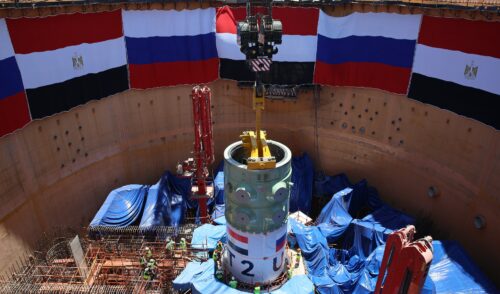
At El Dabaa Unit 2, workers have finished installing the dry shield for the reactor pit. This cylinder-shaped structure, weighing 120 tonnes (comparable to the weight of a large passenger aircraft), was installed by a heavy-duty crawler crane in four hours. The dry shield provides reliable protection against ionizing radiation, ensuring the safety of personnel and equipment throughout the entire service life of the reactor. An additional function of the structure is heat removal, which reduces the thermal load on the concrete of the reactor pit and extends its service life.
Concurrently, the concreting of the fourth tier of the inner containment shell for the reactor building began at the same power unit. The volume of concrete to be poured exceeds 1,100 cubic meters.
The reactor building of Unit 2 maintains its status as the tallest structure on the construction site.
Storing green energy
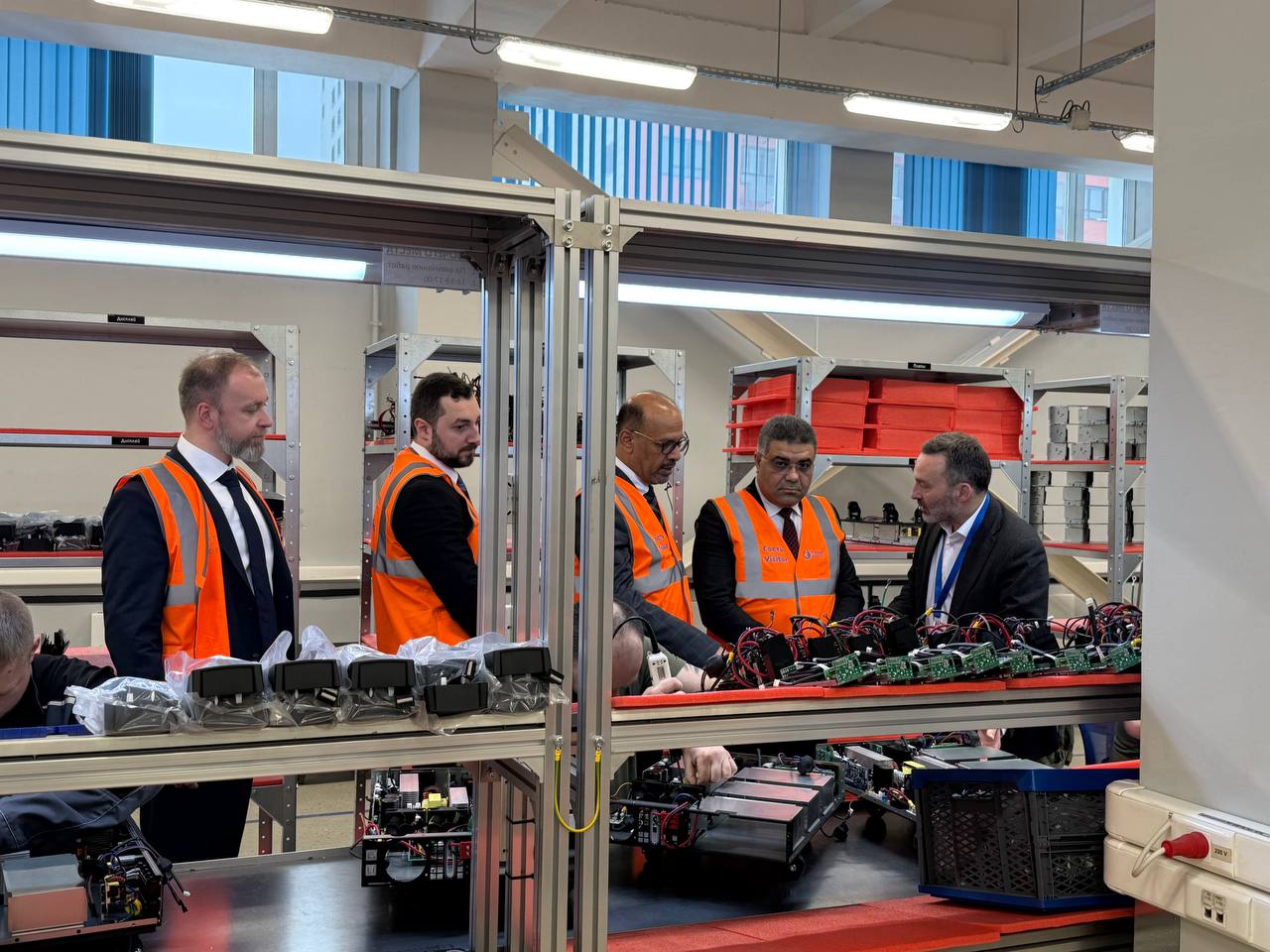
Egyptian and Russian nuclear professionals maintain a constant dialogue, and their cooperation is not limited to the El Dabaa NPP construction project alone. In late February, a delegation from the Executive Authority for Supervision of Nuclear Construction Projects visited Parus Electro in Moscow (part of Rosatom’s Automated Control Systems and Electrical Engineering Division). The parties discussed prospects for technological cooperation in electrical engineering, including the development of charging infrastructure for electric vehicles (EVs). This sector is state-supported in Egypt and has been showing impressive growth.
The guests were also shown the full value chain for battery production, from research and design to the assembly of finished products. Vladimir Khlebnikov, Deputy CEO of Parus Electro, said: “We presented solutions for Egypt’s developing sectors — solar energy, energy storage systems, EV charging infrastructure — and other areas where there is potential to expand cooperation and exchange technological competencies.”
Ahmed Farghal, Chairman of the Executive Authority for Supervision of Nuclear Construction Projects, emphasized that the development of cooperation in advanced technologies aligns with the goals of the Egypt Vision 2030 strategy, which aims to build an innovation-based green economy: “These contacts reflect the depth of Egyptian-Russian relations and the expanding strategic partnership between our countries across various sectors. They facilitate the transfer of knowledge and technologies, the development of energy infrastructure, and the receipt of long-term economic and social benefit based on mutual benefit,” Ahmed Farghal noted.
Following the meeting, the parties agreed on an action plan for further steps toward practical implementation.
Additive manufacturing for technological sovereignty
Today, Rosatom has established an end-to-end additive manufacturing supply chain: from the development of 3D printers and components to special metal powders, software, printing materials, and training. The company provides Russian manufacturing companies with reliable equipment, materials, and professional services to deploy additive manufacturing solutions.
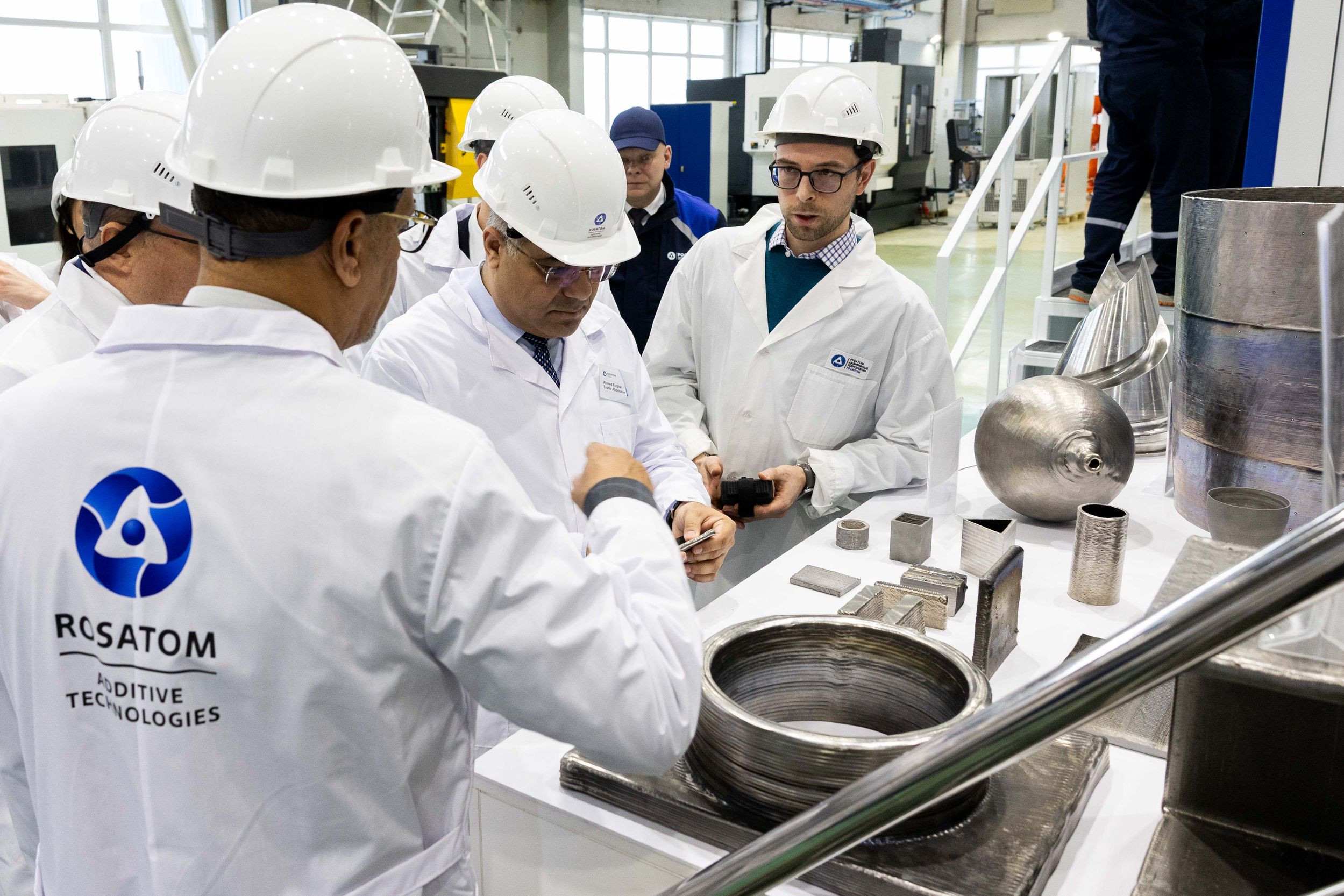
In mid-February, Ahmed Farghal visited Rosatom’s Additive Technologies Center in Moscow. The guest was shown the key stages of making additive products, from 3D scanning and reverse engineering to the production of metal and plastic parts. He was also presented with the entire line of equipment manufactured there.
Ahmed Farghal showed particular interest in selective laser melting (SLM) systems designed to create complex parts from metal powders, as well as direct metal deposition (DMD) technologies. The guest highlighted the capabilities of Rosatom’s additive systems in restoring and repairing complex parts for the energy and industrial sectors, which significantly extends the lifecycle of critical equipment and reduces dependence on imported spare parts.
Ahmed Farghal praised the outcomes of the visit, noting that cooperation with Rosatom in the non-energy sector is reaching a whole new level. “The scale of competencies and the maturity of additive manufacturing solutions seen here convincingly confirm that these technologies are the driving force of modern industrial transformation. The development and implementation of additive technologies is a fundamental step for Egypt toward strengthening national technological sovereignty. We hope that Rosatom’s unparalleled experience in creating a full cycle — from equipment development to building industry ecosystems — will become an important benchmark for our joint projects,” Ahmed Farghal pointed out.
Ilya Kavelashvili, Director for Additive Technologies at Rosatom’s Fuel Division, noted that developing indigenous competencies in additive technologies is a strategic choice for any country striving for technological sovereignty. “Rosatom has unparalleled experience in creating an end-to-end additive manufacturing supply chain: from developing and producing our own equipment to establishing additive technology centers, both in Russia and abroad. We are ready to share this experience with our Egyptian colleagues,” Ilya Kavelashvili said.
The parties reaffirmed their mutual interest in developing bilateral cooperation and outlined steps to specify joint initiatives for integrating additive technologies into Egypt’s industrial sector.
Also in February, the Arab Atomic Energy Agency and the Leader of the MBIR International Research Center Consortium signed a strategic cooperation agreement on peaceful uses of nuclear energy. For more details read the main news section of this issue.
Photo by: ASE JSC, TVEL JSC (Fuel Company), Company Parus electro LLC
This site uses cookies. By continuing your navigation, you accept the use of cookies. For more information, or to manage or to change the cookies parameters on your computer, read our Cookies Policy. Learn more