Rosatom is holding its second recruitment campaign for Impact Team 2050, the international youth advisory council to the Director General of the Russian nuclear corporation. The council aims to foster a direct dialogue between young leaders and Rosatom executives to develop international education, attract young talents to the nuclear industry, and broaden support for nuclear technologies among the younger generation worldwide. Here is the story of Impact Team 2050 member Joyce Mendez, a co-founder of the Latin American Observatory of Energy Geopolitics and a member of the UN Secretary-General’s Youth Advisory Group on Climate Change.
Joyce Mendez was born and raised in Colombia. Since childhood, she observed the natural and cultural diversity of the Paraná River basin and the Guaraní Aquifer, one of the world’s largest freshwater reservoirs.
“One day in school, during a biology class, we were told about one of the consequences of climate change in Brazil: rising temperatures affected the growth of the mosquito population that carries dengue fever and the chikungunya virus. And this is just one of many problems. I was 12 years old then. I became fascinated by the topic and started telling other students about the impact of climate change on our lives,” Joyce Mendez tells her story.
Projects with Joyce’s involvement
Joyce’s belief in the power of education and community engagement prompted her to co-found several non-governmental organizations across Latin America. In 2014, she began working with young people under a social and environmental program for Itaipu, the world’s second-largest hydroelectric power plant. In 2015, Joyce helped launch the Moema Viezzer Environmental Education Observatory, which fosters local community engagement in biodiversity conservation and the fight against climate change. Among the Observatory’s achievements is the Foz do Iguaçu Municipal Plan for the Conservation of the Atlantic Forest aimed at protecting the region’s ecosystems.
In 2016, Joyce co-founded the Latin American Observatory of Energy Geopolitics, and in 2018, she co-founded the Paraguayan Youth for Water Network, which empowers young professionals to implement projects aligned with the UN Sustainable Development Goals (SDGs), Clean Water and Sanitation and Life Below Water. The organization mobilized young people throughout Paraguay via national forums and programs.
One of Joyce’s key missions is advocating for indigenous peoples, ensuring their voices are heard in discussions on climate policy and resource management. She believes that traditional knowledge is not merely a cultural heritage but a vital tool for achieving the SDGs.
International collaboration
Joyce participates in the BRICS Youth Energy Agency, helping develop youth programs on the energy transition and sustainable development.
In 2023, UN Secretary-General António Guterres appointed Joyce to his Youth Advisory Group on Climate Change. Only five young people received such an offer. Representing her region in the international arena, Joyce emphasizes the importance of incorporating the perspectives of youth and migrants when developing sustainable solutions.
Her vision for the future is rooted in collaboration and transparency. “We need to encourage dialogue across cultures, generations, and socio-economic groups,” asserts Joyce Mendez. “Only through discussion can we find common ground and overcome shared challenges.”
For Joyce, building resilient systems is a life philosophy. “I won’t be young forever,” she reflects. “But I have created platforms that will provide the next generation with the tools needed to continue this work.”
Impact Team 2050
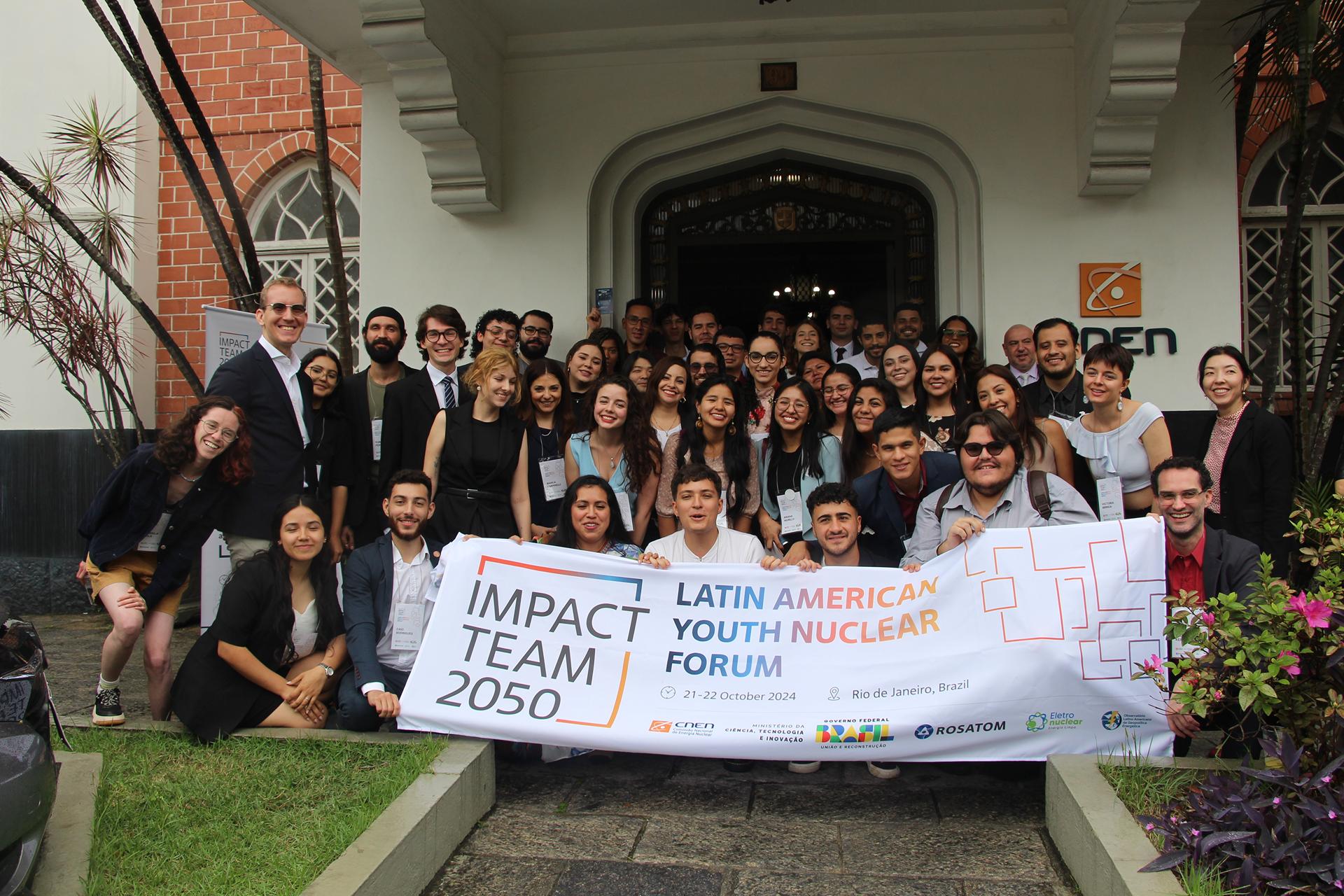
Joyce took an interest in nuclear energy back when she was a university student. In 2022, she joined the Impact Team 2050 council. Together with Rosatom, Joyce has organized major events that enabled young people across Latin America to learn about nuclear technologies, how to build a career in the nuclear industry, and how to improve their countries’ climate footprint.
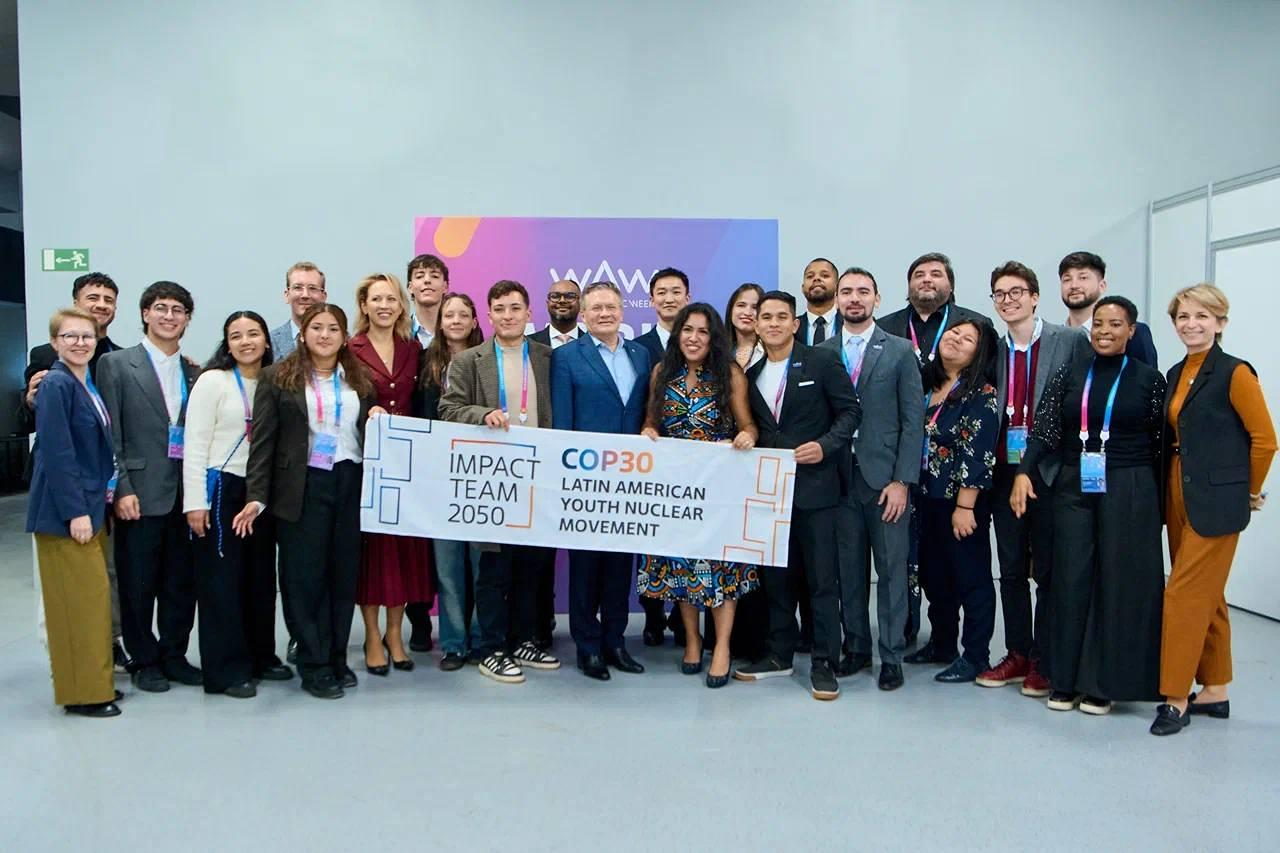
“I joined Impact Team 2050 to prove that the energy transition must be inclusive and that the voices of Latin America must be heard. And we succeeded. We brought together young leaders from nine countries in the region. We conducted technical tours to the Angra NPP and the IPEN research reactor in Brazil, and organized a joint workshop with the IAEA, which laid the groundwork for developing relevant TECDOCs (IAEA technical documents — Ed.). But my greatest point of pride is the presentation of our two years of work at COP30 in Belém, in the heart of the Amazon. We showed the whole world at the IAEA session that the Latin American youth nuclear movement exists, it is strong, and it is ready to offer solutions. When representatives of indigenous communities and young engineers speak the same language, that is true progress.”
Making a contribution
In her younger years, Joyce heard a parable that influenced her worldview. A fire broke out in the Amazon rainforest. The animals fled from the flames in terror. But suddenly, they noticed a hummingbird flying into the forest.
“Why are you going back there?”
“I carry a drop of water in my beak. If everyone does this, we can stop the fire.”
“I thought that I wanted to be like the hummingbird, to make my contribution and stop the fire,” says Joyce Mendez. “For the sake of this dream, I had to sacrifice parties and relationships in my youth, but I don’t regret a thing. If everyone makes the contribution they can, we will see how everything changes. Collaboration is more important than competition; there is strength in solidarity.”
Photo by: From the author’s personal archive