Rosatom has made the first delivery of its proprietary 3D printer to India, where it will be used to print components for the aerospace industry. This delivery confirms market interest in the equipment developed by the Russian nuclear corporation. Moving forward, Rosatom intends to expand its line of additive manufacturing products.
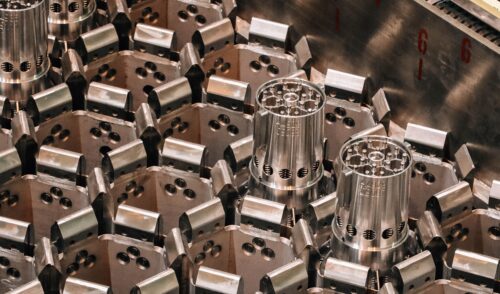
The advantages of 3D printing include the ability to manufacture complex-shaped products in a single operation, reduce component weight, optimize geometry, and minimize material consumption. By eliminating the need for casting and milling, reducing the reliance on expensive alloys, and enabling material recycling, 3D printing significantly cuts both lead times and production costs for small-batch manufacturing.
Large RusBeam 2800
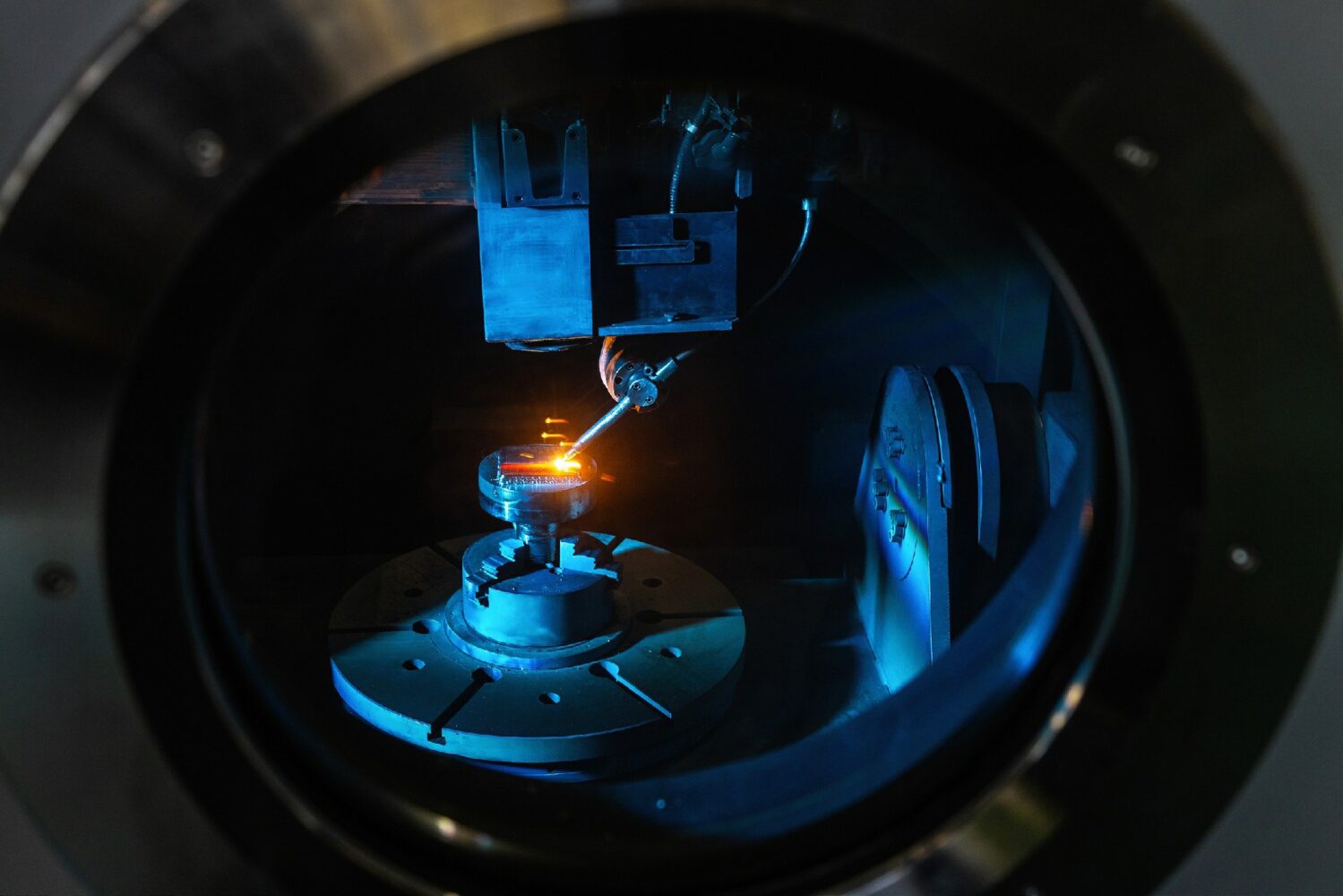
Rosatom has supplied a RusBeam 2800 industrial 3D printer to the Indian Space Research Organization (ISRO). The printer operates using electron beam additive manufacturing (EBAM) technology. “We won the tender by offering, along with Russian-made equipment, our expertise, materials, and services, tailoring them to the customer’s specific needs,” said Rosatom Director General Alexey Likhachev. With this delivery, Rosatom is making a sizable contribution to the strategic space partnership between Russia and India.
The system ensures high speed (50 mm/s) and precision when printing large parts from titanium, refractory alloys, and superalloys. The RusBeam 2800 can print parts up to 2.8 meters high and weighing up to 4 tonnes, including parts of complex geometric shapes. The system’s output capacity allows manufacturing a 50 kg part in approximately five hours, depending on the product’s geometry. For the Indian customer, Rosatom engineers developed unique software for the printer’s control system.
ISRO is expected to use the RusBeam 2800 to print prototypes and components for future orbital infrastructure and deep-space exploration vehicles, including the Gaganyaan spacecraft, the Bharatiya Antariksha Station, and the Chandrayaan lunar mission program.
Cooperation with the Indian customer expands the footprint of Rosatom’s 3D printers in the international market. Previously, the nuclear corporation’s equipment was delivered to the Additive Technologies Center in Minsk (a joint venture with Belarusian partners).
Rosatom will continue to develop the segment of printing large parts using direct metal deposition (DMD) and wire arc additive manufacturing (WAAM) technologies, alongside EBAM: the Russian corporation is confident that equipment manufacturers will increasingly adopt these methods.
Compact RusMelt 150M
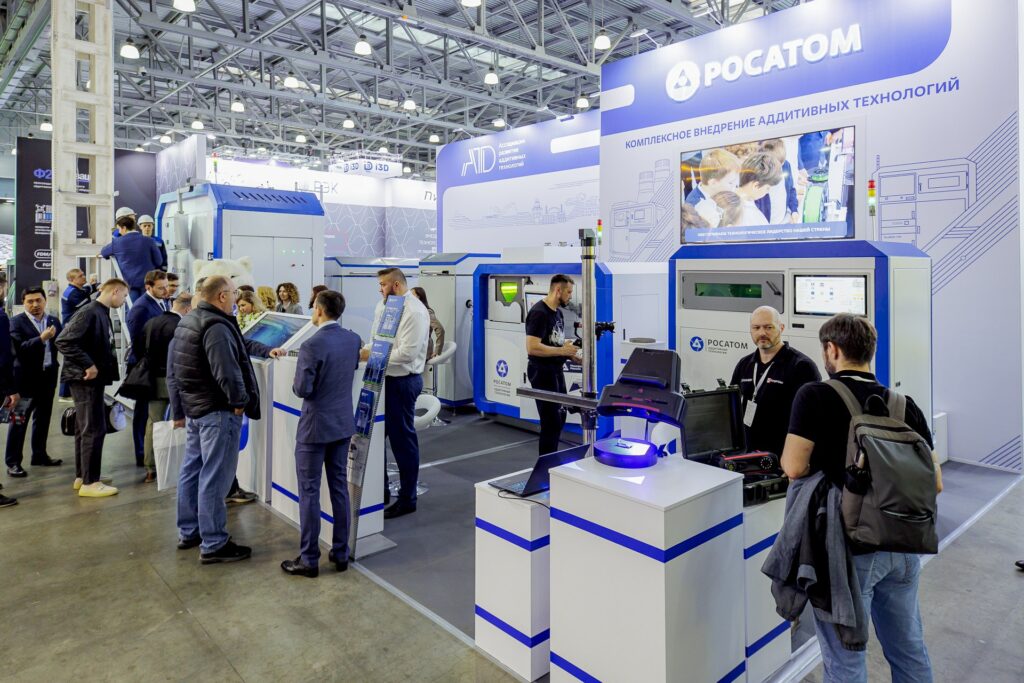
In parallel, Rosatom is expanding its line of 3D printers with compact models. At the Metalloobrabotka 2026 exhibition held in Moscow this May, the nuclear corporation presented its RusMelt 150M printer, which operates using selective laser melting (SLM) technology. The printer is designed for applications in medicine, industry, and scientific research. It can be used to manufacture medical products (such as dental implants, dental frameworks, and reconstruction plates), industrial components (nozzles, brackets, and tooling), and parts for laboratory, testing, and auxiliary equipment (holders, heat exchangers, complex-shaped mini-reactors, etc.).
Weighing just over 900 kg, the RusMelt 150M does not require a special foundation. It is highly compact, consisting of only a single module. The build chamber features a diameter of 150 mm and a height of 200 mm. The printer is equipped with a single laser, and the positioning error of the laser beam does not exceed 20 µm.
The RusMelt 150M builds parts at a rate of 15 cubic centimeters per hour using stainless steel, heat-resistant nickel alloys, cobalt-chromium alloys, titanium, and aluminum. A video monitoring system for print quality control allows for real-time observation of the process, capturing 60 high-resolution frames per second.
Thanks to its compact footprint and small build chamber volume, the RusMelt 150M minimizes the consumption of gas needed for the chamber’s inert atmosphere, as well as electricity and metal printing powder. This compact SLM printer significantly lowers the entry barrier for metal 3D printing, as it requires relatively low capital investment and enables rapid project launch.
Photo by: Rosatom Fuel Company TVEL, Rosatom Additive Technologies LLC