Rosatom is expanding its cooperation with Indonesia. This collaboration reached the highest level in May, as Rosatom Director General Alexey Likhachev had a meeting with Indonesian President Prabowo Subianto. In this interview, Anna Belokoneva, Head of Rosatom’s country office in Indonesia, speaks about the current state of the country’s energy sector and the areas of cooperation that interest both parties.
In your opinion, why is Indonesia interested in using nuclear energy?
Indonesia is an actively developing country with a young, rapidly growing population. Along with economic growth comes an increase in electricity consumption. Therefore, the energy issue is key, especially taking into account current geopolitical developments.
The construction of a nuclear power plant in the country has been planned more than once, and today’s veterans often say: “We are not newcomers, we are latecomers,” referring to the Indonesian government’s repeated attempts to integrate nuclear power into the country’s energy mix. However, it seems today that these plans have every chance of being fulfilled: nuclear energy is included in Indonesia’s official energy programs, both short-term (500 MW by 2033) and long-term (35 GW by 2060). The idea of developing the national nuclear industry in Indonesia is on the table, and Rosatom’s competencies are in demand like never before.
What needs of Indonesia’s fast-growing economy can nuclear generation meet?
The role of nuclear new build projects for Indonesia, as for any country, is not limited solely to providing electricity. First, there are additional socio-economic effects that range from creating new jobs to developing the new scientific disciplines that nuclear technologies bring.
Second, Indonesia has set a goal to achieve Net Zero Emissions by 2060, and the government understands that this goal cannot be achieved without a sufficient share of nuclear generation, which provides baseload power, unlike most other low-carbon energy sources. This is precisely why nuclear generation has been added to national energy plans.
Third, nuclear generation is also a matter of national energy security, as the lifecycle of a nuclear station is no less than 60 years, and the price of electricity it generates is far less dependent on global energy price fluctuations.
Another important reason for the focus on nuclear power is the rapid development of digital technologies and artificial intelligence. Data centers, which are being built at scale across Indonesia, require large amounts of stable, clean energy, which NPPs are uniquely positioned to provide.
It is also important to remember that this country is a vast archipelago consisting of over 17,000 islands. For these islands, especially the remote ones where electricity is often generated using expensive diesel, Rosatom’s unparalleled offering — floating power units (FPUs) — becomes an ideal solution. FPUs can be deployed where building a large onshore power plant is impossible due to geographic and seismic specifics or limited power demand.
Does Indonesia have experience using nuclear technologies in non-energy sectors?
Yes, indeed. Indonesia is no novice in non-energy nuclear and radiation technologies. The country operates three research reactors. All of them are located on the island of Java and were commissioned in 1965, 1979, and 1987. Indonesia has experience producing fuel for these reactors, as well as producing isotopes using them. We are currently discussing cooperation with our Indonesian colleagues in these areas as well.
Could you please describe what the national nuclear infrastructure looks like?
The previously existing national nuclear energy agency, BATAN, was actively involved in developing the use of nuclear technologies in non-energy sectors. In 2021, BATAN became part of the National Research and Innovation Agency (BRIN), and currently, a separate research organization within BRIN — ORTN — handles nuclear research. The agency has experience in the production of isotopes and radiopharmaceuticals, as well as irradiation of products. Furthermore, the country has its own nuclear regulator, BAPETEN, which collaborates with the IAEA. A regulatory framework for the development of nuclear energy has been established. Nuclear disciplines are studied at the country’s leading universities: ITB, UGM, and Politek Nuklir.
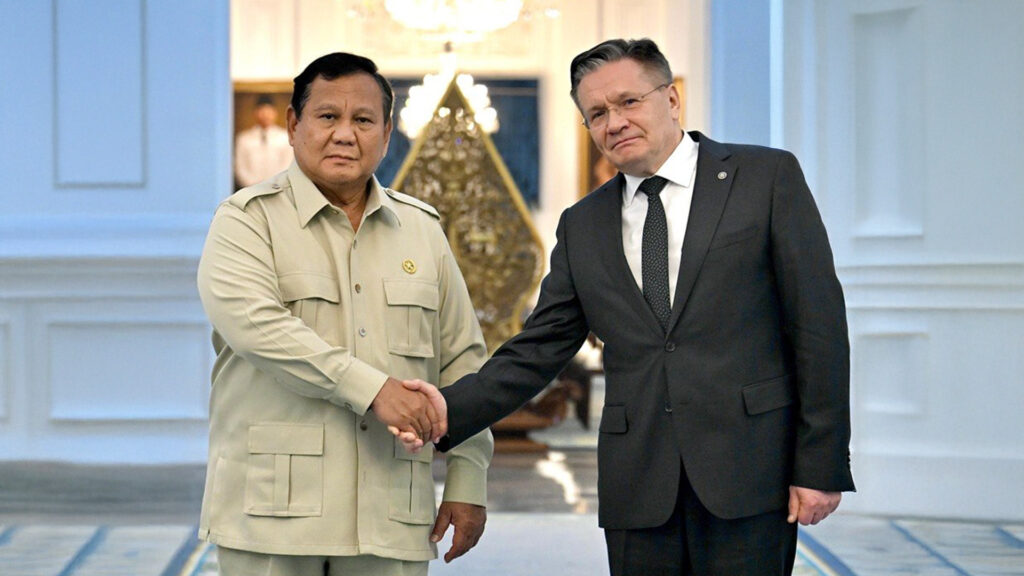
The development of nuclear energy is fully supported by the national government. Indonesian President Prabowo Subianto has discussed this issue multiple times during meetings with Russian President Vladimir Putin. On May 12 of this year, Prabowo Subianto met with Rosatom Director General Alexey Likhachev. In addition to the President, the meeting was attended by ministers and heads of key agencies and organizations, all of them stakeholders in the country’s nuclear program. Participants of the meeting discussed cooperation in peaceful uses of nuclear energy, including nuclear generation projects, nuclear infrastructure, personnel training, and non-energy applications of nuclear technologies.
What is the Indonesian public’s attitude toward nuclear power?
Not everyone is well aware of the advantages that nuclear technologies bring; many harbor certain fears and stereotypes. For this reason, there is an understanding among the stakeholders in nuclear energy development that one of the key tasks right now is informing the public about the safety of modern nuclear power plants and the long-term impact they will have on regional development, human well-being, and national sovereignty.
In this regard, the existing references for our nuclear technologies are important. The latest generation of Russian nuclear plants is successfully operating both in Russia and abroad, and Rosatom has accumulated unparalleled experience in building nuclear facilities in other countries.
Could you please tell us about your work to promote nuclear technologies in Indonesia?
We offer our partners the opportunity to personally verify the reliability of Russian nuclear technologies: we regularly organize visits to Russian-designed nuclear plants. For instance, several official Indonesian delegations have visited the Kalinin and Leningrad NPPs over the past two years. Groups of Indonesian journalists have twice visited the floating nuclear power plant in Pevek, the Kalinin NPP, the factory where RITM small modular reactors are manufactured, and the Atom Museum.
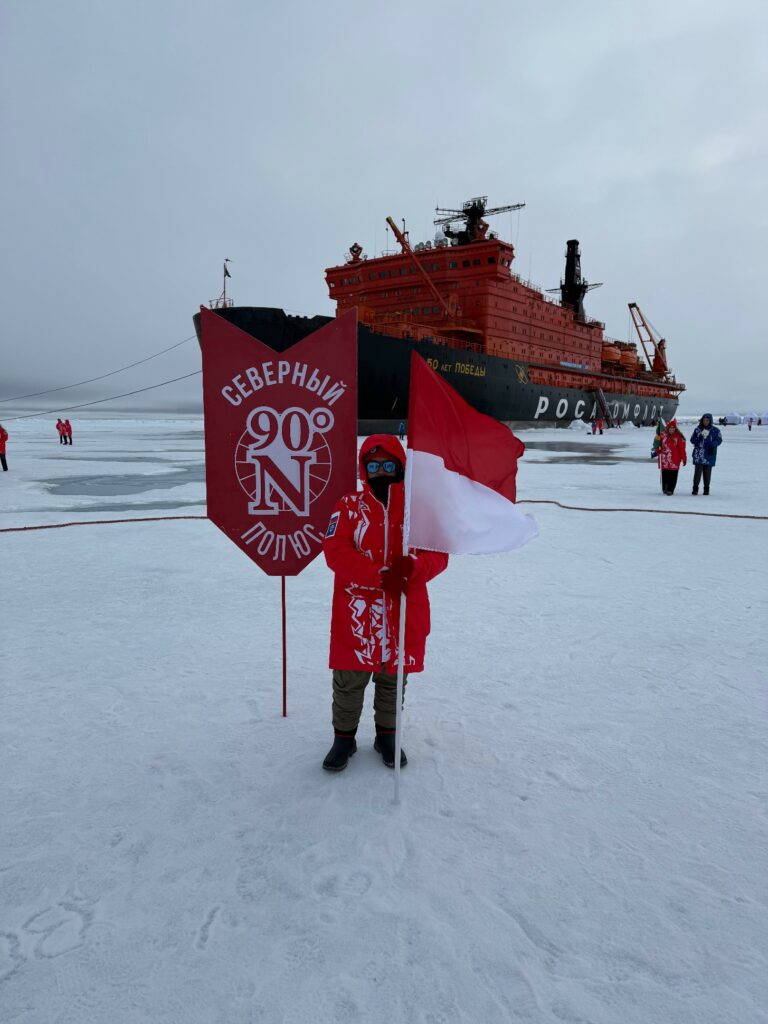
Participating in the Icebreaker of Knowledge 2025 international Arctic expedition organized by Rosatom was an unforgettable experience for student Priya Wicaksono and Professor Topan Setiadipura from Indonesia. Along with school students, university students, and scientists from 21 countries, they traveled to the North Pole on a nuclear icebreaker. Priya planted the national flag at the top of the world on August 17, 2025, on the day of the 80th anniversary of Indonesia’s independence and his own birthday.
Additionally, we are launching initiatives aimed at disseminating knowledge about nuclear technologies among youth in Indonesia. For example, in partnership with BRIN and Tomsk Polytechnic University, we held the national stage of the Global HackAtom international student competition in 2025. Applications were submitted by 39 teams from various Indonesian universities. As part of the competition, Russian experts delivered lectures on Rosatom’s nuclear and radiation technologies and their role in improving people’s lives. The students asked many insightful questions. The winning team from Padjadjaran University traveled to the HackAtom Grand Final in Moscow and took second place.
A deeper dive into the Russian nuclear industry is for Indonesian students to study nuclear-related professions in Russia. Currently, there are 29 such students. Thirteen scholarships have been allocated for the next academic year. The knowledge and experience these graduates acquire during their studies and internships in Russia will help build trust in Russian nuclear technologies.
We are also introducing the broader population of the country to nuclear technologies. For instance, two Indonesian fishermen from the province of Southeast Sulawesi participated in “atomic” fishing in 2025 — that was an international amateur fishing tournament organized by Rosatom. Last year, it was held near the Akkuyu NPP construction site in Türkiye, and the anglers could visit the plant and talk to local residents. Upon returning home, they shared their impressions with friends and neighbors. This year, the competition will be held in Russia near one of the nuclear power plants, and we also expect Indonesian fishermen to participate.
How would you describe the specific cultural traits of Indonesia?
Indonesians are very friendly and polite people. They are generous with smiles, kind words, and treats. As for the local corporate culture, harsh or overly formal communication is not customary. Lack of restraint, pressure, and uncompromising positions are unacceptable in professional communications. During negotiations and business events, partners strive to create a comfortable atmosphere.
Trust between partners is crucial and is achieved through prolonged personal contacts. Decisions are often made through joint discussions, debate, and the search for compromise.
In Indonesia, one must be flexible regarding schedules and deadlines. Another trait of the local culture is the absence of a direct refusal. Personal, trusting relationships with partners help you understand their real position on any given issue. People also develop the ability to read between the lines and pick up on hints, and, when necessary, not to be afraid to discuss the same issue multiple times, re-asking and clarifying to perfectly understand the partner’s position.
Another trait I admire in Indonesians is their deep respect for their cultural heritage, not just in words but in daily life. Most conferences begin with a performance by a dance troupe in national dress, typically performing a dance based on the traditions of Indonesia’s various peoples. And clothing featuring traditional batik patterns is a recognized formal dress code. It is welcomed at business meetings as well as at the highest-level events. Even in schools, there is one mandatory day a week to wear batik or a kebaya (traditional women’s clothing). If a foreigner wears a long-sleeved batik shirt to negotiations, it is perceived as a sign of respect.
Photo by: Rosatom State Corporation, Rosatom International Network, Unsplash