Rosatom and the Ministry of Foreign Affairs of The Kingdom of Norway have been working together for several years within the framework of an agreement, concerning nuclear and radiation security provision, doing dismantlement of the NPS (nuclear powered submarines) removed from the RF Naval forces in the north of the country, nuclear power surface ships and nuclear maintenance ships; RAW and SNF management; NPS dismantlement infrastructure improvement; utilization of RTG (radioisotope thermoelectric generators), placed on navigational beacons in the Murmansk and Archangelsk regions and the Nenets Autonomous Area; safety provision and rehabilitation of radiation hazardous sites.
According to the Agreement, Norway gives Russia unrepayable technical support in the form of supplying equipment, passing technologies, granting financial resources and consulting services.
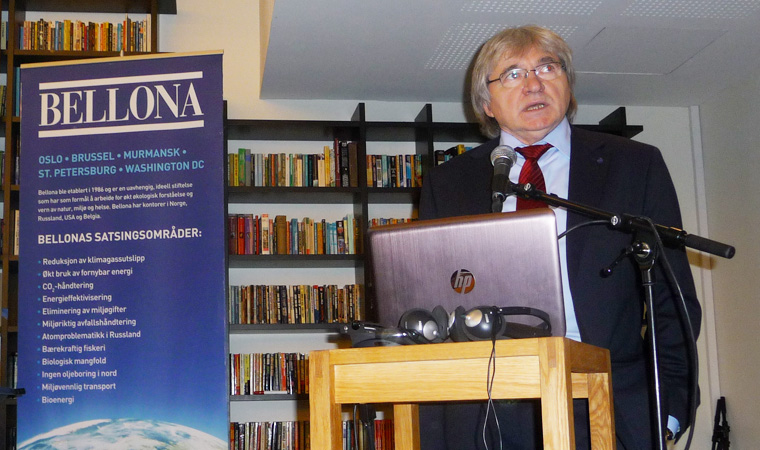
At the seminar in Oslo the special attention was paid to prolongation of Russian-Norwegian cooperation in the nuclear and radiation safety field, along with the participation of civil society in making decisions on the subject. Inger Margrethe Eikelmann, a department head at the Norwegian Radiation Protection Agency (NRPA) assured the audience that the financial and economic sanctions imposed against Russia are not expected to affect the nuclear and radiation safety projects Russia is implementing with the help of Western funds in the country’s northwest. That’s why all main directions of the cooperation will stay the same.
“One of the most important projects for the Norwegian side is preparations for the removal of nuclear submarine spent fuel out of Andreyeva Bay,” Ms Eikelmann said during the seminar. According to Ms Eikelmann, Russia and Norway will continue their joint work, studying the radioactive objects dumped in the Kara Sea during Soviet times and joint monitoring of the situation with the nuclear submarine K-159, which sank in Kola Bay in the Barents Sea during towing.
Ms Eikelmann’s words were echoed by Denis Pleshchenko, head of communications department at the state-owned RosRAO, a Russian State Atomic Energy Corporation ROSATOM entity, responsible for management of radioactive waste in Russia. Pleshchenko said, Western sanctions had had practically no impact on the projects under implementation.
“We have confirmation from the Norwegian side regarding the implementation of projects in Andreyeva Bay. All the agreements remain in force and are confirmed. The project of building a RAW treatment center in Sayda Bay, financed by Germany, will be launched for a trial run in the winter of 2015,” Pleshchenko said.
Bellona’s President Frederic Hauge is confident that whatever way the political and international winds may blow, the ecological projects must go on.
“Yes, the international situation has changed, but nothing has changed for Bellona. Environmental problems remain, and we need to continue to solve them. To do that, we will continue our cooperation with all the concerned parties,” Hauge said.