Kazakhstan participated in the World Atomic Week (WAW) international forum held in Moscow at the end of September. Concurrently, nuclear professionals from both countries discussed nuclear industry development at a conference in Almaty, with a special focus on the deployment of artificial intelligence and digitalization. This intensive, multi-level dialogue confirms the strategic nature of Kazakhstan–Russia partnership in the nuclear sector.
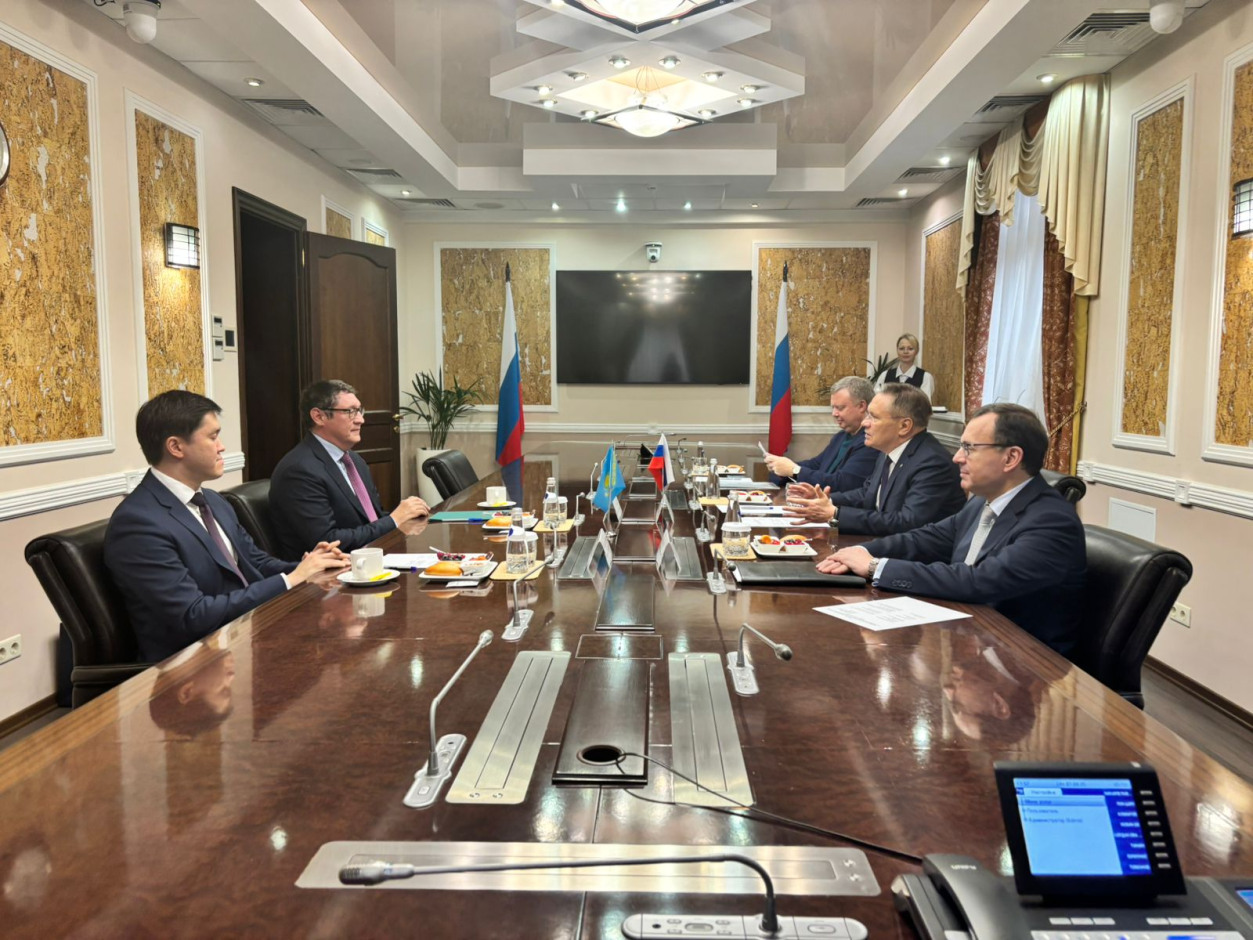
Rosatom Director General Alexey Likhachev and Almasadam Satkaliyev, Chairman of Kazakhstan’s Atomic Energy Agency, held talks during the World Atomic Week. The two aligned their positions on current and future matters related to the construction of a large Russian-designed nuclear power plant, the first in Kazakhstan. They also discussed contracts and legal framework for the project.
The Kazakhstan delegation actively engaged in the intensive four-day program of the forum. Yernat Berdigulov, CEO of Kazakhstan Nuclear Power Plants LLP, shared updates on the country’s first nuclear power project: “We have already entered the active phase of the project to build a Russian-designed nuclear plant. Engineering surveys are now underway. We are confident that we will deliver our nuclear energy strategy with public support. Last October, a referendum was held, and the majority of people supported the nuclear plant construction. As for the region where the plant will be built, support reaches as much as 90%.”
Nuclear industry digitalization
Russian and Kazakh nuclear professionals have also met beyond WAW. In September, an international conference on nuclear knowledge digitalization was held in Almaty. The event was organized by the International Union of Nuclear Energy and Industry Veterans with support from the Kazakh Union of Nuclear Industry Veterans.
The discussion brought together representatives of veteran organizations from 12 countries across the CIS, Eastern Europe, and Mongolia. They considered nuclear energy development, public trust building, and the role of digital technologies in advancing the sector. Special attention was given to automation and the use of artificial intelligence to enhance efficiency and safety.
“Automation and artificial intelligence reduce risks and improve efficiency. Kazakhstan is already deploying advanced solutions, making the industry safe and competitive. We put much effort into transferring experience to young professionals through universities and research centers,” said Kalilallo Baytasov, a member of Kazakhstan’s National Academy of Sciences and Secretary of the Kazakh Union of Nuclear Industry Veterans.
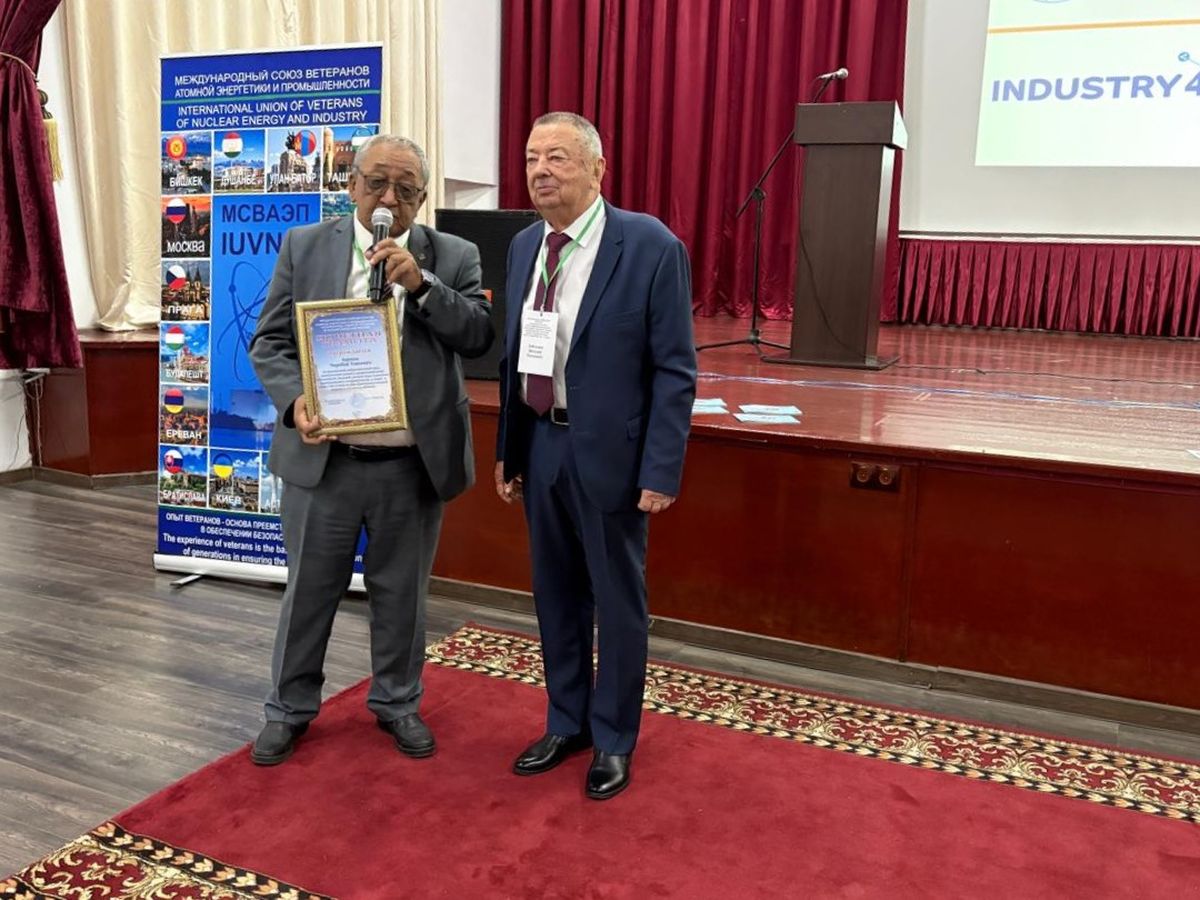
The conference highlighted the priority of public outreach and inter-generational knowledge transfer for workforce development. “We have launched educational initiatives to help society understand the need for nuclear energy as a safe and reliable power source,” said Chorobay Akunov, Chairman of the Kyrgyz Council of Energy Veterans.
Balkhash is safe
Designs of nuclear power plants that Rosatom offers to its partners meet the highest safety standards and will have no negative impact on the regional environment.
Erlan Batyrbekov, Director General of Kazakhstan’s National Nuclear Center, emphasized in an interview with Kazinform news agency that concerns about potential shallowing of Lake Balkhash, near which the nuclear plant will be built, are unfounded. He explained that the reactor technology selected for Kazakhstan featured three independent cooling circuits. The circuit that directly contacts the lake is completely isolated from the reactor cooling circuits, which circulate specially treated water. Lake water will not be used directly for reactor cooling. As Batyrbekov noted, the plant will be located at a distance from the shoreline for safety and operational convenience.
The cooling system design for the future plant will be finalized during the engineering phase following a feasibility study.
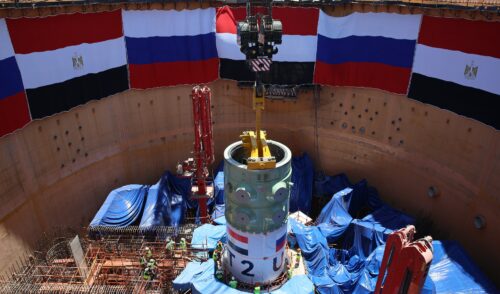
Rosatom has extensive experience building nuclear stations in diverse climates. For example, the cooling systems of Egypt’s El Dabaa NPP—currently under construction—are optimized for desert conditions. In Russia, the Rostov NPP operates successfully in a region where summer temperatures reach 40°C.
Nuclear energy needs advancement
Kazakhstan’s President Kassym-Jomart Tokayev addressed the National Council for Science and Technology, devoting much attention to civil nuclear energy applications as one of the most science-intensive sectors.
He noted that Kazakhstan had long laid a solid scientific foundation in nuclear technology. The country holds about 40% of the world’s uranium reserves, the President recalled, urging the nation to leverage this advantage wisely. “Until recently, Kazakhstan mainly exported raw materials, but now we are consistently increasing our capabilities across the nuclear fuel cycle. For example, a factory for the production of fuel assemblies opened in the country in 2021. With the nuclear power plant commissioned, we will have a full production cycle in place. As a result, nuclear energy will become independent of external markets and evolve into a fully-fledged sector of the national economy,” Kassym-Jomart Tokayev concluded.
Photo by: Rosatom State Corporation, Wikipedia