In July, Rosatom presented its performance results for the past year to experts and journalists. The Russian nuclear corporation met all targeted objectives, ensuring growth in revenue, new orders, and key production metrics. The year was also marked by the launch of several new manufacturing facilities and high-tech projects.
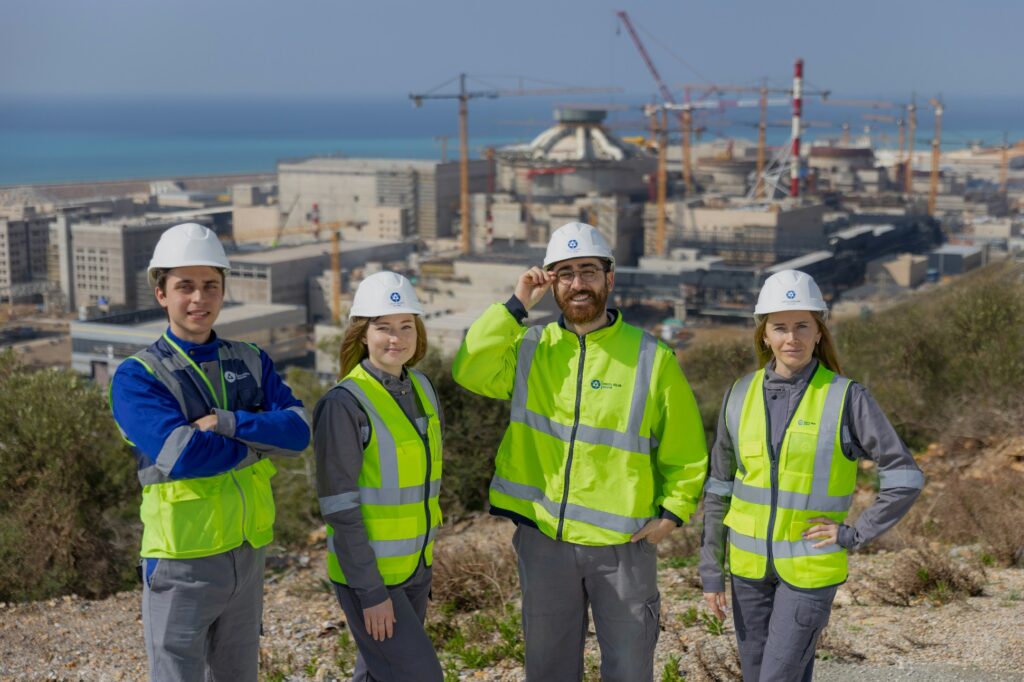
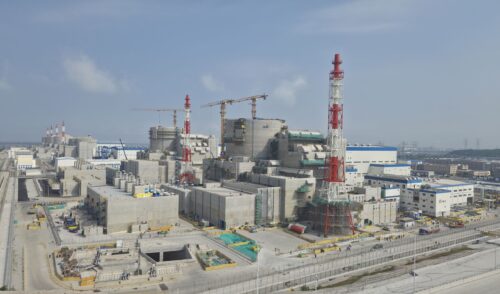
“Solving the Unsolvable” was the motto that guided Rosatom through the year 2025. Over the year, the Russian nuclear corporation maintained its leadership in the export market for nuclear power plants. Despite external pressure, it continues to operate successfully in the global arena. As of the end of 2025, Rosatom was constructing 22 large-capacity power units in seven countries, accounting for 88% of the global market for new build exports. Active construction is underway in Turkey, Egypt, China, Bangladesh, and Hungary. The total international portfolio includes 35 large-capacity power units and six small modular reactors across 11 countries. In Uzbekistan, following consultations with local partners, agreements were reached to modify the project configuration into an integrated nuclear power plant featuring both large-capacity power units and small modular reactors; excavation for the SMR units has already commenced. In Kazakhstan, engineering surveys were launched to select the optimal site for a large-capacity nuclear power plant planned to be built in the country. In Belarus, options for constructing a third power unit were explored in 2025. These developments underscore Russia’s position as a global leader in nuclear energy. Overall, the portfolio of overseas projects across the entire nuclear life cycle increased to USD 206.2 billion, showing a 2.9% year-on-year growth. Rosatom’s project geography now spans 65 countries.
65 countries: Rosatom’s international project footprint
By the end of 2025, Rosatom also led the uranium enrichment market with a 36% global share. The Russian corporation ranks second in uranium reserves and is among the top three in uranium mining (12% market share) and nuclear fuel supply (18% market share).
36%: Rosatom’s share of the global uranium enrichment market
Rosatom’s total revenue reached a record RUB 3.3 trillion (approx. USD 43.2 billion), a 7.9% increase over 2024. This growth was primarily driven by increased sales of electricity and capacity, heat energy, uranium-containing products, enrichment services, and nuclear fuel.
Core business
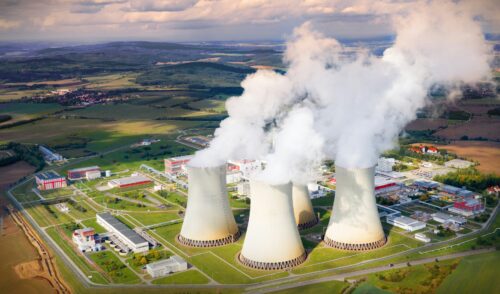
Russian nuclear power plants achieved record-high efficiency levels in the history of the Russian nuclear industry, with the capacity factor exceeding 87%. The share of nuclear power in Russia’s total electricity mix reached 18.7% in 2025. Throughout the year, no nuclear or radiological events above Level 1 on the International Nuclear and Radiological Event Scale (INES) occurred at any of Rosatom’s facilities, reaffirming the reliability and safety of Russian nuclear technologies. The total electricity generation from Rosatom’s nuclear and wind assets reached 220.7 billion kWh.
New lines of business
Revenue from new products exceeded RUB 1.5 trillion (USD 19.6 billion), surpassing targets by 25%, a nearly fivefold increase over the past five years. Flagship high-tech projects are moving into the industrial phase. For instance, pilot production of lithium-ion batteries for electric vehicles was launched in the Neman District of the Kaliningrad Region. The factory will annually produce energy storage systems with a total capacity of 4 GWh, equivalent to 50,000 traction batteries.
Rosatom remains a key player in Arctic development. The Russian corporation operates the world’s only nuclear icebreaker fleet, providing escort services for cargo ships across the Arctic seas. In November, the keel was laid for the new Project 22220 nuclear icebreaker, Stalingrad. The transit potential of the sea lanes on the Northern Sea Route (NSR) continues to expand: cargo traffic along the NSR reached 37.02 million tonnes, with container transit from China doubling. A total of 1,521 voyages were completed via the NSR, 14% more than in 2024, which confirms the efficiency of NSR lanes. Rosatom is also involved in establishing the Trans-Arctic Transport Corridor.
In the healthcare sector, the Russian nuclear corporation is introducing new medical products to the market. In February 2025, a patent was granted for a production technology for the pharmaceuticals containing actinium-225. In December, a radium-223-based drug, Rakurs (223Ra), was registered in Russia for treatment of prostate cancer.
RUB 3.3 trillion: Rosatom’s revenue in 2025
Development of digital products also accelerated. Rosatom’s Smart City technologies are now integrated into the infrastructure of 20 nuclear host cities and 131 non-nuclear cities. These systems manage municipal utilities (water and heating networks) and transport, and enable rapid response by city authorities and law enforcement agencies to incidents and resident requests. They are also used for long-term urban planning. Overall, the Smart City toolkit helps create a safe and comfortable urban environment while saving resources and reducing municipal utility costs.
Environmental stewardship and human capital
Rosatom’s environmental protection expenditures in 2025 totaled RUB 43.43 billion (approx. USD 568.5 million). For comparison, this figure stood at RUB 36.44 billion (approx. USD 477 million) in 2024. Occupational health and safety spending in the reporting year reached RUB 24.4 billion (approx. USD 319.4 million), up from RUB 20.4 billion (approx. USD 267 million) the previous year.
Rosatom is remediating legacy industrial sites in Russia and abroad, rendering them safe and minimizing damage to the environment. For example, work was completed under the CIS Uranium Mining Site Rehabilitation Program, successfully rendering safe a number of legacy sites in Kyrgyzstan and Tajikistan.
Foundation for the future
Rosatom is laying the groundwork for Russia’s future leadership in nuclear technologies. Its Proryv (Breakthrough) project aims to develop Generation IV nuclear energy systems for large-capacity nuclear generation facilities, focusing on demonstrating the technological feasibility of closing the nuclear fuel cycle through the use of fast neutron reactors.
Rosatom also remains a global leader in controlled thermonuclear fusion, developing advanced technology and solutions, manufacturing and supplying systems and components for the International Thermonuclear Experimental Reactor (ITER) project, and conducting R&D for domestic fusion facilities.
In the field of quantum computing, Rosatom developed and tested new generations of five quantum computer prototypes based on ion, atomic, superconducting, and photonic platforms. By the end of 2025, two of them had reached a capacity of 72 qubits.
Anniversary
In 2025, marking the 80th anniversary of the Russian nuclear industry, Rosatom hosted the World Atomic Week, a world-class event that brought together over 20,000 participants from 119 countries, including heads of state and government, ministers, globally recognized experts, leaders of major international nuclear organizations, students, and representatives of public organizations. More than 50 documents were signed during the World Atomic Week. Participants reaffirmed that nuclear energy is indispensable for the sustainable development of the planet and called for equitable cooperation. Offering “partnerships of equals” remains Rosatom’s core competitive advantage for both emerging and established nuclear nations.
Photo by: Akkuyu Nuclear JSC, Novovoronezh Nuclear Power Plant, JSC Production Association Electrochemical Plant, FSUE RADON